When you eat your fruits and vegetables, eat the peels as well. Not all of them, and only under certain conditions—but realize that often most of the healthy stuff is in the peels.
They can also help you eat less because peels contain the all-important fiber. Eating peels reduces food waste and your carbon footprint. I do not want to sound too woke, but food waste is a big issue, so why not combine extra health with helping the environment?
As always, there are some caveats, the most important one being pesticide-related. And some peels are not edible, of course—like the avocado peel.
At home, we incorporate peels as much as possible into our diet. The easiest way is blending them into our daily soup and smoothie.
Summary: For your own health, be more adventurous and do more with peels—but be careful about chemicals, parasites, dirt, and bacteria. Wash well, scrub, and buy organic. If you do not want to wash and scrub, then peel. Peeling is not possible with some popular members of the “dirty dozen” like peaches, blueberries, strawberries, and spinach. I strongly advise buying organic. The more you read about pesticides, the more you will want to avoid them.
Some peel facts
Peels are generally packed with higher concentrations of fiber, vitamins, and antioxidants than the flesh/pulp. In many cases, peels make up 30% to 40% of the total food weight. If you consider fiber important (as you should), then peels are for you.
An apple with its skin can have up to 332% more vitamin K, 142% more vitamin A, and 115% more vitamin C than a peeled apple.
A boiled potato with skin can have 175% more vitamin C, 115% more potassium, and 111% more folate than a peeled one.
Removing the skin of a tomato can cause a loss of up to **80%** of the antioxidant lycopene.
2. Safety / pesticides
Pesticides play a significant role in conventional farming to protect crops. A substantial amount of these chemicals remains on the outer surface (the peel). Washing helps, but is not enough; washing removes, on average, about 40% of chemicals, and peeling removes another 40%. Especially in thin-skinned fruits and vegetables, pesticides can penetrate into the pulp.
In conventional agriculture, 240 pesticide are permitted in the Netherlands; in the whole of EU, as many as 400. In organic agriculture, fewer than 10 pesticides are allowed. Another big difference is that preventive spraying is not allowed in organic agriculture.
To increase shelf life and improve appearance, many fruits (like apples and cucumbers) are coated with synthetic or natural waxes. These waxes can trap bacteria and pesticide residues.
Bacteria, parasites, microbes, and dirt can also be an issue—possibly even more so with organic fruits and vegetables. Careful washing and soaking for **15 minutes** in water with baking soda are among the best approaches.
3. Carbon footprint
Globally, about one third of food is lost or wasted, amounting to **1.3 billion tonnes** per year. Food loss and waste accounts for **8%** of global greenhouse gas emissions. Peels are a substantial part of food waste.
4. Tough to digest
Many peels are high in fiber, which is good. However, they can be too tough or difficult for some people to digest. This can lead to stomach discomfort, cramps, or bloating—especially with thicker peels like those of oranges. If you start incorporating peels into your meals, do it step by step.
5. Peel Taste tip
Some peels, such as mango or citrus, can be bitter or tough, but they can be blended into smoothies or used as zest.
6. Powerhouse fruits and vegetables: the nutrient density score
On the internet you can find extensive rankings of Nutrient Density Scores. All fruits and vegetables are healthy by default, but some are healthier than others. The best nutrient score is held by watercress, followed by Chinese cabbage, chard, beet greens, and spinach. Surprisingly (at least for me), most lettuces also score high—around 70 out of 100 on the nutrient density score.
7. Peels may help you feel fuller longer
Fruit and vegetable peels can reduce hunger and help you feel fuller longer. This is largely due to their high fiber content. While the exact amount of fiber varies, fresh fruits and vegetables may contain up to one-third more fiber before the outer layers are removed.
Several studies show that fiber can help you feel fuller longer. Fiber can achieve this in several ways. It physically stretches the stomach. It slows how quickly the stomach empties. It also influences how speedily fullness hormones are released in your body.
In fact, research suggests that the type of fiber found in fruits and vegetables—known as viscous fiber—may be especially effective at reducing appetite.
8. Banana and pineapple peels
It feels strange to throw away a third of a banana’s edible part. It happens needlessly every time you have one. But that is exactly what most of us do—and probably will continue to do. Personally, I am looking for ways to do “something” with banana peels. One option is making a banana-and-peel breakfast loaf (see online recipes). Of course, you cannot make a banana-and-peel breakfast loaf every day, but I will explore what more is possible.
Another interesting idea is pineapple peel. Look online for “Tepache” (sometimes referenced by writers like Lucy Sherriff): a fermented drink made from pineapple peels. It can be a good source of probiotics and contains some alcohol (often less than 1%, depending on fermentation time).
Dear reader, allow me to conclude with the summary once more. For your own health, be more adventurous. Do more with peels. However, be careful about chemicals, parasites, dirt, and bacteria. Wash well, scrub, and buy organic.
If you do not want to wash and scrub, then peel. Peeling is not possible with some popular members of the dirty dozen, like peaches, blueberries, strawberries, grapes and spinach. For these, I strongly advise buying organic. The more you read about pesticides, the more you will want to avoid them.”
Some years ago, in Isfahan, Iran, Zayandeh river, often without water
Dear reader,
The more I study longevity and healthy aging, the more I realize that our cells are key. Of all cells, stem cells are the mother of all keys. Keeping these in good shape longer will expand your health span and might even add some years to your life.
However, new and exciting science related to stem cells has the potential to go far beyond the marginal gains of adding a few years. Science is exploring ways to push the boundaries of life to 100 and far beyond (but only if stem cell research expectations are translated into reality.
When we get older, stem cells naturally decrease with age. This is bad news, as the three characteristics of stem cells include their ability to self-renew and to create more stem cells, their capacity to differentiate into multiple cell types, and their potential to repair damaged tissues like skin or organs.
This is a long blog. In para 17 and 18 you can read what to do to take care of your stem cells.
The mother of all cells
Stem cell therapies are all over the place, including social media celebrities promoting them. So far only a few therapies work. Stem cell therapies are looking very promising; they can indeed be that potential game changer. If so they will have a fundamental impact on our health and aging process.
Supporting stem cells is supporting life. Cells indeed are what we are. In the trillions and trillions of cells, our DNA is stored; in each cell the same DNA. Realizing this alone helps us understand progress involving human cells. This progress is something to look forward to because it touches upon the essence of longevity.
In this blog, I explore possibilities for supporting stem cells. I look into delaying or stopping their decline. I also consider increasing their number. Not damaging yourself (e.g., alcohol, pesticides, smoking, etc.) and taking good care of yourself helps, such as exercise and the right food. However, these approaches have their natural limits: cells do die, including stem cells.
The most interesting and promising approaches are new scientific methods aimed at restoring youthful function to aged stem cells or making new stem cells from regular cells (reverse engineering). These approaches are mostly in the early stages and not yet proven or approved for widespread use in humans. These new scientific breakthroughs will come; that is almost certain (and I admit I am an eternal optimist).
1, Stem Cells: A Very Brief Overview
Stem cells are “supercells”. They are unique because they can renew themselves, though not indefinitely. They can differentiate into different types of regular cells. This ability allows them to make various tissues and organs. The body makes stem cells naturally, mainly in the bone marrow. They help you grow, repair, and replace tissues. Adult stem cells are found in places like the brain, blood, bone marrow, fat, gut, and skin.
There are not many of them—at most a few billion—a fraction of the number of regular cells, of which there are trillions.
Most of the time the stem cells are hidden somewhere in your body (in “niches”), but they can easily return to circulation when they receive a signal that they are needed. This process happens every day.
Stem cell loss is connected to many age-related diseases. These include heart disease, brain disorders, and bone loss. Fewer stem cells mean our body can’t fix damaged tissues as well as before. This helps diseases get worse. One example: osteoporosis = decreased bone regeneration due to reduced stem cell activity.
2. The science of stem cell research is rapidly developing.
I had no idea what stem cells are. I associated them exclusively with umbilical cords and bone marrow. We all know about the sometimes successful transplantation of stem cells to fight leukemia. You also read about people who freeze the stem cells of their newborns (cord blood) in order to give them better health care later in life. Probably not a bad idea, but for ourselves too late. My parents for sure never did this when I was born.
Stem cell research has become very important in recent years. Stem cell research combines biology, medicine, and technology to study stem cells and their uses. And AI, of course, that is already catapulting so many health areas forward. All this research is expected to change the fundamentals of how we treat many diseases. We will find new treatments. Stem cells are also being used in drug discovery and testing. This opens up new possibilities for personalized medicine
As stem cells can become many different types of cells, this is great for regenerative medicine, helping to fix or replace damaged tissues and organs. This is very important for treating diseases like Parkinson’s, diabetes, and heart disease. Stem cell research also helps us understand human development and diseases and leads to better-targeted treatments.
3. What is the difference between stem cells and regular cells?
There are different categories of stem cells; I will come to that later.
The human body is made up of trillions of cells, each with a specific job. I have seen estimates as high as 30 trillion. About 330 million new cells are produced each day to replace old cells. The gut lining renews itself every 3–5 days. Red blood cells die after about 120 days.
At the heart of this system are stem cells, of which there are, at best, only a few billion. They play a key role in growth, repair, and maintaining health.
Stem cells are unique because they can develop into many different types of cells. This makes them vital for the body’s growth and self-repair. As stem cells differentiate, they change how they use their genes. For example, blood cells in the bone marrow originate from stem cells. These include red blood cells, white blood cells, and platelets.
Stem cells are undifferentiated cells with the ability to self-renew. They can differentiate into multiple specialized cell types. In contrast, regular (differentiated) cells are mature and specialized descendants. They perform specific functions and typically have a limited capacity to divide. A stem cell can become a muscle cell, whereas a muscle cell cannot revert to a stem cell.
Stem cells have a remarkable capacity for self-renewal. They can persist in tissues for long periods, sometimes for the organism’s entire life. But they are not immortal: they age, telomeres can shorten, and they can accumulate damage or become exhausted.
Differentiated cells also vary widely in lifespan—some are short-lived, others, like certain neurons, can last a lifetime. In culture, some stem cells can be kept for long periods. Under the right conditions, they can remain effectively indefinitely. However, their lifespan in living organisms remains finite and context-dependent.
New technologies such as induced pluripotent stem cells can revert differentiated cells to a stem-like state, which is an amazing development. They can also direct stem cells toward particular lineages for research or therapy.
4. An example of the difference between stem cells and regular cells (muscle)
There is a largely quiescent (inactive) stem cell pool which is located between the muscle fiber and the basal lamina (=thin layer that sourrounds each skeletal muscle fiber). When needed, a subset of those cells activates and either self-renews to keep the pool intact or differentiates to form muscle cells for repair.
The balance between self-renewal and differentiation is tightly regulated by signals from the muscle environment (notch, growth factors, etc.), and it varies with age, health, and activity.
5. Definitions
Embryonic stem cells come from embryos. They can become any cell type. This makes them very useful for research and possible treatments.
Stem cells are undifferentiated cells with the ability to self-renew and to differentiate into multiple specialized cell types.
Regular (differentiated) cells are mature, specialized descendants that perform specific functions and typically have limited capacity to divide.
6. Do stem cells function forever?
Not exactly. Stem cells have a remarkable capacity for self-renewal. They can persist for long times in tissues, sometimes for the organism’s entire life. However, they are not immortal. They age and telomeres can shorten. Additionally, they can accumulate damage or become exhausted.
7. As stem cells age, their renewal ability deteriorates and their ability to differentiate into the various cell types is altered. Accordingly, it is suggested that aging-induced deterioration of stem cell functions may play a key role in the various aging-associated diseases.
Differentiated (regular) cells also vary widely in lifespan—some are short-lived, others, like certain neurons, can last a lifetime. In culture, some stem cells can be kept for long periods or effectively indefinitely under the right conditions, but in living organisms their lifespan remains finite and context-dependent.
But again, live forever? If and when research will be able to influence the lifetime of stem cells or produce new ones from regular cells, this will be a game changer, promising longer lives, much longer lives. A topic to follow!
8. Can We Actually Run Out of Stem Cells?
Stem cell exhaustion occurs when our body’s stem cells are depleted. It is linked to aging and can be influenced by our genes and the environment. Studies show that stem cell exhaustion is key in aging. As we age, our stem cells can’t make new cells as well. This makes it harder for our bodies to fix and grow tissues, leading to signs of aging.
Stem cell regeneration is key for our bodies to fix and refresh tissues. It’s a complex process that uses many cellular actions. These actions help replace and fix damaged or old cells.
9. How Your Body Naturally Replenishes Stem Cells
The body can naturally refill stem cells. It does this by activating stem cell niches. These niches are special areas that hold stem cells and control their actions. The quality of these niches is as important as the quality of stem cells. One example of such a niche with stem cells is the skin/hair follicle niche in the bulge region, which maintains hair and skin stem cells.
When the body needs to fix damaged tissue, it turns on stem cells in these niches. They grow and change into the needed cell types.
This natural process is vital for keeping tissues healthy and supporting repair. For example, during wound healing, stem cells move to the injury site. They help in regrowing tissue.
10. The Limits of Natural Stem Cell Regeneration
Even though the body can regenerate stem cells well, there are limits. As we get older, we have fewer and lower-quality stem cells. This makes it harder for the body to fix tissues. As mentioned before solving this issue will push the upper boundary of human life upwards.
Things like stress, lifestyle choices, and some health issues can also hurt stem cell function. Knowing these limits helps us find ways to boost stem cell regeneration. By taking care of our stem cells, we can improve our health and well-being.
11. Natural Decline of Stem Cells Throughout Life
Stem cells are in our bodies all our lives but lessen with age. This drop starts early and keeps going. Studies show that stem cells in different parts of the body fade at different rates, affecting our health and aging.
Many things can speed up or slow down this decline. Lifestyle, genetics, and the environment play big roles. Knowing these can help us keep our stem cells healthy and maybe slow aging.
12. Stem cell pools
Stem cell pools are maintained by a balance of self-renewal and differentiation. However, they can decline with age. Chronic stress or damage also contributes to their decline. Mechanisms include telomere shortening and DNA damage. Cellular senescence (dying of cells) occurs. There are negative changes in the tissue niche (where the stem cells are located) that reduce stem cell function.
Acute “attacks” like chemotherapy or radiation can dramatically reduce stem cell numbers. Diseases such as aplastic anemia can also decrease their regenerative capacity. This leads to impaired tissue maintenance. Some tissues show more resilience, and in some cases remaining stem cells can be reactivated or replenished by therapies (e.g., bone marrow transplantation, iPSC-derived cells).
13. Cell differentiation was assumed to be irreversible, is that really true?
In 2006 the Japanese professor Yamanaka and his colleagues managed to turn a skin cell back into a stem cell. It did so by switching of 4 genes. When they introduced these genes into skin cells some of them reverted to being stem cells. These cells are called induced pluripotent stem cells.
The field has made substantial progress. However, challenges remain. Ensuring safety, such as minimizing tumor risk and genomic changes, is vital. Achieving efficient, controlled differentiation and scalable production is also necessary. These reverted stem cells have not yet fulfilled all early promises. However, they have already transformed regenerative medicine research.
14. By potency, in how many different types of cells the stem cells can turn into?
Perhaps easiest to understand the different stem cells is to look at what they are able to do.
Totipotent: can form all cell types of the body plus extraembryonic tissues (placenta). In humans, this is only the very early zygote/8-cell stage.
Pluripotent: can form all three germ layers (endoderm, mesoderm, ectoderm) but not placenta (e.g., embryonic stem cells, induced pluripotent stem cells). They come from early embryos.
Multipotent: can form multiple cell types but within a limited lineage (e.g., hematopoietic stem cells can become various blood cells; mesenchymal stem cells can become bone, cartilage, fat, etc.).
Unipotent (often grouped with or contrasted with oligopotent): can form only one cell type, though some may self-renew (e.g., muscle satellite cells).
Stem cells come from the early stages of a developing embryo. At this time, they are pluripotent, ready to become any cell type. As they grow, they start to specialize and help form the body’s tissues and organs.
In adults, stem cells are found in places like bone marrow, fat, and skin. These cells are multipotent, meaning they can turn into a few types of cells. These are related to where they are found in the body.
15. How many stem cells are there?
It’s hard to count the exact number of stem cells in our bodies. They are spread out in many tissues and organs. You can find them in the bone marrow, fat tissue, and the gut lining, among others. This makes it tough to figure out how many stem cells we have.
The number of stem cells can differ a lot from person to person. Things like age, health, and lifestyle can affect this. For example, younger people usually have more stem cells than older ones, which helps with healing.
Least in number are the hematopoietic stem cells, capable of reconstituting blood. They are in the bone marrow on the order of tens to hundreds of thousands. That is very little.
Across all tissues, the total number of resident stem cells is not precisely known. It is estimated in the low billions at most. These stem cell pools tend to shrink and lose function with age.
16. At What Age Do Your Stem Cells Stop Regenerating Efficiently?
Regenerative capacity declines with age in a tissue- and person-specific way. While some aging-related changes in stem cells can be seen in middle age, the timing and extent vary widely. Genetics, lifestyle, and health influence how quickly this decline occurs. Overall, older tissues tend to repair more slowly, and the risk of certain age-related issues rises as regenerative potential diminishes, but the pattern is complex and tissue-dependent.
To put a number on it (which is an oversimplification): Usually, by mid-life, around 40 or 50, our stem cells start to lose their power. However, for many tissues, noticeable declines in repair capacity tend to become later (often 50s–70s), but this varies widely.
The timing varies by tissue. High-turnover tissues (blood, skin, gut) often show age-related declines earlier; some tissues show more gradual changes and may remain relatively robust into later decades
When I say “many tissues,” I’m talking about tissues that rely on resident stem or progenitor cell pools to maintain turnover and repair. Note: progenitor cells are somewhat between stem cells and regular cells.
17. Inflammation hurts stem cells
Inflammation acts like a dimmer switch for stem cell activity: acute, short-lived inflammation can stimulate stem cells and promote tissue repair, while chronic, persistent inflammation tends to suppress stem cell function and delay healing, with effects that vary by tissue type and inflammatory context
With aging, both the production of blood cells (hematopoiesis) and the growth of new blood vessels (angiogenesis) can decline. Some polyphenol-rich foods contain compounds that can influence vascular function. These foods may promote or inhibit blood vessel growth. This effect depends on context, dose, and bioavailability. However, there is no solid evidence that these foods reverse aging. They do not restore youthful levels of angiogenesis or hematopoiesis. Any effects are nuanced and vary by individual health and the specific polyphenols involved.
Notes and caveats: most detailed mechanistic data come from animal studies; human findings are growing but variable. The benefits depend on a balanced regimen—generally regular moderate aerobic plus resistance training—while excessive or very intense training can transiently stress the system.
Exercise generally supports stem cell function across several tissues by improving the supportive niche, mobilizing cells when needed, and boosting regenerative signaling. The effects vary by tissue and by the type, intensity, and duration of exercise, as well as age and health.
Senescent cell. Retired workers who refuse to leave and shout contraction orders. They secrete SASP a cocktail of inflammatory signals that can poison the stem cell niche
The environment the stem cells live in is important, so healthy stem cells in a toxic environment is not good. Toxic niche means that healthy stem cell underperform.
18. Ways to support stem cell function (lifestyle and health)
Many things can make stem cells disappear faster. Lifestyle choices, toxins, and some health issues are examples. Smoking and drinking too much alcohol harm stem cells as does chronic stress and certain medical treatments, such as chemotherapy.
Positively you can do the following, with exercise as the most important contributor.
Regular, varied exercise (aerobic + strength training) to support tissue health and resident stem cell function.
Adequate sleep and stress management to reduce chronic inflammation that can impair tissue environments.
According to the Stem Cells journal, diet enriched with vitamins C (red and green peppers, citrus, kiwi, cabbage, strawberries, black currants) and D3 (cod liver and tuna, sardines, caviar, milk, eggs, natural antioxidants (contained in high-quality red wine, green tea, nuts) increase the number of stem cells.
Manage chronic diseases and infections that can chronically tax tissue repair systems.
19. Some examples of reactivation of stem cells
1. Physiological activation: stem cells exit quiescence to replace damaged or aged cells after injury or stress (e.g., muscle satellite cells after a tear, hematopoietic stem cells during infection).
2. Therapeutic mobilization: increasing the number of stem cells circulating or available for a patient (e.g., for transplantation) using medical interventions.
3. Experimental rejuvenation: researchers are developing approaches to restore youthful function to aged stem cells. Most of these approaches are in the early stages. They are not proven or approved for widespread use in humans.
20. The future: some experimental studies to add new stem cells to your overall load.
Scientists use several experimental and semi-established methods to increase the body’s stem cell pool. These methods aim to regenerate tissues. They include reprogramming and transplantation. Here’s a concise overview:
Stem cell transplantation (ex vivo): Harvesting stem cells, expanding or conditioning them outside the body, then transplanting them back.
Induced pluripotent stem cells (iPSCs): Reprogramming a person’s differentiated cells (like skin or blood cells) back to a pluripotent state, then differentiating them into the desired cell type for transplant..
In vivo reprogramming: Delivering factors or drugs directly in the body to convert resident cells into stem-like cells or directly into a needed cell type (e.g., turning fibroblasts into neurons or heart cells). This is mostly in preclinical stages or early human trials.
Direct lineage conversion (transdifferentiation): Converting one mature cell type directly into another (e.g., skin cells to neurons) without passing through a stem cell state. This is an active research area with promising concepts but still far from routine clinical use.
Partial or “rejuvenation” approaches: Some research aims to momentarily reset age-related cellular features in vivo to improve tissue function, but these are experimental and not ready for clinical application.
Cord blood and cord tissue stem cells have the special quality of being the purest and youngest tissue-specific stem cells you can collect and function more quickly and effectively than adult stem cells from other sources. They are also easily collected at the time of birth.
8 pages, 20 paragraphs and I only touched the surface of this fascinating topic. Of one thing I have become convinced, that without progress in the field of stem cells, the upper boundary of human life will remain 110-120 years.
But this blog is about another poly, the “polyols”.
Polyols are presented by the food industry as ideal replacements for sugar. They are considered 100% safe. However, I am a bit wary about artificial products, which polyols often are. I am concerned about their long-term impact on our health. Unfortunately, it is increasingly difficult to avoid them.
A typical 100 g serving of plain yogurt already contains about 5 g of natural sugar (lactose), but for most people this is not sweet enough. The industry loves to oblige us and keeps us on a sweet track. When a yogurt is advertised as “no sugar added,” “light,” or “diet,” it often contains added polyols.
What are polyols?
Polyols are sugar alcohols, a type of carbohydrate similar to sugars and to alcohols. It is short for polyhydric alcohol, which is an organic compound containing multiple hydroxyl (-OH) groups. The “ol” in “polyols” signifies that they contain multiple hydroxyl (–OH) groups, a common feature in alcohols.
In less technical words: polyols are low-calorie sweeteners found in more and more food products and labelled “light” or “diet”—or not labelled at all! This fact of the lack of precise labeling is worrisome as one should limit the intake of polyols between 10-15 g daily.
You can safely assume that when the label says “no sugar added,” polyols are being used. Well-known polyols include xylitol, isomalt, erythritol, maltitol, and sorbitol. Some are produced through chemical methods; others are extracted from natural sources.
Sweeteners can be divided into intense and non-intense sweeteners.
Polyols, in general, fall into the category of non-intense sweeteners. Unlike high-intensity sweeteners (e.g., aspartame, stevia) that are hundreds of times sweeter than sugar, polyols have a sweetness intensity similar to sugar (ranging from about 25% to 100%) and are used in similar volumes to provide bulk and texture in products like sugar-free candy and gum.
Net carbs Not all carbohydrates (as said, polyols are carbohydrates) in our diet have the same effect on our metabolism. Ingredients such as polyols (e.g., glycerin and maltitol) have only a very minor impact on blood sugar levels compared to carbohydrates like sugar and white flour. None of these ingredients noticeably affect your blood sugar. Therefore, you can subtract the amount of polyols from the total carbohydrate content of a product. This is also called net carbs.
What about health? Not eating sugar, and in particular not the harmful calories of added sugar, is a good thing. Whether polyols are the right answer is not certain.
The EU is reconsidering its position on sweeteners and is organizing more research. This is after reports from the WHO that non-sugar sweeteners might pose a (yet unproven) cardiovascular risk. For me, that is enough reason to stay away from polyols, but this is difficult. Polyols are found in candies, chewing gum, baked goods, dairy products, ice cream, salad dressings, pasta sauces, cheeses, crackers, and even in some pharmaceuticals and personal care products.
As we advance in time, it’s vital to remember that our understanding of food ingredients and their effects is continually evolving. By staying curious, asking questions, and seeking reputable information, we can make informed decisions and adapt. Remember the discussions about aspartame, once considered 100% safe? After some worrying reports and additional studies, aspartame is still labeled safe, but the new research shows that this is not case under all circumstances and not for everyone. A seemingly small change, but an important one!
However, the main issue is added sugars, not natural ones. It’s important to remember that, nutritionally, sugar offers little for your health, particularly not added sugars. They contain no nutrients, vitamins, or protein—none of the essentials for optimal body function. On the contrary, the empty calories of added sugars can wreak havoc on your health.
Many fruits are high in natural sugars, which is what makes them taste sweet, as seen in mangoes, bananas, and pineapples. Your body processes natural sugars more slowly than added sugars or artificial sweeteners. Added sugars are quickly digested, leaving you unsatisfied, while natural sugars provide sweetness and fiber, helping you feel full. You can enjoy them without triggering the brain’s centers that lead to cravings for more.
Although added sugars provide easily accessible energy, other energy sources like fats, proteins, and natural sugars (along with complex carbs) are available as well. Use them! Healthwise, they are preferable to added sugars.
Unfortunately, producers seem to believe that consumers prefer the sweetest products possible. Just as it is easy to overconsume sugar, it’s also easy to exceed recommended levels of polyols (10–15 grams daily). I dislike how polyols support the food industry’s efforts to keep us addicted to sweet products. While I can’t prove a deliberate policy behind this, it certainly feels that way.
Why is the EU concerned? Four reasons
In 2024, the EU considered reducing polyols (but no decision has been taken yet) in supplements based on emerging scientific evidence raising safety concerns. Numerous studies have linked Polyol consumption to various health issues a reason for the European Union to reassess the health implications of long-term Polyol usage. This process is ongoing.
1. Polyols have poor absorption rates in the body, leading to digestive issues like abdominal pain, cramping, and diarrhea.
2. Despite having a lower glycemic index than sugar, polyols still impact blood sugar levels, albeit less than regular sugar.
3. Polyols are widely present in many products, increasing the risk of excessive consumption.
4. Limited research exists on the long-term health consequences of polyols, which is concerning.
Alternatives to sweeteners
Good alternatives to sugar and artificial sweeteners include stevia, raw honey, coconut sugar, maple syrup, blackstrap molasses, and monk fruit extract. However, all sweeteners should be consumed in moderation, whether artificial (zero calories) or natural alternatives (calorie-containing).
Be aware of the controversies surrounding aspartame. Nearly 100 global food safety agencies deem aspartame safe. However, the International Agency for Research on Cancer (IARC) classifies aspartame as possibly carcinogenic to humans (Group 2B). This classification contributes to ongoing debate and trust issues among consumers.
What are the benefits of polyols?
Polyols typically have fewer calories than regular sugars; for example, erythritol contains almost zero calories, while maltitol provides about 2–3 calories per gram compared to sugar’s 4 calories.
They generally have a lower glycemic index than sugars, making them appealing for those managing blood sugar levels, such as individuals with diabetes.
Some polyols, like xylitol, can help reduce dental decay and promote oral health.
Drawbacks of polyols (sugar alcohols) include gastrointestinal symptoms such as bloating, gas, and diarrhea, especially when consumed in large amounts. This happens because most polyols are only partially absorbed in the small intestine.
Erythritol is an exception: it is absorbed more completely and is generally better tolerated.
While polyols provide fewer calories than table sugar, they still contribute energy, so they should be counted toward daily intake for those tracking calories.
When in doubt, leave out
My philosophy as a health-conscious layman is simple. Our body is complex and capable of much. This includes defending itself against harmful elements. However, we should avoid substances known to cause harm and disease, such as smoking, drugs, and excessive alcohol consumption (recent insights suggest it’s best to avoid alcohol all together). The sentiment, “If I must live like that, life is not worth living,” is nonsense. One can enjoy a fulfilling life without cigarettes, drugs, and alcohol.
While your body can handle many challenges, it will thank you for taking care of it to prevent certain diseases. For those that do arise (and they will), your body will be better equipped to cope.
Tobacco and similar substances are addictive, and their negative health impacts may not be immediate—sometimes they may never become obvious. After all, every person knows an uncle who smoked two packs a day and lived to be 98.
It reminds me of a hypothetical scenario. Imagine 100 smokers crossing a busy highway blindfolded. Your 98-year-old uncle might be one of the two who make it safely.
There are scientifically proven harmful products. In addition, there are new substances suspected of being harmful. These include Nanoplastics, ultraprocessed foods (UPPF), or polyols. Just as with smoking, it can take decades to conclusively prove whether a substance harms health.
I prefer not to wait for those results; my philosophy is to avoid such substances. This includes ultra-processed foods (UPPF), which can account for up to 70% of supermarket offerings, sweets with artificial coloring, sodas like Coke (also UPPF), and white bread that remains fluffy for days. While it’s impossible to avoid nanoparticles entirely, allowing tiny plastic particles into your cells seems like a long-term health issue. Moreover, PFAS are increasingly contaminating rainwater, groundwater, oceans, human blood, and vegetation, with no effective remediation. Our health faces numerous (often unseen) threats today.
I am not sure if polyols have to be added to this list. As said above, I am wary and try to stay away. However, that is difficult.
Ok, this was a long one with as main message: polyols, it is difficult to escape them, it is easy to over consume them + remain wary as the safety claims about polyols are part of new research.
Enjoy life, stay away from added sugars and sweeteners (my motto) and take care,
Grr, I misfiled my long draft blog post on spinach, but perhaps this is a good thing. Now I’ve written down what I remember, which hopefully is the essence. It is a well-known fact that patients remember only about 20% of what the doctor has told them, and that readers remember only one or two main conclusions from any article.
Spinach is one of those excellent foods that provides a lot of nutrition per gram. I do not like the label “superfood” as there is no scientific basis for this, but spinach would probably qualify. The main conclusions:
It is best to cook it, even when you add spinach to your smoothie. I used to eat it raw, but cooked is better.
Only use organic spinach, as this vegetable is often listed among the Dirty Dozen—fruits and vegetables that tend to have high pesticide residues.
Its reputation as an iron source is exaggerated.
Spinach has a surprisingly positive impact on eye health.
Why cook, not raw?
Spinach is nutritious whether cooked or eaten raw. However, when cooked, spinach tends to have higher bioavailable calcium and iron because cooking reduces oxalates that can bind minerals. The reason is that spinach contains oxalates, which bind minerals like iron and calcium and reduce absorption; cooking reduces oxalate levels, making minerals more available.
Cooking also makes more of certain nutrients available—particularly the fat-soluble vitamins A and E and the carotenoids lutein and zeaxanthin—so they become more available to the body.
Raw spinach retains more heat-sensitive nutrients, such as vitamin C and folate.
Personally, I consider the advantages of raw spinach less important. The cooked version is generally better for vegetarians. Although I am not a full vegetarian, I often follow what is good for them.
Before I forget, spinach is also a very good source of fiber!
Why organic?
I read more about health and aging and more than before I realize that the quality of the trillions of cells is key how one ages. Unfortunately, over the years, damage accumulates in our cells. DNA is attacked and can deteriorate. Our immune system wears down—first slowly, then faster. You can develop all kinds of health issues. Many stem from chronic low-grade inflammation. This often starts with the quality of your cells.
We also engage in the much older discussion about the impact of chemicals on your health. We know that this can be serious. Remember DDT. However, just as with the forever chemicals or nanoplastics, the evidence does not show that the so-called modern safe pesticides are really safe for you. I doubt authorities in aspect, and just as with the forever chemicals and nanoplastics I want to avoid the risk.
Some fruits and vegetables suffer more from pesticides than others. The Environmental Working Group publishes a “Dirty Dozen” list each year since 1995. Yes, strawberries, grapes, and blueberries are always on that list, but so, unfortunately, is spinach. Actually, it is one of the main offenders. Studies indicate that 76% to 97% of conventional spinach samples contain detectable pesticide residues.
I know that supervising agencies like the USDA always claim that the national food supply “is one of the safest in the world,” but I tend to be skeptical about these claims. I am no specialist. Instinctively, I agree with experts. They say continuous exposure to pesticides—even in small doses—can build up in your body over time. This exposure can lead to chronic health conditions.
The iron reputation of spinach is overestimated.
In general, when eating balanced meals, your iron intake should be sufficient. However, there are certain groups at risk, such as vegetarians and pregnant women.
From a nutritional point of view, meat is a good (some say the best, but I am not sure) source of well-absorbed iron (heme iron).
However, you can also obtain enough iron (non-heme iron = iron from non-meat sources) through vegetables, nuts, and fruits alone, but because of their low bioavailability, you have to consume a considerable amount.
Spinach is often mentioned as a good source of iron; cooked spinach provides about 3.6 mg per 100 g. A pregnant woman needs 27 mg of iron per day, which would require eating roughly 700 grams of spinach. However, because of its low bioavailability (2–20%), several kilograms of spinach are needed daily. This is not feasible, of course. The solution is a good iron supplement.
Spinach can support eye health, mainly because of two nutrients it’s rich in—lutein and zeaxanthin. These two carotenoids form the macular pigment in the retina. They help protect your eyes from blue light. They also reduce oxidative stress. Higher intake is associated with a lower risk of age-related macular degeneration (AMD) and cataracts in many studies.
One caveat: it supports eye health, but not in a dramatic way. Cook spinach or lightly steam it: cooking helps release carotenoids and improves bioavailability. Add a small amount of healthy fat (olive oil, avocado, nuts) to improve absorption of lutein/zeaxanthin. Aim for regular inclusion of spinach as part of a varied, eye-healthy diet (for many people, 1–2 cups cooked or a few cups raw several times per week is a reasonable target). There are many studies on this topic and they all indicate that the relation between cooked spinach and a better eye health is promising.
Be careful with spinach in the following cases.
Acid and mineral buildup are among the main risk factors for kidney stones. The most common type is calcium stones, which consist of calcium oxalate. Spinach is high in both calcium and oxalates, so people at high risk of developing kidney stones should limit their intake and cook spinach, since cooking reduces oxalate levels. Note: Oxalates are salts or esters of oxalic acid found in many foods. They can bind minerals and form insoluble calcium oxalate crystals, which in susceptible individuals may contribute to kidney stone formation.
Spinach is high in vitamin K1, which serves several roles in the body but is best known for its role in blood clotting. As such, it can interfere with blood-thinning medications. People taking blood thinners, such as warfarin, should consult their healthcare provider before eating large amounts of spinach.
It is always fun to write about positive topics and spinach is one of them. Enjoy your food, enjoy your life and take care.
On Gozo, one of the 21 islands of the Maltese archipelago
Dear reader,
My dad was overweight for many years. As a result, every year he started a diet and counted calories. He then lost about 20 kilograms in a few months. In the process, he also became a bit short-tempered. Then, he maintained a stable weight for several weeks. But he slowly regained weight, kilogram by kilogram, and became overweight again. I am sure many of us have similar stories in our families. Others have been on this yo-yo track themselves.
There are many reasons why diets do not work for many people, even when they seem initially successful. An important physiological factor is that after weight loss the body reduces energy expenditure (a lower resting metabolic rate). This makes further weight loss harder. Weight regain is more likely, often with a higher body fat percentage or a slower metabolism. In short, you end worse than you started.
My non-diet diet
This blog focuses on better-quality calories in. It also emphasizes more calories out by moving more. Additionally, it suggests reducing the number of hours during which you eat. By better-quality calories, I mean fiber-rich foods and complex carbohydrates. Moving more? This is probably the easiest part to do.
Set a realistic end goal for yourself (preferably a BMI of 20–23) and aim for a weight loss of about 1 kilogram per month.
It is helpful to know that the same amount of good-quality calories leads to less weight gain than bad-quality calories. And do not be too strict with yourself. If you love apple pie, you can continue eating it, at least I did. Take smaller portions and limit it to once per week.
Weigh yourself weekly at the same time of day, and don’t despair if there is a plateau now and then. It will be all right eventually.
Although turning to better-quality calories is important, eating less also helps. I know this is not always easy, which is why limiting the eating window is helpful. Start with a 12-hour daily fasting window.
Prepare your food yourself, using basic elements.
Willpower is another important factor (I will write about this in another blog), as we all have our weak moments. If chocolate is in front of me, I may struggle. Note to self: do not buy chocolate for home.
Furthermore, realize that we live in an environment where unhealthy choices are the default options. This implies that a life change requires some effort and will not always be easy, but it is worth it!
One more thing: do not forget your protein intake. Inadequate protein or insufficient resistance training can lead to a loss of muscle. This lowers resting metabolic rate. It also impairs long-term fat loss.
How did I do on this non-diet diet?
I am 196 cm tall and have weighed an average of 95 kilograms for decades. That translates to a BMI of 24.7, just below the threshold for being overweight. Three times in my life I weighed 105 kilograms, which really scared me. That scare helped a lot, and I managed to lose these excess kilos by eating less and exercising more. In particular, cutting back on sweets helped a lot; I remember. So overall, it wasn’t bad, but not great either.
When I changed my lifestyle about five years ago, I began losing weight. I eventually reached a low of 84 kg. However, I averaged around 88 kg. I didn’t follow a diet or count calories. I ate what I wanted but in a different way. This included limiting the hours during which I ate. I do keep an eye on the scales, because a bit of self-discipline helps. I have weak moments when I satisfy my sweet tooth. This is bad for several reasons. It raises my calorie intake and tends to lead to poorer-quality nutrition.
Worldwide trends in obesity are very worrisome.
What strikes you most when you see movies and TV shows from the 1950s, 1960s, and 1970s? Besides the fact that everyone smoked everywhere all the time, very few people were overweight! Recently, my wife and I watched “From Russia with Love.” It was set in our beloved Istanbul. We lived there for four years. It was great to see the Istanbul of the 1960s, and yes, almost everyone was slim, as was common in films from that era.
This has changed, not only in Turkey but globally. According to the World Health Organization, obesity has become one of the greatest threats to global health. Overweight and obesity are related terms; overweight refers to a higher-than-normal body weight, while obesity is a more severe category. Obesity is now considered a disease—a serious chronic condition with long-term implications and considerable health damage.
Just to remind you of the dangers. Obesity places excessive strain on organs, tissues, and systems, leading to reduced life expectancy and quality of life. Major risks include Type 2 diabetes. They also include cardiovascular diseases such as heart disease, stroke, and high blood pressure. Certain cancers are risks too. Joint issues like osteoarthritis and sleep apnea are included as well.
Body Mass Index (BMI)
BMI is only one indicator of one’s health. The composition of your body (muscles or fat) is also important as are many other factors. Still, I like to use it. BMI is easy to calculate. Divide your weight in kilograms by your height in meters squared. If this does not work Just ask google :-).
For an adult with a height of 185 cm (approx. 6’1″), a weight of 103 kg (227 lbs) or more is considered in the obese range (BMI of 30 or higher). A BMI of 25–29.9 is classified as overweight.
The “best” BMI for health is generally considered the range of 18.5 to 24.9. Some research suggests an even lower range (around 20-23).
How is the world doing BMI-wise?
The trend is upward, and quite strong, including among children.
American Samoa has the highest obesity prevalence in the world. Recent data indicates that roughly 70–75% of its adult population is obese. One important factor is its heavy reliance on imported, ultra-processed foods.
Around 40% of adult Americans were obese, and 18% were severely obese as of 2019. Severe obesity is defined as a BMI of 35 or higher.
Twenty-six to twenty-nine percent of adults in England are classified as obese, with about 64% being overweight or obese. France: about 17% of adults are obese.
In China, obesity was virtually non-existent until the 1990s. This has changed dramatically. Today, more than 50% of Chinese adults are overweight or obese. About 15% are classified as obese.
Why is obesity on the rise?
Ultimately, weight and health are your own responsibility; however, maintaining a healthy weight is not easy. We are bad food bombarded from all sides, there is a lot of misinformation, and healthy options are not always available or can be more expensive.
Look at all the changes in our diet and food environment. Most of the food in supermarkets is ultra-processed, calorie-dense, nutrient-poor, and high in fats, sugars, and salt.
Engineered foods are often designed to be addictive and to encourage overeating. In many regions of the world, unhealthy, calorie-dense foods are cheaper and more accessible than fresh, nutritious options.
Larger portion sizes in fast-food restaurants are standard; the trend toward pre-packaged meals encourages higher caloric intake. And let us not forget the aggressive advertising, particularly targeting children, that promotes high-calorie food consumption.
All statistics show that we move less, sit more, and spend increased screen time. In the Netherlands—the bike capital of the world—the e-bike has become very popular. In my opinion E-biking cannot be considered serious physical activity; the battery does the work.
We see a link between poverty and obesity. We also observe a link between wealth and obesity. Fewer and fewer people prepare meals themselves. Instead, they prefer ready-to-eat convenience foods.
Other factors that influence your efforts to control your weight
Increased stress levels lead to emotional eating (we’ve all been there).
Sleep is important. Poor sleep quality and duration disrupt hormones that regulate hunger—ghrelin and leptin. This disruption leads to increased cravings and appetite.
Your gut microbiome can influence how you respond to a given diet.
In some people, genetics play a negative role. Certain medications as well.
Some recommended diets
First, reread my recommendations at the start of this blog. They are a way of living that has helped me a lot. It has resulted in better health and lower weight. Not something for the short term, but for good. Step by step, slowly turning the tables.
Second, below are some popular diets/approaches that all contain elements of my recommendations.
Mediterranean diet: It emphasizes plant foods, healthy fats like olive oil, fish, and whole grains. This diet is well supported for weight management and cardiovascular health.
DASH diet (Dietary Approaches to Stop Hypertension): This diet emphasizes fruits, vegetables, low-fat dairy, and lean proteins. It has strong evidence for improving blood pressure and heart health.
Plant-based / vegetarian / vegan approaches can support weight loss. They also aid in lipid improvements. However, they require careful planning to ensure adequate protein, iron, B12, iodine, and zinc.
Moderate-carbohydrate, higher-protein patterns: Can promote satiety and preserve lean mass, supporting sustainable weight loss.
Low-carbohydrate / ketogenic patterns: These diets are often effective for short- to mid-term weight loss. They also help with glycemic control in some people. Long-term adherence and potential nutrient considerations vary.
Intermittent fasting (time-restricted eating, etc.): Can reduce caloric intake and improve metabolic markers for some; adherence and individual response vary.
What about Ozempic and other weight-loss medications?
Ozempic and friendscan be quite effective. They do have potential side effects, but they’re generally considered safe. I wouldn’t use it myself. It isn’t cheap, and unless you make lasting lifestyle changes, you may need to use it for life.
People who stop taking it often regain the weight. Besides the cost, you should ask whether you really want to use such a medicine forever.
The long-term effects of Ozempic aren’t known yet. Like with all medicines, there may be changes to the gut microbiome. However, the evidence isn’t clear yet on how significant those changes are.
Dear reader, the non-diet diet approach described in this blog served me well. Hopefully it is something for you as well.
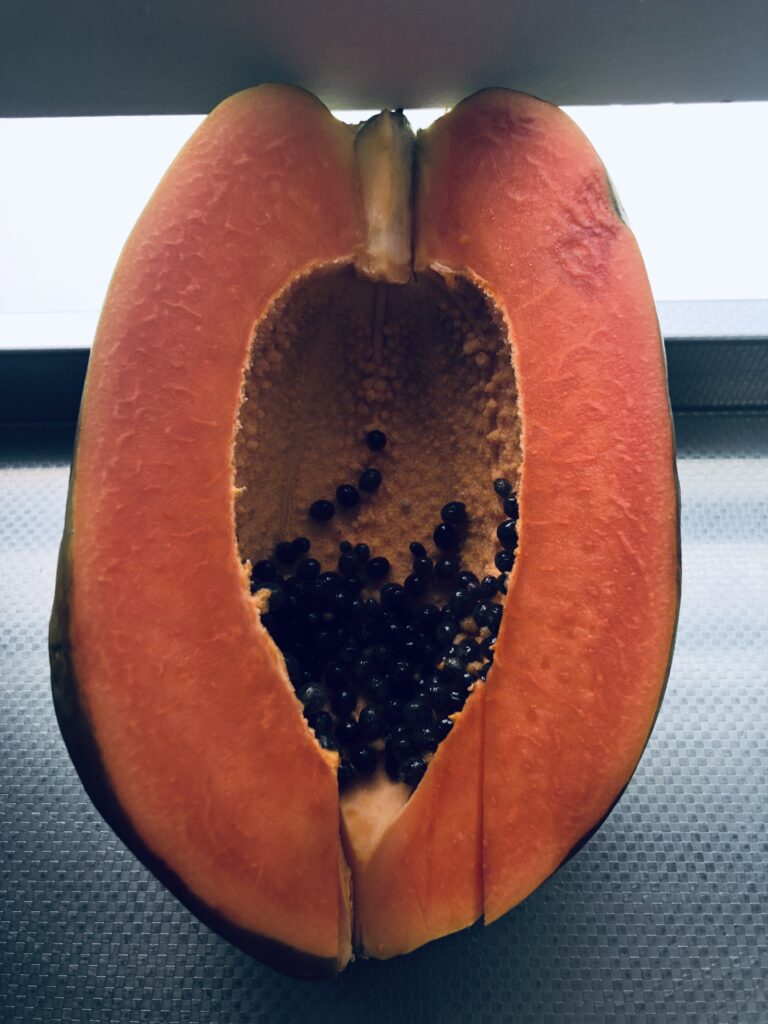
Sweet papayas are also great! From my own tree in Venezuela
Dear reader,
When writing about sweet potatoes, we should focus on more than just the (overhyped) concept of super foods. It’s neither the comparison between sweet potatoes and regular potatoes either. It’s also a story about pesticides conflicting with the great health contribution of peels.
Finding a balance between nutritious peels and harmful pesticides is not easy. Bio is best, but not always available or sometimes too expensive. It is difficult to make the right decision, because we do not know exactly how harmful pesticides are. Neither do not know how much the peels positively impact health.
Sweet potatoes a super food?
Sweet potatoes are a delicious vegetable and are often labeled as a super food. As written before, I am skeptical about the label of super food. Super food lacks a scientific definition and one can use it at will.
Super food sounds like superman, the guy who can solve everything. Well, super food can not and are not a direct way to health heaven. They offer a lot of excellent nutrients per unit which in itself is very important. Much food offers little good nutrients, like soppy white bread, white rice or the ever present ultra-processed food. All full of empty calories.
Sweet or regular potatoes?
It is often suggested that sweet potatoes are much better than regular potatoes. They are not much better, except for perhaps one cancer-fighting reason. This reason is not fully proven yet scientifically (more about this point below). There are differences between sweet and regular potatoes of course, but the health balance of each is not much different.
Sweet potatoes offer significantly more Vitamin A and fiber. Regular potatoes generally provide more potassium, iron, and B vitamins like B6. Both are nutritious root vegetables with similar carbs. Sweet potatoes lean sweeter and higher in sugar. Regular potatoes are starchier. Preparation heavily influences their glycemic impact.
Calories? Sweet potatoes and regular (white/Russet) potatoes have very similar calorie counts. The differences in calories are usually minimal, around 85–110 calories per 100 g raw. Frying drastically increases calories in both, while baking or boiling keeps them lower in calories. I always choose the oven without adding oil.
Resistant starches from potatoes have about 2.5 calories per gram, while regular starches contain about 4 calories per gram. As such, it may help to swap other starches for resistant starches if you’re looking to lose or maintain weight.
Both regular potatoes and sweet potatoes contain significant amounts of digestible (regular) starch, but they also provide resistant starch. This is a type of fiber that resists digestion and promotes gut health. Cooling cooked potatoes (including sweet potatoes) significantly increases their resistant starch content. Advice: always precook your (sweet) potato and let it cool before using it in the preparation of your meal.
The reasons I prefer sweet potatoes
First, the taste! The only drawback is figuring out how to make excellent French fries from sweet potatoes without frying them in oil. I do this in the oven, but with precooked regular potatoes it turns out well. Sweet potatoes, on the other hand, remain a challenge. One day it will work out fine; I am sure of it.
Second, there are indications that sweet potatoes have anti-cancer properties. While the majority of this research has been conducted in laboratory cell cultures and animal models, the findings are promising. Human clinical trials are needed to confirm these effects fully.
More about the peels
Why peels? Peels often contain more nutrients than the pulp. While exact percentages vary by produce, studies indicate that skins can contain 50% or more of certain nutrients. In some cases, they have over 300% more antioxidants than the pulp. So throwing away peels, as many of us do, means discarding a lot of essential nutrients.
Some examples of nutrients in peels
An apple with skin contains up to 332% more vitamin K than a peeled apple. The skin also has 142% more vitamin A. It contains 115% more vitamin C and 20% more calcium.
Removing the tomato skin can result in a loss of up to 80% of its lycopene.
The peel of a fresh carrot makes up only 11% of its weight. However, it contains 54% of its phenolic acids (antioxidants).
A citrus peel can contain twice as much vitamin C as the fruit’s flesh. • Boiled potato skin can contain up to 175% more vitamin C than a peeled potato. It holds 115% more potassium. Additionally, it contains 110% more magnesium and phosphorus.
Peels and pesticides
The problem, however, is that peels often contain pesticides. These can remain on many fruits and even penetrate the first few millimeters of the pulp. So peels contain high levels of nutrients, but they also carry a high concentration of pesticides.
Debates about pesticides are numerous and often contradict one another. Companies and farmers claim that there are safe levels of pesticides, or that some pesticides are safe for humans. I would like to believe this, but I do not.
To minimize exposure, it is recommended to wash all produce. However, washing is only half as efficient as peeling. As mentioned before, organic is the best option, but cost can be an important factor. Take kiwis. I love kiwis. In general, organic kiwis are twice as expensive as the regular ones. So, in the case of kiwis, I prefer to peel.
Produce with thin or no skin, like apples, strawberries, and peaches, tends to hold more pesticides in the peel. This is not surprising. Thick-skinned produce (avocados, bananas) are much less affected.
Blueberries and strawberries are among the worst when it comes to pesticide residues. Unlike kiwis, which at least can be peeled, this option does not exist with these berries. Conclusion: only eat blueberries and strawberries when you can buy them organic.
What Is Resistant Starch? And Why Is It So Important?
Resistant starch is a type of complex carbohydrate that resists digestion in the small intestine. It functions as a prebiotic fiber. It escapes digestion in the small intestine. The starch is fermented in the large intestine by gut bacteria. This fermentation produces short-chain fatty acids (SCFAs), such as butyrate, acetate, and propionate. These fatty acids can be absorbed and used by the body. They may support gut and metabolic health. Note that resistant starch provides energy mainly through SCFAs rather than glucose.
Carbohydrates can be simple or complex. Simple carbohydrates have a simple chemical structure and are digested quickly into glucose. They are common in foods like candy, white bread, and white rice.
Anti-cancer
The potential anti-cancer effects attributed to sweet potatoes arise from several bioactive compounds found in the plant. Anthocyanins are abundant in purple-fleshed varieties. They are powerful antioxidants. These antioxidants have shown anti-cancer effects in test-tube and animal studies.
These effects include inhibition of growth in cancer cells and promotion of apoptosis (programmed cell death). Beta-carotene gives orange-fleshed sweet potatoes their color. In the body, it is converted to vitamin A. Some epidemiological studies have associated it with a lower risk of certain cancers. Dietary fiber supports gut health and may reduce colorectal cancer risk. Sweet potatoes also contain sporamins (a storage protein) with antiproliferative effects in laboratory and animal studies. Polyphenols and flavonoids are found in leaves, stems, and the edible roots. They help modulate inflammatory pathways. They also inhibit cell-cycle progression and protect DNA. I wrote a blog on the many potentials of the 8.000 polyphenols. https://shakethehealthtree.com/index.php/2025/12/02/5-polyphenols-8000-interesting-plant-derived-compounds-health-project99/
In summary, my way forward:
Choose sweet potatoes, preferably with the peel and, when possible, organic.
Use cooking methods that preserve resistant starch (e.g., boil, then cool before reheating) to maximize resistant starch content.
Include them a few times per week, with oven-baked, oil-free French fries as a tasty option.
Enjoy life, enjoy your dinners with sweet potatoes and take care!
Rare winter landscape in Kijkduin, The Netherlands
Dear reader,
“Eat your vegetables.” “Get your vitamins and minerals.” “Do not forget your protein.” “Do not smoke”. These are common nutritional mantras that most of us already follow. But “get enough fiber”? This advice isn’t given very often; it should be, as there is a serious fiber deficiency worldwide. One culprit is modern living, which includes too much ultra-processed food. Many Americans eat less than half the fiber they need.
We often think of fiber as the food that relieves constipation. However, fiber is much more than that. It plays an important role in your overall health. Adequate fiber intake is one of the best ways to improve your health. Fiber impacts gut bacteria and aids in weight loss. It controls hunger cues and regulates blood sugar. Fiber is a fundamental part of a healthy diet. Therefore, it is fundamental to a healthy life.
As you will read in this blog, getting enough fiber is not easy. You need to eat whole grains, nuts, fruits, and vegetables. In my view, this is the better approach. I also place emphasis on including fermented foods (sauerkraut) and kefir in the diet.
What Is fiber? Fiber, also referred to as dietary fiber or “roughage,” is a plant nutrient. Fiber is a diverse group of carbohydrates that humans don’t digest in the small intestine; most of it is fermented in the colon.
Together with adequate fluid intake, fiber helps move food through the digestive tract and supports digestion.
Your body does not digest fiber with human enzymes. Most fiber passes through the small intestine largely undigested. It is then fermented by bacteria in the colon. In short, fiber is not absorbed in the small intestine; it travels through the gut largely intact.
Fiber functions to help regulate bowel movements, support healthy cholesterol and triglyceride levels, and promote colon health.
There are many types of fiber.
What is the best fiber? Fibers that are soluble, viscous, and fermentable seem to be particularly beneficial. Resistant starches are another healthy group of fibers. More about the meaning of soluble, viscous, and fermentable fibers below. It’s not necessary to worry too much—just eat a mix of whole grains, fruits, nuts, and vegetables. That should provide plenty of the best fibers. My approach to meeting daily fiber needs is described in detail at the end of this blog.
What does fiber have to do with feeding gut bacteria? You may wonder what your gut bacteria have to do with fiber. Just like any other organism, gut bacteria need to eat to get energy to survive and function. The issue is that most carbs, proteins, and fats are absorbed into the bloodstream early. They reach the large intestine with very little left for the gut flora. This is where fiber comes in.
As human cells can’t digest fiber, it reaches the large intestine relatively unchanged. Intestinal bacteria do have the enzymes to digest many of these fibers. This is the most important reason some dietary fibers are so essential for your health. These dietary fibers are also labeled fermentable fibers (see below). They feed the “good” bacteria in the intestine, functioning as prebiotics. A good example is sauerkraut or kefir. I wrote a blog about the wonderful impact a daily portion of sauerkraut has on my gut health. And we all know that a happy gut means a happy owner. https://shakethehealthtree.com/index.php/2025/09/25/3-sauerkraut-ein-sehr-gutes-probiotikum-health-project99/
How much do you need daily? The recommended intake is 38 grams for men and 25 grams for women. About one quarter should come from soluble fiber. However, most people consume around half of that, roughly 15–17 grams per day. As you age, you may need slightly less.
How much fiber per day is too much? Around 70 grams of fiber is considered excessive. Consuming that level or more regularly may lead to unwanted side effects. These include temporary bloating, gas, and abdominal discomfort.
When you increase your fiber intake, pay attention to the following: If you’re adding high-fiber foods to your diet, do so gradually over a few weeks and drink plenty of water, too. This helps prevent adverse effects such as bloating and gas. Increasing gradually means adding about 5–10 grams more fiber per week to allow your gut to adapt.
When I started increasing fermentable fiber (sauerkraut), I overdid it and felt uncomfortable for a few days. Aim for a mix of soluble and insoluble fiber from real foods (fruits, vegetables, legumes, whole grains, seeds). When bacteria ferment the fiber, they also produce gases. This is why high-fiber diets can cause flatulence and stomach discomfort in some people. These side effects usually go away with time as your body adjusts.
Sources of fiber: nuts and seeds. Legumes include beans, lentils, and peas. Whole grains such as brown rice and Ezekiel bread are good sources. Green vegetables like broccoli and other dark leafy greens also provide fiber. Cabbage and celery are included. Bran, specifically wheat bran and oat bran, is another source. Lastly, popcorn is a fiber-rich snack. The best whole-food sources of fermentable fibers are beans and legumes.
What are the benefits of sufficient fiber intake?
Improves heart health. Soluble fiber can lower LDL cholesterol and improve overall lipid profiles, which lowers heart disease risk.
1.Works against colon cancer. Fiber cleanses your colon, acting like a scrub brush. The scrub-brush effect helps clear bacteria and other buildup in your intestines and reduces your risk for colon cancer. This is supported by science. One reason may be that some types of fiber, such as the pectin in apples, may have antioxidant properties. The friendly bacteria produce nutrients for the body. They include short-chain fatty acids such as acetate, propionate, and butyrate. Butyrate appears to be crucial. These short-chain fatty acids can feed the cells in the colon. This leads to reduced gut inflammation. It also results in improvements in digestive disorders such as irritable bowel syndrome, Crohn’s disease, and ulcerative colitis.
2.Managing blood sugar: The body takes longer to break down high-fiber foods. This means glucose does not enter the bloodstream so quickly. This helps you maintain more consistent blood sugar.
3.Reducing cholesterol: Fiber in the digestive tract can help reduce the body’s cholesterol absorption. This is particularly true if you take statins. However, I would not use fiber supplements.
4.Promoting a healthy weight: High-fiber foods like fruits and vegetables tend to be lower in calories. In addition, fiber can slow digestion to help you feel fuller for longer.
5.Supports gut microbiome health: Many fibers act as prebiotics. They feed beneficial gut bacteria and produce short-chain fatty acids. This process supports colon health and boosts immune function. An estimated 100 trillion live bacteria reside in the human gut, mainly in the large intestine. These bacteria are crucial for optimal health. They play various roles related to weight management, blood sugar control, immunity, brain function, and mental health. They are so important that they are often referred to as the “forgotten organ.”
Because humans can’t digest fiber, it ends up reaching the large intestine mostly unchanged. Fermentable fiber comes into play: these are fibers that friendly gut bacteria can digest (ferment) and use as fuel. Fermentable fibers include pectins found in apples with skin, citrus fruits, berries, and peaches. Beta-glucans are in oats and barley. Inulin and oligofructose are present in chicory root, Jerusalem artichoke (sunchoke), onions, garlic, leeks, asparagus, artichokes, and dandelion greens.
6.Important for energy: When our gut bacteria break down fiber, they produce short-chain fatty acids (SCFAs). Humans can digest SCFAs for energy, and a symbiotic relationship between the digestive system and our colon’s microbiome ensues.
7.Managing stool: Fiber increases the weight and size of your stool and softens it. A bulky stool is easier to pass, decreasing your chance of constipation. If you have loose, watery stools, fiber may help solidify the stool because it absorbs water and adds bulk. It is not a process that your body can do without fiber.
8.Nanoplastics: recent studies indicate that fibers could be a good way to get rid of most nano plastics. Something to follow!
Can humans survive without fiber? Yes, fiber is non-essential. It is not a nutrient in the traditional sense, since we derive no nutrition from fiber—it simply passes through us. However, describing it as “just passing through” understates the importance of sufficient fiber intake. Italso serves as fuel for your gut bacteria.
Classifications of fiber Most people, including me, have a very basic understanding of fiber. We tend to lump it all into one category. However, not all fiber is created equal. Some types are highly beneficial, while others can cause digestive problems in some people. The three classifications are: Solubility (soluble vs insoluble), viscosity (viscous vs non-viscous), and fermentability (fermentable vs non-fermentable).
Soluble vs insoluble fiber
Soluble fiber dissolves in water to form a thick gel-like substance in the digestive tract. It supports healthy cholesterol levels. It also aids in maintaining balanced blood sugar.
Insoluble fiber does not dissolve in water and adds bulk to stool as it passes through the digestive tract. Its job is to promote regularity by increasing stool bulk and speeding transit through the gut. It does not ferment as much with bacteria in the colon.
Not all soluble fibers are highly viscous. Some dissolve without forming much gel; these are less chewy in the gut.
Why it matters: the gel from viscous soluble fiber slows gastric emptying. It also slows the rate at which sugars and fats are absorbed. This helps with blood sugar control and can lower LDL cholesterol. Visceral or viscous fibers are particularly associated with increased satiety and may support weight management.
All about resistant starches (a type of dietary fiber) Starches are the main type of carbohydrate in the diet. They are long chains of glucose molecules. These are found in potatoes, grains, and many other foods. When starch resists digestion in the small intestine, it is called resistant starch. It then behaves like soluble, fermentable fiber in the gut. For a note on fermented foods, see the related link.
Resistant starch has several health benefits. It supports digestive health, improves insulin sensitivity, helps regulate blood sugar, and may reduce appetite. Good sources include green bananas, certain legumes, and cooked-and-cooled potatoes and rice. Some starchy foods form larger amounts of resistant starch when they are cooled after cooking (e.g., white potatoes and white rice).
Thanks for reading. Please enjoy food, life, family and friends,
Robert, your health friend
Snow in Istanbul is not rare
Some notes on how I get my daily quantity of fiber
The whole fiber topic makes you realize how much the world and our diets have changed. Basically, you need to radically change your eating habits to get those 25 grams (women) or 38 grams (men) daily.
How to get there? Whole grains, fruits, vegetables and nuts; skip ultra processed food or white cereals. Please vary as different produce have different types of fiber. Also realize that some fruits or vegetables have a lot of sugar, like carrots (4.7 grams of sugar per 100 grams), beets (7 per 100) and even broccoli (1.7 per 100).
As I said, getting to the 38 grams (I pretend I am younger than 50) is not easy. I do not like beans. It is a shame because 100 grams of beans will get you 10 grams of fiber.
My liquid meals help a lot: the smoothie in the morning and the soup in the evening.
My morning smoothie contains 50 grams of broccoli (=1 gram), 100 grams of banana (=2,6 gram), 50 grams of oats (=5 grams), avocado 50 grams (=3,4 grams), 50 grams spinach (=1 gram). In total around 12 grams. This can be more when one adds for example berries, but these are low on fiber (1.2 grams per 50 grams).
My soup consists of carrots, beets, broccoli and pumpkin (broccoli 2.6 per 100, beets 2 per 100, carrots 2.8 per 100 0,5 pumpkin. Another 7.4 grams.
In addition, my lemon wonder drink. Every morning I make a few liters, using 2 lemons + 4 grams of ginger. I take the lemons whole, including peel, which has the most fibers. One lemon is 60 grams, the peels weighs 30 grams of which 10 % is fiber. So, another 3 grams of fiber per day; the other 3 grams are for my wife.
I also take some yogurt in the morning with home made granola including Chia seeds. Chia seeds are the best in fiber with 34,4 grams per 100 grams. I estimate I take some 10 grams of Chia seeds as part of my granola, so 3,4 grams. Plus some berries, 1 gram per 50 grams. In total 4.4 grams.
The readers sees that with this fiber rich approach I just make it to 27 grams. The remainder is nut snacking during the day, between 50 and 100 grams almonds (too much, I know). Almonds give you 13.4 grams of fiber per 100 grams.
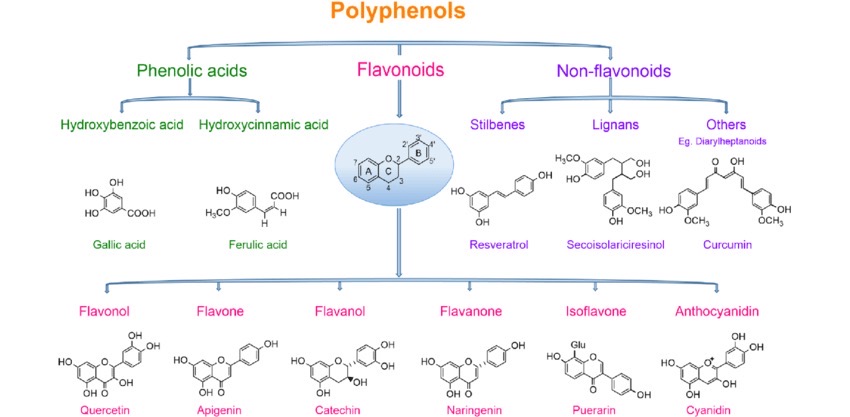
After encountering the term polyphenols many times, I finally wanted to know what they are. It turns out I already know quite a few—for example, Resveratrol and Curcumin. There are thousands of polyphenols, so it’s not surprising that we’re familiar with some of them. The general term flavanols probably rings a bell, too. They’re the main subgroup of polyphenols, with many described and researched compounds. Other major groups include stilbenes, lignans, and tannins.
Most of us believe the Mediterranean diet is healthy (I do, at least). An important reason is that it is rich in polyphenols.
What are polyphenols? In simple terms, polyphenols are plant-derived compounds. They aren’t one of the four fundamental biomolecule classes (carbohydrates, proteins, lipids, and nucleic acids). Rather, they’re a diverse family of plant secondary metabolites that can influence human biology.
They are plant compounds built around multiple phenol (aromatic ring with hydroxyl groups) units.
Polyphenols come from plants. There are about 8,000 polyphenols, of which roughly one-third are flavonoids. They give plants color and flavor and, in particular, help protect and defend them.
Some of these defense functions include UV protection through absorption of UV light. They also include strengthening of cell walls and vascular tissues. Additionally, there is regulation of growth and development through interactions with plant hormones and reproduction. In fruits and seeds, polyphenols influence taste, color, and perceived freshness.
Examples: Quercetin (onions, apples), Epigallocatechin gallate (EGCG) in green tea, Anthocyanins (blue and purple berries), Resveratrol (red grape skin, wine), Curcumin (turmeric), Hydroxytyrosol (extra virgin olive oil).
What do they do for the human body?
Polyphenols are not essential nutrients like amino acids. However, they are known to exert substantial biological activity in the human body. This activity can protect cells from damage and includes antioxidant, anti-inflammatory, and potentially disease-protective effects. They may be linked to a lower risk of certain chronic diseases (e.g., cardiovascular disease, metabolic disorders, some neurodegenerative conditions) in studies, but results are mixed and often depend on dose and context. Given their vast diversity (there are 8000 polyphenols!) and the many unknowns many, many more studies are needed.
It makes sense to me that compounds that protect plants might also benefit humans. We humans, at least most of us, are not lettuce or apples, but we are living beings nonetheless.
Treat health influencers with caution. As I said health influencers love polyphenols. We consumers have to be careful of course. Many of the health claims of polyphenols are not proven or they have only limited effect.
The other day I wrote about dark chocolate. It has a too positive health claim because of flavanols, which are a subcategory of polyphenols. I also wrote about Resveratrol and pterostilbene. They are both polyphenols. The main conclusion is that taking Resveratrol is not worth the money and effort, but Pterostilbene is.
What do polyphenols do for the brain?
Some health claims about polyphenols are intriguing, especially regarding brain health. While intriguing, these brain-related effects require more robust human evidence before drawing firm conclusions.
For example, Curcumin from turmeric is often cited as contributing to better brain health. Polyphenols are a broad class of plant-derived compounds, and brain-related claims vary widely by specific compound.
This topic could fill a book. Here are the main proposed brain benefits often discussed. There is protection against neuroinflammation linked to aging and neurodegenerative diseases. It may cause a potential reduction of oxidative stress in the brain. It influences brain-derived neurotrophic factor (BDNF). There are improvements in synaptic plasticity and neuronal survival signaling. It also leads to improvements in mitochondrial function. There could be reductions in mitochondrial dysfunction, which is a hallmark of aging and neurodegeneration.
Some notes: BDNF plays an important role in healthy aging.
From where do you get your polyphenols?
The sources are the right ones and not difficult to obtain: fruits, vegetables, tea, coffee, cocoa, wine, olive oil, nuts and whole grains. You will not find polyphenols in ultra processed food.
One additional remark on coffee: caffeine is not a polyphenol (it is a purine alkaloid). Coffee does have many polyphenols, such as chlorogenic acid, and are often highlighted for their antioxidant properties
Warning
One warning: the fact that the source is healthy food, does not mean that polyphenols are always beneficial. They can interact with medicines or can cause certain physical reactions. As so much is still unknown about polyphenols it is preferable to get them through food, not through supplements.
Bioavailability and Metabolism Bioavailability and metabolism are important considerations. In the end, if only a small fraction of a compound reaches the bloodstream, it will have limited effect.
Many polyphenols are poorly absorbed, with only a few percent entering systemic circulation. Fortunately, the original (parent) compounds are metabolized by the gut microbiota. The liver also metabolizes them into metabolites. These metabolites can be biologically active.
Interaction between different compounds (vitamins, hormones, amino acids, and polyphenols)
As mentioned, polyphenols are part of an integrated network. The main functions of these classes are:
Nutrients (vitamins and minerals) and amino acids supply the building blocks and cofactors for metabolism.
Hormones regulate how the body uses these building blocks and respond to energy and nutrient status.
Polyphenols influence enzyme activity, signaling processes, and the metabolism of hormones and nutrients—often via the gut microbiome and redox signaling.
Experts note that mounting evidence highlights the vital interplay between immunity and metabolism. This interplay occurs in a range of immunometabolic disorders. These disorders include autoimmune and non-autoimmune conditions. The immune system modulates (=regulates) cellular metabolism in organs such as the brain, pancreas, and adipose (=fat) tissue. It senses fluctuations in the local nutrient environment. This process shapes metabolic pathways that influence pro- or anti-inflammatory phenotypes. Nutritional status supports immune function. However, we are only beginning to understand how individual nutrients or their combinations (immunonutrients) might guide immune cells. They could steer these cells toward a less inflamed, tolerogenic state.
This last paragraph is a bit on the technical side. Perhaps the best summary is that polyphenols are abundant in Mediterranean foods. This sums it up pretty well I would say.
The main takeaway from this blog is that a small amount of unpasteurized and uncooked sauerkraut daily can replace a probiotic pill.
Sometimes the best food can be cheap. Today I will discuss sauerkraut, a true superfood of the ages, in particular because as a fermented product it has great probiotic qualities. 50 grams per day of sauerkraut could replace the strongest probiotic supplements available (up to 50 bln CFU units).
I am skeptical about the term superfood, as it can be misleading in the sense that no food is a cure for everything. Neither is sauerkraut. Sauerkraut “only” offers, like other superfood, a lot of quality ingredients per gram contrary to for example white bread or a Coke. Eating a superfood is a great step forward towards a more healthy life as most of the food in super markets is of low quality, doing more harm than good.
1.The favorite dish in my youth was “zuurkool stamppot” mashed potatoes with cooked sauerkraut, sauce, sausage and apple sauce. I loved it. Still do, but now with bio chicken instead of a highly processed sausage. Unfortunately, when eating sauerkraut like this, it takes away most of its advantages, in particular its probiotic qualities.
2.To profit from the benefits of Sauerkraut you indeed have to eat it raw. Pasteurized or shelf-stable varieties often lose these live cultures.
3. Its advantages
Many raw, refrigerated sauerkraut contains live lactic acid bacteria that can support gut health and digestion. How much? See below, last paragraphs.
Good source of fiber, vitamin C, and vitamin K (and some B vitamins). It also provides minerals like potassium.
Low in calories and highly flavorful: Adds tangy, crunchy texture to meals without many calories, which can aid in satiety. It is great in salad and easy to combine with a lot of food.
Versatile and inexpensive: Easy to incorporate into many dishes and pairs well with meat, fish, and vegetables.
You could of course lightly heat or sauté sauerkraut to soften texture and mellow acidity, but keep a bit of crunch if you want the probiotic benefits to remain more intact. Cooking for long periods reduces probiotic viability
You can cook it slightly, but this will already diminish its probiotic capabilities. After opening, refrigerate and use within a reasonable time (often a few weeks)
4. Disadvantages and cautions
High sodium content: A typical serving can be quite salty, which isn’t ideal for people watching sodium intake (high blood pressure, kidney issues, etc.). Rinsing can reduce sodium but also lowers some of the salt-brine flavor and may reduce some probiotic activity. The package we use indicates 1.5 gram sodium per 100 gram of Sauerkraut, which is 25 % of the DRA. We eat it as a side dish, around 50 grams only.
Not all sauerkraut is probiotic: Many jars are pasteurized or heat-treated, which kills the beneficial bacteria. Look for labels that say unpasteurized, live cultures, or are kept refrigerated.
Some people with histamine intolerance or gut sensitivities may react to fermented foods and experience GI symptoms, headaches, or skin issues.
Fermented foods can cause gas or discomfort for some people with irritable bowel syndrome (IBO) or small intestinal bacterial overgrowth (SIBO). Start with small amounts to test tolerance.
The important factor is the strain and the evidence for that strain and that dose. Different strains have different effects, and not all probiotics work the same way for everyone.
5. Probiotics/quantities/sauerkraut
For probiotics doses are usually given in CFU (colony forming units) per day. There is no official RDA, but many studies and products use ranges like 1–10 billion CFU per day for general use, with higher doses (10–50+ billion CFU) used for specific conditions.
Sauerkraut can meet these doses, because fermented foods (like unpasteurized sauerkraut) can contribute live bacteria, but the CFU are variable and not standardized.
A rough, literature-based range for live probiotics in unpasteurized sauerkraut per gram is about: 10^7 to 10^9 CFU per gram (10 million to 1 billion CFU/g). Per 100 grams of sauerkraut this translates to roughly 1 billion to 100 billion CFU per 100 g.
The fresher the sauerkraut the more the CFU count will be in the higher range towards the 1 bln CFU per gram. Pasteurized or heat-treated kraut will have far fewer or no live bacteria.
Although it is clear that there is wide variability depending on the specific product, fermentation stage, salt concentration, storage temperature, and time since fermentation, it is also clear that with fresh, unpasteurized sauerkraut you will have a substantial intake of probiotics. Not the same everyday, that is true, but life should save some surprises for you.
Enjoy your sauerkraut and live a happy, healthy and long life,
Zinc is a trace mineral that is involved in hundreds of enzymes and proteins in your body. It is essential for many processes, but it is not stored in your body in large amounts. You need to top it up regularly. Daily doses required are generally limited (8–11 mg/day), but a diet alone is often not sufficient, especially (but not exclusively) if you are vegetarian. For context, see the Trace minerals section below.
1.My takeaway is to add a modest zinc supplement to your daily regime, in the order of magnitude of 10 mg. The official line of health sites is that most people will meet their trace-mineral needs with a balanced diet, but that very much depends on your definition of “balanced.” A sufficient-zinc diet should include red meat (which many people do not eat anymore) or oysters (which very few people eat). Those who eat mainly vegetables, fruits, and grains run a risk of not getting enough zinc.
2.Challenge
For those focusing on vegetables, carbohydrates, and poultry, it will be a challenge to get enough zinc. One can do a zinc test, of course, but since the upper intake level for zinc is high, a low-dose zinc supplement will not hurt (and remember that even the most efficient zinc supplement, for example 10 mg, will in practice only contribute about 5 mg toward your daily zinc needs).
3.Trace minerals
Let me first refresh your knowledge on trace minerals. Your body needs them in very limited quantities, but they’re essential for many functions. They differ from major minerals (like calcium and magnesium) because of the small amounts required. Main examples: iron, copper, zinc, and manganese (all measured in mg/day) and iodine, selenium, chromium, and molybdenum (all measured in micrograms/day). Deficiencies in each of them cause problems, including zinc’s effects on the immune system and growth.
4.What happens if you do not have enough zinc?
• Slower growth in children; potential delays in puberty. • Immune system problems: more frequent or longer infections; poorer response to vaccines. • Slower healing of cuts and injuries. • Skin and hair: dermatitis, itchy or scaly skin; hair loss. • Reduced appetite; possible mood changes or irritability. • Diminished ability to taste or smell (hypogeusia/ageusia). • Digestive issues: diarrhea may occur in some cases. • Several hormonal pathways (e.g., insulin, growth hormone) will not work well.
5.Who is at risk for zinc deficiency?
• Vegetarian diets can put you at risk of zinc deficiency because such diets often include phytates that reduce zinc absorption (phytates are discussed later under Phytates). • People with very poor diets or absorption problems (malnutrition, eating disorders, Crohn’s disease or celiac disease, and other malabsorption conditions). • Older adults, pregnant or lactating people with increased needs. • Heavy alcohol users and people with certain chronic illnesses.
6.What happens if you get too much zinc?
• Short-term (acute) effects: nausea, vomiting, stomach cramps, diarrhea, abdominal pain, headaches, a metallic taste, and sometimes dizziness. • Long-term (chronic) effects: copper deficiency (which can cause anemia, low white blood cell counts, and nerve/hematologic problems), possible immune dysfunction, and potential impacts on blood lipids and mineral balance. • Zinc can interfere with the absorption of other minerals (notably copper and iron) and can interact with some medications and antibiotics (e.g., tetracyclines and fluoroquinolones), reducing their effectiveness if taken together. The good news is that it is not easy to get too much zinc, as the upper intake levels are quite high.
7.How much zinc do you need?
Based on US and EU guidelines • Infants birth to 6 months: about 2 mg/day; 7–12 months: about 3 mg/day. • Children and teens: increasing with age; for example, around 4–8 mg/day in early childhood, rising to about 8–11 mg/day for older boys and about 8–9 mg/day for girls. • Adults: men about 11 mg/day, women about 8 mg/day; during pregnancy about 11 mg/day and during lactation about 12 mg/day. •
8.Upper intake levels: In the US, the tolerable upper intake level (UL) for zinc is 40 mg/day for adults. In the EU, EFSA uses a lower UL for adults (about 25 mg/day). This is important to know because it signals that even if you do not need your zinc supplement, it will not hurt you as long as you stay below the UL in total.
9.Food and zinc?
As always, rough estimates are provided. The internet can flood you with many more details.
Meat, poultry, and seafood are heme zinc and generally better absorbed than plant sources. • Oysters: about 74 mg zinc per 100 g; absorption roughly 20–40% • Beef steak (cooked, lean): about 4–5 mg/100 g; absorption roughly 25–40% • Pork (cooked): about 2–3 mg/100 g; absorption roughly 15–35% • Chicken (white meat, cooked): around 1–2 mg/100 g; absorption roughly 15–30% • Salmon or sardines (cooked): about 1–2 mg/100 g; absorption roughly 20–40%
Do the math. Take chicken. In order to get 10 mg of effective zinc, one would need (best scenario) over 1.5 kg of chicken meat per day.
10.Plant-based sources
• Spinach (cooked): about 0.8–1 mg/100 g; absorption roughly 5–15% • Beans (kidney, cooked): about 2–3 mg/100 g; absorption roughly 10–20% • Tofu (firm, depending on fortification): about 1–3 mg/100 g; absorption roughly 5–15% • Quinoa (cooked): about 1–2 mg/100 g; absorption roughly 10–20% • Pumpkin seeds (roasted): about 7–8 mg/100 g; absorption roughly 10–25% • Sesame seeds (raw): about 9–10 mg/100 g; absorption roughly 10–20% • Fortified cereals (varies by product): often 5–20 mg/100 g; absorption roughly 10–25%
Do the math here as well. In order to get 10 mg of absorbed zinc from plant sources, one would need almost 2 kilograms of tofu daily. Not feasible, at least not for me (and I do not like tofu that much anyhow).
Only a few fruits have around 1 mg/100 g of zinc, the others much less. Plus a very low absorption rate.
• Dried apricots: about 1–2 mg/100 g; absorption roughly 5–15% • Raisins: about 0.5–2 mg/100 g; absorption roughly 5–15% • Prunes: about 0.5–1 mg/100 g; absorption roughly 5–15%
11.Practical tips to maximize zinc absorption
If your diet is rich in phytates (lots of unprocessed grains and legumes, see explanatory note at the bottom of this blog) and you’re concerned about zinc or iron, consider pairing meals with phytate-reducing prep (soaking/fermenting) and including some animal protein or vitamin C-rich foods to help absorption.
Another option is to oak, sprout, or ferment grains and legumes to reduce phytates that inhibit zinc absorption.
Avoid taking large amounts of calcium or iron at the same time as a zinc-rich meal, as they can compete for absorption.
12.The several half-lives of zinc
• If you’re thinking in terms of half-life for planning supplements or interpreting zinc status, focus on the fact that there are multiple pools with different kinetics. Short-term changes (days) mainly reflect plasma zinc and gut absorption changes; longer-term status reflects tissue stores and overall balance over weeks to months, including bone and other long-term stores. They turn over slowly and are not quickly altered by daily dietary changes or short-term supplementation. For a practical planning approach, see the Absorption and Bioavailability section above.
13.What kind of supplement and how to use it?
There are many different zinc supplements around. Some (like the one I used to take from Kruidvat) are zinc oxide, which has low absorption and is one of the many brands without generally recognized quality controls. In short, for a few years I have been taking a basically useless supplement.
So when choosing a zinc supplement, start with 1) zinc citrate or a chelated form. The absorption rate of zinc citrate is about 30%, so you would need roughly 33 mg ingested daily to reach about 10 mg effective (i.e., doing its zinc work!). Chelated forms (zinc bisglycinate/glycinate and zinc picolinate) are even better with a 40–45% absorption rate. 2) Make sure it is GMP (Good Manufacturing Practice) produced or produced in GMP-compliant facilities. 3) If you’re aiming to maximize absorption, take zinc with a meal that contains protein, and avoid taking it simultaneously with large doses of calcium or iron. A zinc supplement strengthened with vitamine C does not hurt.
14.GMP: general advice
I know it is cumbersome to look for supplements with a GMP label, but trust me, it is worth it. For every supplement there are some GMP-certified producers; just search the internet. Be careful, most are not and do not go for the 1+1 offers from the regular chains unless these products meet all the criteria, like GMP.
15.There is more beyond GMP to look for
Check also for Third-party verification: USP Verified, NSF Certified for Sport, Informed-Choice, or similar certifications add independent testing for potency and contaminants.
Batch-specific COA (certificate of analysis): a lab-tested result showing exact zinc content per serving and purity/heavy-metal testing for the current batch.
Clear labeling: exact zinc dose per capsule/tablet, other ingredients, and expiry date. Reputable brand with transparent sourcing and manufacturing information. Avoid marketing claims that only say “GMP” without evidence or documentation.
Testing to see if you have a zinc deficiency
Blood tests (serum/plasma zinc) are commonly used but aren’t perfect indicators on their own, especially during periods of inflammation, like when you have an infection. Clinicians may consider dietary history, symptoms, and sometimes other labs.
Thanks for reading, take care and live a happy, healthy and long life,
Robert, your health friend
Going to Paris (again)
Explanatory note on Phytates
Phytates (also called phytic acid) Phytates are naturally occurring compounds found in many plant foods. They are phosphorus-containing compounds stored in seeds, grains, legumes, nuts, and some seeds. The main practical concern of phytates is related to mineral absorption, especially if you rely heavily on plant-based sources. Phytates can be mitigated by soaking, sprouting, or fermenting foods and by pairing plant sources with animal proteins or vitamin C-rich foods to aid absorption.