3A. DARK CHOCOLATE, ANOTHER MYTH (PARTLY) SCATTERED (health project99+)

Elephants in the Okavango delta

Dear reader, 

Do you sometimes have that feeling that “they” are taking away everything from you? Especially the things you like so much suddenly seem to be bad for your health. In short, are they robbing you of your last pleasures? I am sure you recognize this sentiment. 

At the moment, I feel a bit down as well. After years of diligently eating dark chocolate because it was supposedly so beneficial (and delicious), I have come to the conclusion that I should stop. Dark chocolate: farewell. Your health benefits are limited, and your negative impact on my health can be substantial. 

1.Red wine revisited 

Do you remember those discussions about red wine? One or two glasses a day were said to be good for your health because red wine contains resveratrol. Yet after years of serious drinking, many people learned that you would need around 100 glasses of red wine daily for resveratrol to have a meaningful impact. And later, while studying resveratrol, I learned that resveratrol has a short half-life and that pterostilbene may be a better option https://shakethehealthtree.com/index.php/2025/05/16/21-stay-healthy-100-glasses-of-red-wine-daily-or-resveratrol-pterostilbenehealth-project99/. I wrote a blog about this.

2.Okay, back to dark chocolate. Its main claim to health fame is that it is one of the few foods rich in flavanols. The other two are green tea and cocoa powder. Fewer flavanols are found in hazelnuts and red wine. Others that are often mentioned but contain very little flavanols are grapes, apples, blueberries, strawberries, and pears.

One oz (28 grams) of dark chocolate (70% cacao) provides 150–400 mg of total flavanols, a quantity that according to some could be enough. There are however two problems with dark chocolate: its saturated fat content and the way it is processed. If it is processed using the “Dutch process”, it can lose up to 90% of its flavanol content.

3.Summary 

Many of these beneficial flavanols are removed during the majority of manufacturing of dark chocolate. This means that dark chocolate processed in that way does not contain enough of these plant chemicals to be considered a health food. Chocolate also contains a lot of saturated fat and sugar. If you want your flavanols, go for green tea.

4. First, what are flavanols?

Flavanols are a subclass of flavonoids, a large family of plant compounds with antioxidant activity. They include flavan-3-ols (such as catechin and epicatechin) and their polymeric derivatives known as proanthocyanidins; some sources also mention related forms such as flavan-4-ols, isoflavan-4-ols, and flavan-3,4-ols. In total, many flavanol derivatives have been identified.

Flavanols are associated with health benefits in many studies.

You will often read the term monomeric flavanols. These are single-unit plant compounds and are the basic building blocks for larger, linked molecules called oligomeric flavanols. Some well-known monomeric flavanols are epicatechin, catechin, and EGCG (epigallocatechin gallate). These are among the flavanols most studied.

5.What are the reputed benefits of flavanols?

They act as antioxidants and may support cardiovascular health, reduce inflammation, and confer other health benefits in some studies. However, results in humans are mixed and often depend on dose, the specific flavanol form, bioavailability, and overall diet. My conclusion: worth the try.

Antioxidants protect cells from damage caused by free radicals—unstable molecules produced during normal metabolism.

6.Daily Recommended Quantity

There are no scientifically determined daily quantities. In general, the often-mentioned aim is 200–500 mg/day of total flavanols, but see caveats below.

One ounce (28 grams) of dark chocolate (70% cacao) provides 150–400 mg of total flavanols. Most people—myself included—do not stop at just 28 grams, but eat half or a whole bar. One cup of green tea contains about 150–300 mg of total flavanols (EGCG ~80–150 mg). Unsweetened cocoa powder (5 g) provides about 30–70 mg of total flavanols.

7.The main problem with dark chocolate is saturated fat.

Only those with a lot of discipline limit themselves to just one or two pieces. One or two pieces already account for about a quarter to one third of the daily recommended amount of saturated fat. Imagine what happens if you eat a 100 g bar of dark chocolate with about 80% cacao. Such a bar contains 35–45 g of total fat, of which saturated fat is 20–25 g, roughly the maximum recommended for women (20 g) and men (30 g) per day.

Assuming that saturated fat is not good for you (which I do), then having dark chocolate for its flavanol health component may not be worth it, in spite of all the claims by chocolate producers. This is especially true because many dark chocolate bars are processed in ways that cause most of the potential beneficial flavanols to disappear.

8.Two ways to process dark chocolate: the Dutch method (“Dutching”) and the other (much better), non-alkalized approach

In most dark chocolate bars, Dutch processing is applied, especially in cheaper ones. This is also called alkalization, which reduces the acidity of dark chocolate. Producers like it because it mellow‘s the acidity and deepens the brown color. Generally, more expensive brands use non-alkalized (natural) cocoa to preserve natural acidity and more complex flavors. The main downside of the Dutch process is the reduction of polyphenols and antioxidants, such as flavanols, which can be reduced by up to 90%. 

A challenge is that Dutch-processed cocoa, alkalized cocoa, or Dutched cocoa is often not clearly labeled. You may also see terms such as “Dutch-processed cocoa,” “alkalized cocoa,” or “Dutched cocoa,” or labels like “cocoa processed without alkali” or “natural cocoa.”  

On a different note, I wonder why the English language has so many negative expressions with the word Dutch included (perhaps because we destroyed their fleet in London in the 17e century).

9.Bioavailability 

Looking at the required dose is one thing, but bioavailability is what matters for each supplement. What is its half-life? How much of the flavanol intake actually reaches the bloodstream and is available to exert effects?

For flavanols, the issue of bioavailability is complex and highly variable, and therefore difficult to generalize, but for practical purposes, flavanol bioavailability is low, often only a few percent. For example, the well-known monomeric flavanols catechin and epicatechin show peak plasma levels within 1–3 hours after ingestion and are eliminated within a few hours.

Larger flavanols, such as proanthocyanidins (condensed tannins; polymers), are poorly absorbed in the small intestine. They are largely broken down by gut microbes in the colon into smaller metabolites that can be absorbed.

10.Can you take flavanols as supplements?

Yes. Flavanols can be taken as pills or supplements. The three most well-known types are: 1) Green tea extract or EGCG-heavy supplements (rich in monomeric flavanols such as catechin and epicatechin, and EGCG); 2) Cocoa flavanol extracts (rich in total cocoa flavanols); 3) Grape seed and pomegranate extracts (rich in proanthocyanidins and related metabolites). 

11.However, there are some important caveats. 

When you take a supplement always!! be aware of the general issue of quality. Only buy from reputable brands and always look for Good Manufacturing Practice (GMP) certification. 

And realize that these beneficial flavanols can also have some drawbacks, especially if you take too much. Safety-wise four points stand out.

A.Liver safety: high-dose green tea extract has been linked to rare cases of liver injury. If you have liver disease, start low and consult with a clinician. 

B.Caffeine content: many green tea extracts contain caffeine or related stimulants; this can affect sleep, anxiety, and heart rate in sensitive individuals. 

C.Drug interactions: they may interact with anticoagulants/antiplatelets and other medications; discuss with your doctor if you’re on prescription meds. 

D.Iron absorption: tannins can modestly reduce non-heme iron absorption; if you’re iron-deficient, consider taking flavanol supplements away from iron-rich meals. I wrote a blog about the importance of iron. https://shakethehealthtree.com/index.php/2025/08/14/21-to-iron-or-not-healthproject99/

Thank you for reading and my apologies for my negative conclusions about dark chocolate.

Take care and live a happy and healthy life,

Robert, your health friend

In the desert of Namibia

23. GUT HEALTH: FIRST THINGS TO KNOW (health project99+)

A party bus in Berlin

Dear reader,

For your overall health and wellbeing it is difficult to overstate the importance of gut health. When your gut isn’t well, you may experience short‑term discomfort. Regular discomfort can have longer‑term effects.

The main determinant of gut health is what you eat and drink, which is good news because it’s something you can influence. In this blog some tips that helped me a lot.

What has been beneficial for my gut?

  • Avoiding certain foods, such as sugar, refined starches and above all ultra processed foods. When I have a weak moment and eat cake or cookies in one sitting, I immediately notice a negative impact on my gut.
  • Focusing on healthy and fiber‑rich foods.
  • I aim for three servings of fermented foods daily: as part of breakfast unsweetened Greek yogurt or plain quark and a glass of kefir, and in the afternoon a daily spoonful of raw cabbage (or sauerkraut/kimchi).

This blog is not medical advice. There are many potential gut issues, and factors such as age, medications, or genetics can also matter. I describe what works for me. In light of all I read in medical sources my approach should help many people as well. The daily intake of fermented foods has been one of my best new health habits over the past year. Earlier I wrote a blog on sauerkraut “ein sehr gutes probiotikum”.

https://shakethehealthtree.com/index.php/2025/09/25/3-sauerkraut-ein-sehr-gutes-probiotikum-health-project99/

Is the gut an organ?

Yes. In anatomical terms, the “gut” refers to the gastrointestinal tract (the esophagus, stomach, small intestine, and large intestine), which is an organ system made up of multiple organs.

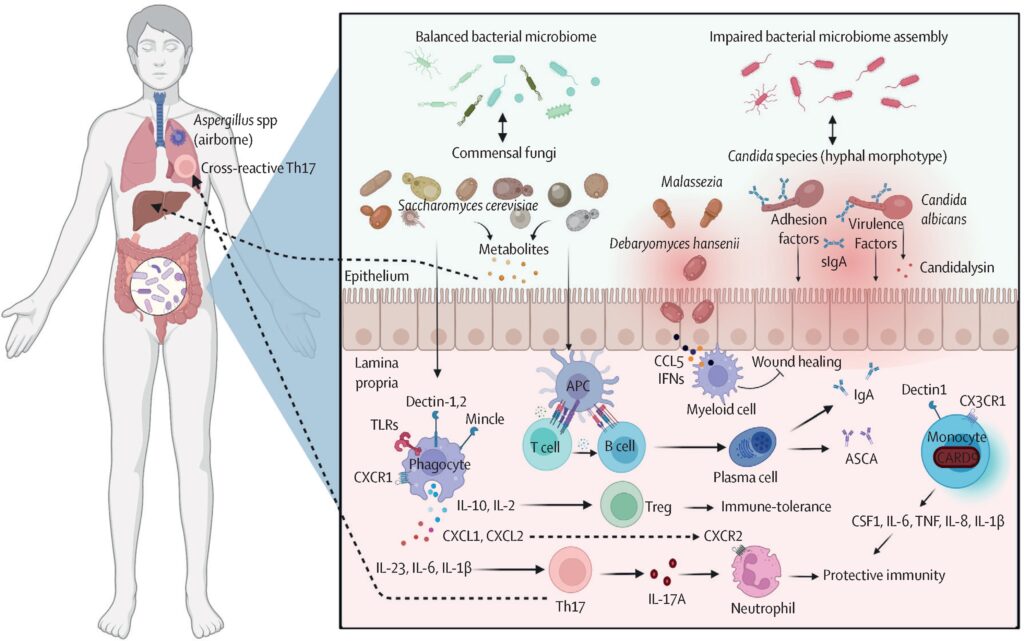
Just to show how many different microorganisms there are in your gut microbiome

And what is the notorious gut microbiome? 

The gut microbiome is not an anatomical organ. It is a vast, dynamic ecosystem of about 100 trillion microorganisms—including bacteria, archaea, viruses, and fungi—primarily inhabiting the large intestine. Its composition and function are shaped by diet, genetics, antibiotics, and the environment, with complex microbe–microbe interactions giving rise to emergent properties that function like an additional metabolic organ. When well diverse and balanced, it supports health; when disrupted (dysbiosis), it can contribute to inflammatory, metabolic, and neuropsychiatric conditions.

The gut microbiome closely coexists with the human host, helping break down complex carbohydrates, synthesize vitamins, strengthen the gut barrier, and “educate” the immune system, while producing metabolites such as short-chain fatty acids that influence metabolism and inflammation. What are metabolites? They are small molecules produced or consumed during metabolism by living organisms (including gut microbes).

In relation to the gut microbiome, what are probiotics?

Probiotics are live microorganisms that, when consumed in adequate amounts, may offer health benefits by supporting a balanced gut microbiome, improving barrier function, and modulating the immune system. Many people use probiotics to prevent antibiotic-associated diarrhea. Importantly, the effects are highly strain- and condition-specific, so benefits seen with one probiotic do not necessarily apply to another.

When considering probiotics, focus on strain- and condition-specific evidence, not general “probiotic” claims. Choose products with well-documented strains and labeled doses for your target outcome, and be mindful that more CFUs are not always better. Also be realistic. Your gut microbiome counts 100 trillion microorganisms and most probiotics 10 billion CFU’s, which is a modest 0.01%.

Prebiotic examples (feed for gut bacteria): onions, garlic, bananas, oats, apples, flaxseeds. Note: these are not probiotics themselves; they are foods that feed beneficial microbes. If you want examples of probiotic foods, refer to unsweetened yogurt, kefir, sauerkraut, kimchi, and other fermented foods.

How to ruin your gut microbiome (1)

Sugar, refined starches, processed and ultra‑processed foods, artificial sweeteners, E‑numbers, and saturated fat can shape the gut microbiome in a negative way. They can alter the substrates available to microbes in the long term, influence bile acid circulation, and increase inflammation. Poor dietary choices can lower microbial diversity.

The overall effects depend heavily on the broader dietary pattern rather than a single nutrient, and on individual factors such as baseline microbiome, genetics, age, and medications. Disruption of the microbiome has been linked to diseases including inflammatory bowel disease (IBD), obesity, allergic disorders and asthma, type 2 diabetes, cardiovascular disease, and autoimmune disorders.

What your microbiome needs

A diet rich in diverse fibers (vegetables, fruits, legumes, and whole grains), resistant starch, and fermented foods tends to boost SCFA‑producing bacteria and strengthen gut barrier function. Omega‑3 fatty acids and polyphenols may also support a healthier microbiome. Consider adding probiotic foods to your diet and don’t forget fermented items. Aim to support a healthier dialogue between the gut and brain, though individual responses vary.

Gut–brain axis

You have heard about the gut–brain axis. What happens in your gut impacts your brain and mood. The gut–brain axis is a dynamic bidirectional communication network linking the central nervous system with the gastrointestinal system, integrating neural, immune, and endocrine signaling.

In practice, the axis helps govern mood, stress reactivity, cognition, and pain perception, while psychological states and stress can alter gut motility, permeability, and microbial composition, creating a feedback loop.

The microbiota sits at the heart of this axis, shaping brain function by producing and modulating neuroactive compounds such as short‑chain fatty acids. Signals travel via neural routes (notably the vagus nerve), immune mediators, and circulating metabolites that can affect brain cells, with gut barrier integrity and systemic inflammation playing key roles. Because this signaling is highly context‑dependent, factors like diet, antibiotics, stress, and aging can markedly influence the axis.

How to Ruin Your Gut Microbiome (2)

The impact of medicines can be substantial. It has long been known that antibiotics affect the gut microbiome, killing both beneficial and pathogenic bacteria. Researchers have found that also longer durations of other medication use and taking more medications are associated with greater disruption of the microbiome. In a recent study, 167 of 186 drugs affected the microbiome in some way, with 78 showing long-term effects. The longer people used medications and the more drugs they took, the greater the disruption.

Multiple drugs can interact to produce a larger impact on the microbiome; among individual drugs, benzodiazepines appear to have the greatest negative effect. The implications matter because microbiome disruption is linked to inflammatory bowel disease (IBD), obesity, Type 2 diabetes, cardiovascular disease, and autoimmune disorders. A healthy microbiome is a stable, diverse community with high microbial gene richness that lives in balance with its human host.

Bloating and floating

A healthy gut microbiome and normal transit usually manage gas without distress, but imbalances or intolerances can amplify symptoms. Bloating and gas are common signals from your gut that reflect how your digestive system and its microbial residents are handling food.

Most gas comes from bacterial fermentation of undigested carbohydrates in the colon, producing hydrogen, methane, carbon dioxide, and other compounds. The amount and composition of gas depend on what you eat—especially fiber and fermentable carbohydrates (FODMAPs)—your gut microbiome, and how quickly food moves through your gut.

In health terms, bloating and gas can be linked to specific conditions or dietary intolerances, such as irritable bowel syndrome (IBS), small intestinal bacterial overgrowth (SIBO), lactose or fructose intolerance, or celiac disease.

Red flags and the doctor

Red flags to seek medical evaluation include weight loss, blood in stool, severe or persistent pain, vomiting, fever, or new symptoms after age 50. If bloating or gas is persistent or bothersome, a clinician can help identify triggers (often via a symptom diary), assess for intolerances or underlying conditions, and discuss targeted dietary or therapeutic options. 

Thanks for reading, mind your diet and enjoy life,

Robert, your health friend,

Art from Venezuela

30.CARTILAGE AND OSTEOARTHRITIS: SOLUTIONS ON THEIR WAY (health project99+)

By train in Uzbekistan, some years ago

Dear reader,

Cartilage is throughout the body. Wherever there are bones, there is cartilage. Problems with cartilage affect many people and can lead to health issues later in life, such as the feared osteoarthritis (OA). In the United States, about 14–15 million Americans have arthritis-attributable activity limitations. OA is the most common form of arthritis, so a large share of this group is OA-related. There are also about 700,000–800,000 joint replacement surgeries in the United States each year!

Although some cartilage interventions exist, OA cannot be fully cured yet and can cause a significant drop in quality of life. Fortunately, new medical solutions seem to be on the horizon, so in the meantime take good care of yourself: lose weight if necessary; do aerobic exercises like walking, cycling, and swimming; wear proper shoes; and use pain relievers when really needed. In my case I use a supplement (see at the end of this blog).

Cartilage protects joints like the knees, elbows, and ankles, allowing bones to move smoothly against one another. It is a specialized type of connective tissue, but it is not as hard as bone. Interestingly, newborns are largely cartilage that turns into bone.

1.The link between cartilage and osteoarthritis In OA, Damage to cartilage is a central, defining feature. OA is a disease of the whole joint, and cartilage deterioration is what sets the process in motion and drives symptoms and later joint changes.

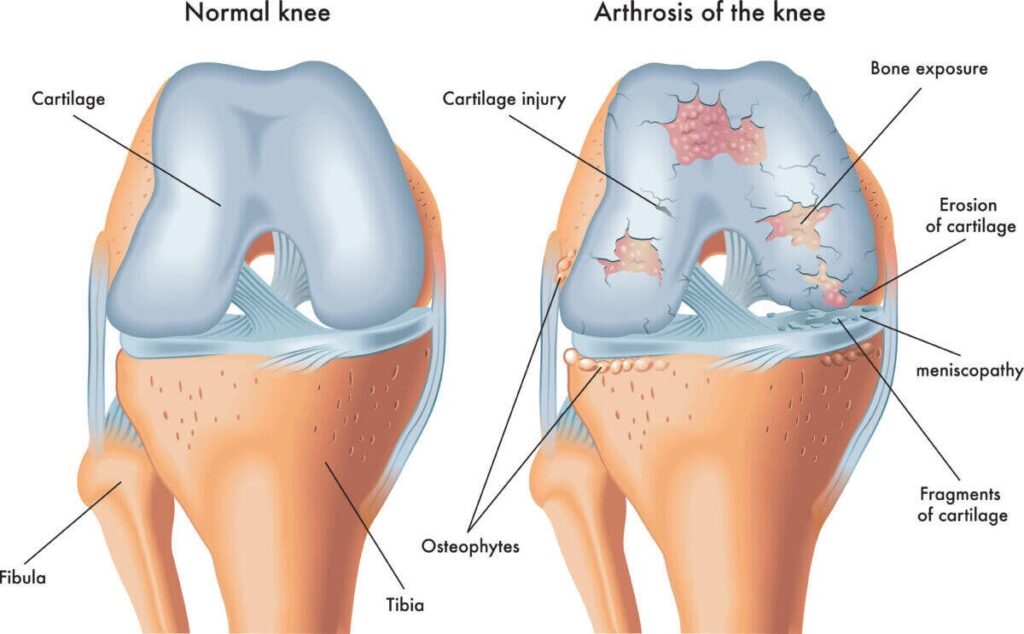
Mechanical stress, aging, genetics, and inflammation disrupt the balance between cartilage building (anabolic) and cartilage breakdown (catabolic). Chondrocytes—the cells that are a key component of cartilage—start producing more degradative enzymes that break down collagen and proteoglycans, which are also key components of cartilage. As a result, the cartilage surface cracks and fissures, thins, and loses its smoothness and shock-absorbing properties.

2.What is cartilage? Cartilage is a strong, flexible, and specialized connective tissue found in many areas of the body, such as joints, the nose, ears, and spine. Almost every bone has some cartilage around it. Cartilage (1) provides structural support, (2) protects joints as a shock absorber, and (3) reduces friction between bones. One specific cartilage is articular cartilage, which is the smooth, cushion-like tissue covering the ends of bones in a joint. 

Cartilage is made up of cells, a gel-like matrix, and fibers. Most of this is gel, made up of proteoglycans. About 80% of the tissue is water, which helps explain why cartilage is a hydrated network, mostly made of collagen and chondrocytes. There are three types of cartilage: (1) hyaline cartilage, the most common, mainly in the joints, the trachea, and the nose; this cartilage is smooth and helps resist compressive forces; (2) elastic cartilage, found in the ear and larynx, which is more flexible and resilient; (3) fibrocartilage, the strongest type, found in areas that must withstand heavy pressure, such as the menisci in the knee and the intervertebral discs in the spine.

Not going into technical detail, the perichondrium is a vascularized connective-tissue sheath that surrounds most cartilage and serves as a source of nutrients and new cells. It also helps with growth and repair of cartilage. Not all cartilage has a perichondrium: articular cartilage (the hyaline cartilage at joint surfaces) and fibrocartilage lack it; this helps explain why repair of the meniscus is difficult.

3.Repair/regeneration of cartilage: is it possible? The short answer is: partly possible. Cartilage has no blood supply, so natural repair is very difficult, but not completely impossible. Chondrocytes have a limited ability to produce new matrix and repair minor damage. Fortunately, this is an area where new techniques and solutions are on the horizon.

4.A torn meniscus and its relationship to cartilage health A torn meniscus is common and closely linked to cartilage health and osteoarthritis (OA). This relationship goes both ways. Tears of the meniscus, even small ones, can accelerate cartilage degeneration and OA progression, while OA-related changes make the meniscus more prone to tearing. A tear can, for example, provoke inflammation in the joint and release damaging enzymes that break down the cartilage matrix. This inflammatory milieu accelerates cartilage damage and can speed OA progression. Another issue is that when the meniscus extrudes (slips out of place), its load-distributing role is further compromised, increasing focal cartilage wear. Tears at the roots or tears that occur in the setting of aging OA are especially associated with rapid OA progression

5.What can you do in 2025 when there is joint damage related to cartilage?

  • Physical therapy and exercise: Tailored exercises can improve muscle strength, flexibility, and joint lubrication while minimizing pain. Brisk walking, cycling, swimming, and some resistance training can help. Consider balance and coordination training like Tai Chi. Proper footwear can alleviate knee OA symptoms and support safe, beneficial exercise.
  • Weight management: Losing weight can significantly reduce stress on the joints, especially in the knees and hips, helping to alleviate pain and slow disease progression.
  • Medications: Over-the-counter and prescription pain relievers can help manage pain and inflammation.
  • Other therapies: Heat or cold therapy and topical pain relievers can provide additional symptom relief.
  • Injections: Some injections can supplement joint lubrication or reduce inflammation to improve function and reduce pain.
  • Procedures that repair or restore cartilage (often for focal defects in younger patients): Osteochondral autograft transplantation (OATS / mosaicplasty) — plug-like grafts taken from your own bone and cartilage and transplanted into the defect.
  • Joint-preserving approaches for larger defects or persistent pain: Debridement, drilling, or fixation strategies to optimize the remaining cartilage.
  • Surgery: In severe cases, surgery such as joint repair or replacement may be recommended. This is a major operation with long-term considerations (implant lifespan, activity limits, potential need for revision later).

6.Over the next five years, several new treatments are on the horizon. Current treatments aim to relieve pain, maintain function, and slow progression; many approaches target the biology of cartilage breakdown or support joint health. Regenerating native cartilage remains challenging. Therefore, a true reversal of osteoarthritis (OA) is not yet here, but several promising approaches could move into commercial use in the next five years.

7.Without going into detail, here are some promising developments:

  • Sprifermin (FGF18) for knee OA: a recombinant fibroblast growth factor intended to stimulate cartilage growth and repair.
  • Allogeneic mesenchymal stem/stromal cell (MSC)–based intra-articular therapies: off-the-shelf cell therapies intended to modulate the joint environment and support repair.
  • Exosome/secretome–based therapies from MSCs: cell-free products using extracellular vesicles (exosomes) derived from MSCs to deliver regenerative signals.
  • Regenerative scaffolds and osteochondral implants for focal defects in OA joints: bioengineered implants or grafts to restore cartilage at focal wear areas, sometimes combined with bone components.

I do not understand all the details, but it is clear that hard work is ongoing to reverse OA by repairing cartilage.

8. My own experience is that I have had cartilage issues in my knee since I was in my forties. It was at times a very annoying and painful experience. Exercises helped, and at times the symptoms returned, but ongoing physiotherapy and aerobic exercise each time helped me overcome the problems.

For the past few years I have been taking the supplement glucosamine-chondroitin MSM+. I wrote about this supplement a few months ago with the following conclusion: “Some supplements, like glucosamine, seem to work well for me, even if they are not fully backed by research, though I would of course prefer stronger evidence.” https://shakethehealthtree.com/index.php/2025/03/04/21-glucosamine-a-supplement-for-your-joints-health-project99/ . Do not believe claims that collagen supplements will go straight to the place where it is needed.

Dear reader, take care of your body, listen to signals and do your best to reverse it when things go south. Not always possible, but often it is!

In Khiva, Uzbekistan, on the Silk Road