
30.CARTILAGE AND OSTEOARTHRITIS: SOLUTIONS ON THEIR WAY (health project99+)

By train in Uzbekistan, some years ago

Dear reader,

Cartilage is throughout the body. Wherever there are bones, there is cartilage. Problems with cartilage affect many people and can lead to health issues later in life, such as the feared osteoarthritis (OA). In the United States, about 14–15 million Americans have arthritis-attributable activity limitations. OA is the most common form of arthritis, so a large share of this group is OA-related. There are also about 700,000–800,000 joint replacement surgeries in the United States each year!

Although some cartilage interventions exist, OA cannot be fully cured yet and can cause a significant drop in quality of life. Fortunately, new medical solutions seem to be on the horizon, so in the meantime take good care of yourself: lose weight if necessary; do aerobic exercises like walking, cycling, and swimming; wear proper shoes; and use pain relievers when really needed. In my case I use a supplement (see at the end of this blog).

Cartilage protects joints like the knees, elbows, and ankles, allowing bones to move smoothly against one another. It is a specialized type of connective tissue, but it is not as hard as bone. Interestingly, newborns are largely cartilage that turns into bone.

1.The link between cartilage and osteoarthritis In OA, Damage to cartilage is a central, defining feature. OA is a disease of the whole joint, and cartilage deterioration is what sets the process in motion and drives symptoms and later joint changes.

Mechanical stress, aging, genetics, and inflammation disrupt the balance between cartilage building (anabolic) and cartilage breakdown (catabolic). Chondrocytes—the cells that are a key component of cartilage—start producing more degradative enzymes that break down collagen and proteoglycans, which are also key components of cartilage. As a result, the cartilage surface cracks and fissures, thins, and loses its smoothness and shock-absorbing properties.

2.What is cartilage? Cartilage is a strong, flexible, and specialized connective tissue found in many areas of the body, such as joints, the nose, ears, and spine. Almost every bone has some cartilage around it. Cartilage (1) provides structural support, (2) protects joints as a shock absorber, and (3) reduces friction between bones. One specific cartilage is articular cartilage, which is the smooth, cushion-like tissue covering the ends of bones in a joint. 

Cartilage is made up of cells, a gel-like matrix, and fibers. Most of this is gel, made up of proteoglycans. About 80% of the tissue is water, which helps explain why cartilage is a hydrated network, mostly made of collagen and chondrocytes. There are three types of cartilage: (1) hyaline cartilage, the most common, mainly in the joints, the trachea, and the nose; this cartilage is smooth and helps resist compressive forces; (2) elastic cartilage, found in the ear and larynx, which is more flexible and resilient; (3) fibrocartilage, the strongest type, found in areas that must withstand heavy pressure, such as the menisci in the knee and the intervertebral discs in the spine.

Not going into technical detail, the perichondrium is a vascularized connective-tissue sheath that surrounds most cartilage and serves as a source of nutrients and new cells. It also helps with growth and repair of cartilage. Not all cartilage has a perichondrium: articular cartilage (the hyaline cartilage at joint surfaces) and fibrocartilage lack it; this helps explain why repair of the meniscus is difficult.
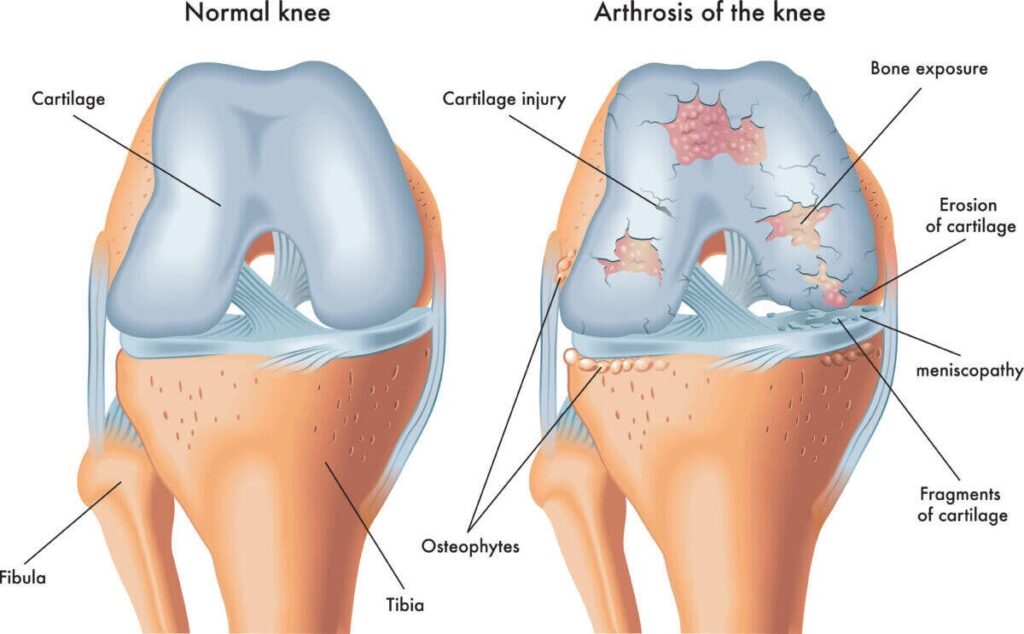
3.Repair/regeneration of cartilage: is it possible? The short answer is: partly possible. Cartilage has no blood supply, so natural repair is very difficult, but not completely impossible. Chondrocytes have a limited ability to produce new matrix and repair minor damage. Fortunately, this is an area where new techniques and solutions are on the horizon.

4.A torn meniscus and its relationship to cartilage health A torn meniscus is common and closely linked to cartilage health and osteoarthritis (OA). This relationship goes both ways. Tears of the meniscus, even small ones, can accelerate cartilage degeneration and OA progression, while OA-related changes make the meniscus more prone to tearing. A tear can, for example, provoke inflammation in the joint and release damaging enzymes that break down the cartilage matrix. This inflammatory milieu accelerates cartilage damage and can speed OA progression. Another issue is that when the meniscus extrudes (slips out of place), its load-distributing role is further compromised, increasing focal cartilage wear. Tears at the roots or tears that occur in the setting of aging OA are especially associated with rapid OA progression

5.What can you do in 2025 when there is joint damage related to cartilage?

  • Physical therapy and exercise: Tailored exercises can improve muscle strength, flexibility, and joint lubrication while minimizing pain. Brisk walking, cycling, swimming, and some resistance training can help. Consider balance and coordination training like Tai Chi. Proper footwear can alleviate knee OA symptoms and support safe, beneficial exercise.
  • Weight management: Losing weight can significantly reduce stress on the joints, especially in the knees and hips, helping to alleviate pain and slow disease progression.
  • Medications: Over-the-counter and prescription pain relievers can help manage pain and inflammation.
  • Other therapies: Heat or cold therapy and topical pain relievers can provide additional symptom relief.
  • Injections: Some injections can supplement joint lubrication or reduce inflammation to improve function and reduce pain.
  • Procedures that repair or restore cartilage (often for focal defects in younger patients): Osteochondral autograft transplantation (OATS / mosaicplasty) — plug-like grafts taken from your own bone and cartilage and transplanted into the defect.
  • Joint-preserving approaches for larger defects or persistent pain: Debridement, drilling, or fixation strategies to optimize the remaining cartilage.
  • Surgery: In severe cases, surgery such as joint repair or replacement may be recommended. This is a major operation with long-term considerations (implant lifespan, activity limits, potential need for revision later).

6.Over the next five years, several new treatments are on the horizon. Current treatments aim to relieve pain, maintain function, and slow progression; many approaches target the biology of cartilage breakdown or support joint health. Regenerating native cartilage remains challenging. Therefore, a true reversal of osteoarthritis (OA) is not yet here, but several promising approaches could move into commercial use in the next five years.

7.Without going into detail, here are some promising developments:

  • Sprifermin (FGF18) for knee OA: a recombinant fibroblast growth factor intended to stimulate cartilage growth and repair.
  • Allogeneic mesenchymal stem/stromal cell (MSC)–based intra-articular therapies: off-the-shelf cell therapies intended to modulate the joint environment and support repair.
  • Exosome/secretome–based therapies from MSCs: cell-free products using extracellular vesicles (exosomes) derived from MSCs to deliver regenerative signals.
  • Regenerative scaffolds and osteochondral implants for focal defects in OA joints: bioengineered implants or grafts to restore cartilage at focal wear areas, sometimes combined with bone components.

I do not understand all the details, but it is clear that hard work is ongoing to reverse OA by repairing cartilage.

8. My own experience is that I have had cartilage issues in my knee since I was in my forties. It was at times a very annoying and painful experience. Exercises helped, and at times the symptoms returned, but ongoing physiotherapy and aerobic exercise each time helped me overcome the problems.

For the past few years I have been taking the supplement glucosamine-chondroitin MSM+. I wrote about this supplement a few months ago with the following conclusion: “Some supplements, like glucosamine, seem to work well for me, even if they are not fully backed by research, though I would of course prefer stronger evidence.” https://shakethehealthtree.com/index.php/2025/03/04/21-glucosamine-a-supplement-for-your-joints-health-project99/ . Do not believe claims that collagen supplements will go straight to the place where it is needed.

Dear reader, take care of your body, listen to signals and do your best to reverse it when things go south. Not always possible, but often it is!

In Khiva, Uzbekistan, on the Silk Road


5.COLLAGEN LOSS, WHAT TO DO? (health project99+)

Orinoco river in Venezuela

Dear reader,

Be aware that many claims about restoring your collagen are not proven, especially concerning the skin. Some approaches work, but many do not. Public interest in collagen is mostly related to skin issues. However, much of the function and benefits of collagen take place inside your body. 

The bad news is that “Very few things work.” While this is a sobering conclusion, it can also motivate you to lead a healthy lifestyle. This is the best way to a) prevent collagen loss as much as possible and b) reverse some of the negative impacts of collagen loss. And consider yourself lucky if good genes run in your family.

The good news is that “Very few things work” means that some do. There are promising developments, but so far, studies do not suggest that collagen loss can be completely halted. In general, studies make a strong case for certain dietary and lifestyle interventions, as well as for supplements and red light therapy.

Science is not resting, and interesting studies are ongoing, even for interventions at the cellular level. We already have microneedling and red-light therapy.

For those who desire smooth and radiant skin, looking at people from Korea might provide insights. Yes, genetics probably play a role, but so does their elaborate skincare routine, involving many steps and products. I do not have the patience for this, but the Korean method works, at least for the skin. Just Google “Korean skincare” and be impressed (and perhaps inspired). At the end of this blog, I will summarize the Korean secret.

1.This is a long blog, so let me start with the three main take-aways: from what I read the most effective are animal-based collagen products; for plant based boosters there is less scientific proof. There are also indications that LED masks have an impact and for those with a lot of patience the Korean skin care approach seems to be a good idea.

    2.What is collagen?

    Collagen is the most abundant protein in the human body, accounting for about 30% of your body’s total protein. Collagen is the primary building block of your skin, muscles, bones, tendons, ligaments, and other connective tissues. It is also found in your organs, blood vessels, and intestinal lining. Three-quarters of the weight of dead skin consists of collagen. There are at least 28 different types of collagen, with Type I being the most prevalent and found in skin, bones, and ligaments. 

    There are 20 amino acids that make up proteins, with 9 amino acids being essential and 11 being non-essential. Collagen is classified as a non-essential protein. It is mainly composed of three non-essential amino acids: glycine, proline, and hydroxyproline.

    Something is called “essential” because your body does not produce it. What your body produces is called non-essential, like collagen, but it is equally important.

    Collagen products come from various animals: cows, pigs, chickens, and fish. Consuming food rich in protein and vitamin C is advisable. Specific mention is reserved for bone broth.

    There are two primary skin aging mechanisms, referred to as intrinsic and extrinsic. Intrinsic processes are predominantly controlled by genetic and hormonal variations. Extrinsic factors include smoking, alcohol consumption, chronic sun exposure, stress, and several other influences.

    3.What does collagen do, besides maintaining skin elasticity?

    Collagen plays a vital role in maintaining skin elasticity, bone strength, joint health, and tissue repair (wound healing). It helps maintain the integrity and elasticity of various body parts. Collagen is a major component of cartilage, which cushions joints, and provides structural support to bones. It is crucial for muscle structure and repair. It is also found in blood vessels and plays a role in maintaining their structure. Collagen may support the lining of the gut and digestive tract. It can potentially aid conditions like leaky gut syndrome. It may improve overall digestive health. As aging progresses, the connective tissues in organs can weaken. Collagen helps maintain the structural integrity of organs. It contributes to their normal function. 

    Collagen may interact with kidney disease, but there are no known side effects related to its consumption.

    4. What are the causes of collagen loss?

    Aging is a natural process that begins in your early 30s. Each year, it leads to about a 1% or more reduction in your body’s ability to replenish collagen naturally. This decrease in collagen is first and foremost visible through the appearance of fine lines and deeper wrinkles. Additionally, the quality of collagen diminishes with age.

    Hormonal changes due to pregnancy, menopause, health conditions, etc.

    Sun exposure, since ultraviolet rays can cause collagen to break down in the skin.

    Oxidative stress resulting from metabolic processes and lifestyle choices, such as smoking and poor diet.

    Low levels of ascorbic acid (vitamin C), which can lead to scurvy.

    Certain genetic conditions can affect collagen production.

    5. How to address collagen loss?

    First, limit negative factors like sun exposure (use sunscreen!), smoking, and an unhealthy diet. A well-balanced diet includes chicken, beef, fish, dairy, eggs, beans, leafy greens, other vegetables, whole grains, and citrus fruits. Eating collagen-rich foods doesn’t directly increase collagen levels in your body because collagen can’t be absorbed in its whole form. Your body breaks down collagen proteins into amino acids. 

    However, many foods provide the raw ingredients necessary for collagen production. These foods contain the amino acids proline, hydroxyproline, and glycine. Vitamin C, zinc, and copper are also essential for the production process. In relation to collagen they are often referred to as “co-factors”.

    Some studies have investigated the positive role of silica, which is found in foods like cucumbers and bell peppers. Silica may help in promoting collagen synthesis. Other research has demonstrated that antioxidants can help protect collagen from oxidative stress. Not surprisingly, a Mediterranean diet has positive effects on skin health, indirectly supporting the health of collagen-rich tissues.

    Secondly, genetics play a role. If everyone in your family has smooth skin, consider yourself lucky.

    Third, consider taking collagen supplements (but see point 7).

    Fourth, use special infra-red LED lamps (see point 11).

    Additionally, botox can take away wrinkles. This is an entirely different process unrelated to collagen. Botox injections involve purified botulinum toxin, which temporarily paralyzes specific muscles to reduce the appearance of wrinkles and fine lines.

    Further, other injections directly involving collagen may have a longer-lasting effect than botox.

    6.Main tip

    Before considering collagen supplements, first focus on a balanced diet to improve health in multiple ways. Exercise, adequate sleep, and sunscreen also have well-known benefits for skin appearance and health. I apologize if these suggestions seem mundane. They resemble advice for other health issues. It’s true: a healthy lifestyle is paramount.

    7.What about collagen supplements? The good news is that studies show collagen supplementation could improve joint pain. It may also promote collagen turnover, especially in those with osteoarthritis. However, more research is needed. Other studies on collagen supplementation indicate a modest improvement in both hydration and elasticity.

    Collagen supplements and collagen-rich foods contribute to the overall collagen levels in your body. They provide the necessary amino acids and nutrients. These elements support collagen synthesis (production). It is unclear if it is possible to completely compensate for the loss caused by aging. Based on what I have read, this seems challenging.

    One key problem with claims about the benefits of collagen is what happens when the molecule is ingested. There is little solid proof that collagen will survive digestion, travel into the bloodstream, and then reach your skin. Were life but that simple!

    When any protein arrives in the stomach—including collagen—it is usually swiftly broken down into amino acids. These amino acids are then reassembled into the proteins that the body needs at that moment. So, if the body needs collagen, it might reassemble those amino acids into collagen, but there are no guarantees.

    The European Food Safety Authority (EFSA) assesses risks related to novel foods. It states that the idea that collagen helps maintain skin elasticity has not yet been sufficiently demonstrated by scientific research. The concept that collagen improves joint functioning is also not confirmed.

    Creams that claim to rejuvenate the skin are unlikely to have a significant impact. The molecules cannot penetrate the outer layer of the skin in a way that induces a difference. More research is needed. Nonetheless, the Korean example (described below) shows that it is possible to influence skin quality from the “outside.”

    8.Animal-derived collagen vs. plant-based boosters

    • Animal collagen (bovine, porcine, marine): typically provided as hydrolyzed collagen peptides (types I, II, III depending on source). Many studies have reported benefits for skin elasticity, joint comfort, and hair/nail health at typical daily doses (often 2.5–10 g). Efficacy varies by product, dose, duration, and individual factors. There is an important role for the so-called co-factors like vitamine C and Zinc.
    • Plant-based boosters do not supply the collagen molecule itself. This should not be a problem as animal collagen will also be broken down in your body. Plant-based boosters tend to provide nutrients that support the body’s own collagen production (e.g., vitamin C, glycine, proline, lysine, minerals) or use fermentation-produced, collagen-like peptides marketed as vegan. Evidence for these approaches is more variable and generally less robust than for animal collagen supplements. They may help if you have overall protein intake and cofactors well covered, but they’re not delivering collagen per se.

    9.We often hear about peptides, what are those?

    Peptides are short chains of amino acids, which are the building blocks of proteins. They typically consist of 2 to 50 amino acids. Peptides are smaller than proteins. Proteins are made up of longer chains of amino acids.

    Hydrolyzed collagen (collagen hydrolysate) refers to collagen that has been broken down into peptides. Peptides are the collection of amino acids between individual amino acids and proteins. Certain collagen products emphasize the peptide aspect, suggesting they are much better absorbed. This is somewhat true, but not in an essential way. Like amino acids, collagen peptides—from foods or supplements—cannot be directed to a specific area. They cannot be used where you want them (the skin). Your body utilizes these peptides for whatever it requires at the moment, whether it is collagen or another protein.

    10.What doses and what substance to take?

    This substance comes from a wide variety of sources and types of collagen. It is also packaged into many differing forms. These forms range from bars to drinks. When taking collagen as a supplement, opt for a powder or liquid that contains at least 5-10g (0.2-0.4 ounces) of collagen per dose. I personally take a powder, with two doses per day of 10g. It is advisable not to choose tablets or gummies.

    11.Sunscreen and Vitamin D

    Remember to protect yourself against the sun, which you should do. However, this also blocks the UV rays that help produce Vitamin D. Read more about this in my blog

    12.LED Face Masks

    It is important to recognize that you need consistent and regular use of LED masks to see noticeable results. Some studies suggest that treatment sessions lasting 15-30 minutes, three times a week, may be optimal for collagen stimulation.

    Yes, LED face masks can be effective in stimulating collagen production. It applies LED light therapy, also known as photo biomodulation (PBM). The process works by exposing skin cells to specific wavelengths of light. This exposure triggers cellular changes. Red light for this purpose is between 633-700nm.

    Red and near-infrared light emitted by LED masks are known to penetrate deeper into the skin. They stimulate fibroblasts, the cells responsible for producing collagen and elastin. leading to increased collagen and elastin production. This can improve skin elasticity, reduce wrinkles, and promote a more youthful appearance. I realize this sounds like an advertisement. However, I have seen skeptical people on YouTube who used LED face masks over a longer period. They showed the difference.

    LED light therapy also enhances blood circulation. It brings more oxygen and nutrients to the skin. This further aids in the repair and renewal processes.

    Important to realize is that you need consistent and regular use of LED masks to see noticeable results. Some studies suggest treatment sessions of 15-30 minutes, three times a week, may be optimal for collagen stimulation.

    Studies about red-light therapy for the whole body are less clear so far.

    13.FUTURE AHEAD

    Microneedling involves creating tiny punctures in the skin, triggering the body’s natural healing response and stimulating collagen and elastin production.

    Red and near-infrared light can penetrate the skin, stimulate collagen production, reduce inflammation, and promote cellular regeneration. Research in this area is fast developing.

    Research suggests that combining collagen supplementation, particularly hydrolyzed collagen, with exercise can significantly increase collagen synthesis. High-intensity resistance training can potentially strengthen tendons and improve physical performance.

    Future Research Directions Finding new mechanisms to address fibroblast senescence is an exciting area of research. Discovering new bioactives to impede telomere loss could offer new treatments. Repairing DNA damage may also provide new solutions in the fight against skin aging. Fibroblast senescence refers to the process in which fibroblast cells stop dividing and functioning properly due to aging or stress. Fibroblast cells play a crucial role in producing collagen and maintaining the extracellular matrix in connective tissues.

    Thanks for reading, I hope it was useful. For myself it was.

    Take good care and live a happy and healthy life,

    Robert, your health friend

    Our beloved Randy supervising events in Istanbul

    Annex: The Korean secret

    Skincare is part of Korean cultural tradition, just as paying attention to good food and protecting against the sun.

    Daily skincare Routine (for me this takes too much time)

    • Cleansers Double cleansing with an oil-based cleanser followed by a water-based cleanser helps to thoroughly remove makeup and impurities.
    • Exfoliators Regular use of chemical exfoliants (like AHAs and BHAs) and physical scrubs to remove dead skin cells.
    • Toners Hydrating toners are applied to prepare the skin for subsequent products.
    • Essences Lightweight, hydrating formulas that help improve skin texture and hydration.
    • Serums Targeted treatments for specific concerns (e.g., brightening, anti-aging, hydration).
    • Moisturizers Emollients that lock in hydration.
    • Sunscreen Daily use of broad-spectrum sunscreen to protect against UV damage.
    • Sheet Masks Frequent use of hydrating sheet masks for an extra moisture boost.

    Ingredients

    Korean skincare often incorporates the following ingredients.

    Hyaluronic Acid provides intense hydration. Niacinamide brightens the skin and improves texture. Snail Mucin is known for its reparative properties. Green Tea offers antioxidant effects. Licorice Root helps in brightening and soothing the skin. Propolis and Honey are used for moisturizing and antibacterial benefits.

    While there are many brands and products available, some popular Korean skincare brands include: Innisfree, Dr. Jart+, Laneige, The Face Shop, Etude House, Missha, COSRX, Sulwhasoo.

    15. DEEP TISSUE MASSAGE: IMPORTANT? YES! (health project99+)

    Uganda, mother and son (or daughter)

    Dear reader,

    Does one always understand what one reads? In my case I often don’t. Take for example “deep tissue massage”. Highly recommended by any masseur. But why? What does it mean? What tissue she (my masseur) is talking about? Apparently about connective tissue. What is this? And what about the muscles? 

    Household words in this context are collagen, cartilage, osteoarthritis. In the world of connective tissue there is a lot of hype, exaggeration and fake promises. So be careful and do not fall for all the claims. The good news is that studies show that massage has positive effects on your tissues. Massage also benefits your overall health as it is integral to your immune system; in particular the deep tissue massage.

    And do not forget, before or after the massage, to subscribe, for free, to my blogs.

    1.Introduction

    We all know that muscle loss, or sarcopenia, is something we should prevent. Without action, an average woman can lose approximately 6 kg of muscle between the ages of 25 and 65. It is also important to keep flexibility. Strength and resistance training, tai chi, and yoga are all beneficial activities. They are effective and also enjoyable. These activities support overall health.

    Massage should be included in this list of active health interventions, both for prevention and treatment. Many of us tend to visit a masseur only when we face problems. Still, regular massages can help keep the body loose and flexible, contributing significantly to overall health. This blog will explore this topic further.

    A central choice offered by massage therapists is the so-called deep tissue massage. Contrary to what some might think, deep tissue massage is not just about treating superficial muscles beneath the skin. It primarily targets deeper layers of both muscle and connective tissue. The main goal is to relieve tension in muscles that are chronically tight. These contracted muscles can detrimentally affect your health more than you might realize. Consider it a two-step approach: addressing issues in the connective tissue to effectively reach the deeper layers of muscle.

    I strongly encourage readers to educate themselves about different types of massage techniques. This knowledge can help you determine how to best incorporate massage into your health routine.

    2. To start, what exactly is “connective tissue”?

    Humans have four main types of tissues. Connective tissues are the focus of this blog. Epithelial tissues are also important (see note at the bottom of this blog). In addition, there are muscle and nervous tissues.

    Connective tissue is essential for maintaining the body’s structural integrity. It facilitates communication and transport. It provides protection and supports various physiological functions. It is a vital component of the overall body system.

    Connective tissue is composed of a variety of cells (see note at the bottom of this blog). It also includes fibers and an extracellular matrix (see note at the bottom of this blog). The composition and structure of the extracellular matrix can vary widely among different types of connective tissue. These include loose connective tissue, dense connective tissue, cartilage, bone, blood, and adipose (fat) tissue.

    3. What different types of connective tissue are there?

    • Loose Connective Tissue. (Provides support and elasticity; found beneath the skin and surrounding organs).
    • Dense Connective Tissue. (Composed of closely packed collagen fibers and provides tensile strength; found in tendons and ligaments).
    • Adipose Tissue. (Specialized fat storage for insulation and energy storage).
    • Cartilage. (Provides flexible support; found in joints, the nose, and ears).
    • Bone. (Provides structural support and protection; stores calcium and produces blood cells). 
    • Blood. (A liquid connective tissue responsible for transport and communication within the body) 
    • Lymph. (Part of the immune and circulatory systems; helps transport lymphatic.

    4. And what are the many functions of connective tissue?

    In short, it provides structural support and shape to the body. 

    In line with this, connective tissue plays a crucial role in anchoring and binding other tissues and organs together. Tendons connect muscles to bones. Ligaments connect bones to other bones at joints. Both tendons and ligaments are types of connective tissue.

    Blood is a specialized type of connective tissue responsible for transporting nutrients, gases, hormones, and waste products throughout the body. 

    An important function of some connective tissues is the protection of organs. For instance, adipose tissue (fat) acts as a cushion, providing protection for vital organs.

    Moreover, connective tissue is integral to the immune system. It houses various cells involved in immune responses, such as macrophages and lymphocytes. These cells help defend against pathogens (substances that can cause illness). It also stores energy and nutrients. Adipose tissue stores fat for energy reserves. Bone tissue stores essential minerals like calcium and phosphorus.

    Another well-known function of connective tissue is seen in cartilage. It provides flexibility and support in joints. This allows for smooth movement without friction between bones.

    Additionally, connective tissue plays a vital role in the healing and repair of tissues after injury. It can regenerate and form scar tissue to restore structure and function. Connective tissue also contains signaling molecules and fibers that facilitate communication between different cells and tissues in the body.

    5. The relationship between connective tissue and aging is multifaceted

    Age-related changes can lead to decreased strength, elasticity, and overall resilience of connective tissues. While it is not possible to completely stop the effects of aging on connective tissue, there are several strategies. These strategies may help slow the process and mitigate the negative impacts. Aging is a natural biological process, and connective tissues, like all tissues in the body, undergo changes over time. 

    Maintaining a healthy lifestyle that includes regular exercise, a balanced diet rich in nutrients that support connective tissue health (like vitamin C, omega-3 fatty acids, and amino acids/protein), staying hydrated (drink a lot during the day!), and avoiding smoking can help mitigate some of the negative effects of aging on connective tissue. 

    Protect from Injury. Be mindful of body mechanics and use protective gear during activities that risk injury. Avoid repetitive strain and take breaks to prevent overuse injuries.

    Some people may find benefits from supplements that support joint health, such as glucosamine, chondroitin, collagen peptides, or hyaluronic acid. I already wrote about glucosamine and will write about a LED mask. Interesting things going on. 

    6. Well known issues with your tissues……

    • Reduced Collagen Production. Collagen is the primary protein in connective tissue, providing structure and strength. As we age, the body’s ability to produce collagen decreases. This causes a decrease in the elasticity and firmness of skin, contributing to wrinkles. It also leads to increased joint stiffness. Additionally, there is a higher risk of injuries. How to compensate this collagen loss is a billion-dollar business, with only few products and methods that work. I write about in another blog.
    • Elastin Degradation. Elastin fibers allow tissues to resume their shape after stretching. Aging can lead to the breakdown of elastin. This can result in less elastic skin and blood vessels, leading to sagging skin and potential cardiovascular problems.
    • Changes in Ground Substance. Aging can reduce the moisture content in connective tissue. This reduction leads to stiffness in the body. It also results in decreased cushioning in joints (osteoarthritis). This is the result of changes in certain glycans that help keep moisture and offer resilience to tissues.
    • Increased Cross-Linking. where sugar molecules bond with proteins. The age-related misery does not stop. Cross-linking can lead to decreased flexibility and increased rigidity in tissues. This contributes to conditions like reduced mobility and joint pain.
    • Degenerative Changes leading to osteoarthritis. Connective tissues can undergo degenerative changes, including the wear and tear of cartilage in joints. This can lead to osteoarthritis, characterized by pain, stiffness, and reduced mobility.
    • Increased Risk of Injuries. As connective tissues become less resilient and more rigid with age, they are more susceptible to strains, sprains, and tears. Older adults may experience more frequent injuries and longer recovery times.
    • Inflammatory Changes. Aging is also associated with a low-grade inflammatory state, which can affect connective tissues and their healing processes. Chronic inflammation can exacerbate the degeneration of connective tissues and contribute to age-related diseases.
    • Impact on Healing: The capacity for connective tissue repair tends to decline with age. This means injuries may take longer to heal.
    • 7. Main effects of deep tissue massage on connective tissue
    • Deep tissue massage can positively affect connective tissue health. It does so through mechanisms like (1) fibroblast stimulation and (2) inflammation reduction. It also includes (3) collagen remodeling and (4) enhanced hydration. 
    • (1). Fibroblast Activity. Fibroblasts are cells responsible for producing collagen. They also produce other components of the extracellular matrix. These are crucial for maintaining the integrity of connective tissue.  Studies suggest that massage can stimulate fibroblast activity, potentially enhancing collagen production, which helps improve tissue elasticity and strength.
    • (2). Inflammation Reduction. Deep tissue massage has been shown to reduce markers of inflammation in the body. This can be beneficial for connective tissue, as chronic inflammation is linked to tissue degeneration and aging. Lowering inflammation can lead to improved healing and recovery from exercise or injury.
    • (3). Collagen Remodeling. Massage can promote collagen remodeling by altering the structure of collagen fibers. This is important for maintaining flexible and functional connective tissue. Manipulative techniques help break down adhesions or scar tissue, enabling better movement and operation of tissues.
    • (4). Tissue Hydration. Massage increases blood circulation, promoting better hydration and nutrient delivery to tissues. Improved hydration is essential for the health of connective tissues, as they need adequate moisture for flexibility and operation.

    8.Scientific Studies on frequency and effectiveness

    The good news is that research suggests that regular massage can have accumulative benefits. Best seem to be regular sessions. Some studies indeed show that deep tissue massage can be effective in managing chronic pain. It can also help alleviate muscle tension and even reduce stress levels.

    9.My experience

    • I could not do without. No more knobs on my back and my whole body feels much better. I support this with exercises and some massage equipment at home.

    10. Visualizing connective tissue (for example on your back) can be done through a few different techniques.

    You can palpate (gently press) different areas of your back to feel for various structures. You may feel tendons and ligaments that are part of the connective tissue system. It will help if you understand the different muscles of course. Look for diagrams or models (websites, apps) that illustrate the back’s connective tissue structures. There are various apps available that allow you to explore 3D models of human anatomy.

    MRI is an imaging technique providing detailed images of soft tissues, including connective tissue, muscles, and fascia. And we have ultrasound as well. This can also be used to visualize soft tissues. It can provide insights into the condition of connective tissues like tendons and ligaments.

    Engaging in practices such as yoga or Pilates can enhance your awareness of how connective tissue supports movement. Pay attention to how your body feels during these practices. Notice how it behaves. This can provide indirect insight into the state of your connective tissue.

    Understanding the connective tissues in your back requires combining knowledge of anatomy. It involves utilizing technology and imaging. Engaging in physical exploration through touch and movement is also essential.

    11. If you have developed knobs or lumps in your back, they might be associated with connective tissue. This condition could be due to various causes. 

    Knobs in your back related to connective tissue can stem from a variety of conditions. Some can be prevented and/or solved by physical activity, proper posture, and stress management.

    Trigger Points These are small, tight areas within a muscle that can feel like knots. They are often caused by muscle overuse, stress, or poor posture. 

    Fascia is a layer of connective tissue that surrounds muscles and organs. Sometimes, due to injury or inflammation, the fascia can develop adhesions or thickened areas that feel like knobs. A masseur can do wonders.

    Something similar are lipomas These are benign (non-cancerous) tumors made up of adipose (fat) tissue. They can occur in the subcutaneous tissue, which is just beneath the skin. Lipomas are typically soft and movable and can vary in size. Only a surgeon can remove them. The same applies to fibromas, benign tumors. They can be firm and may or may not cause discomfort.

    A strain or tear in a muscle can lead to localized swelling and may form palpable knots. Symptoms may include pain, swelling, and reduced range of motion. Here we have potential work for a masseur and own massage work as well.

    Skeletal Conditions like osteophytes, bone spurs that can form on the vertebrae due to degenerative conditions like arthritis. No work for a masseur.

    Cysts. Sometimes fluid-filled sacs can develop in areas of connective tissue, leading to a hard or soft lump. They can be painless or cause discomfort.

    Conditions like abscesses, infections, or inflammatory disorders can cause localized swelling. Knobby structures may form due to the body’s immune response.

    12. When to Seek Medical Attention

    If the knobs are new, painful, or growing, consult a healthcare professional for a thorough evaluation. See a professional if they are accompanied by other unusual symptoms, like fever, weight loss, or persistent discomfort.  

    13. Some notes

    a. Extracellular matrix is a complex network of proteins and carbohydrates. It is found outside of cells. It provides structural support and regulates various cellular functions. There is collagen (provides strength), elastin (provides elasticity), and reticular fibers (provide support. There is also ground substance, a gel-like material that helps hold cells and fibers together; it contains water, proteoglycans, and glycoproteins.

    b. Epithelial tissue is a type of tissue that forms protective coverings on body surfaces. It lines cavities and organs. It is also involved in absorption, secretion, and sensation.

    c. Various types of cells are found in connective tissue

    • Fibroblasts.Responsible for producing fibers and the ground substance.
    • Macrophages.Involved in immune responses and cleaning up debris.
    • Adipocytes. Store fat and serve as energy reserves.
    • Mast Cells. Play a role in allergic responses and inflammation.
    • Lymphocytes. A type of white blood cell involved in immune response.

    Dear readers, this was much too long. There was too much to tell about connective tissue and deep tissue massage so I do not apologise .

    Take care and life a long and healthy life.

    Robert, your health friend,

    21. GLUCOSAMINE: A SUPPLEMENT FOR YOUR JOINTS (health project99+)

    A beach on Curacao

    Dear reader,

    1: Supplements are just one aspect of pursuing a longer and healthier life. 2: The internet is flooded with many supplements and incredible claims, so it’s important to be wary of these, also when written by me:).

    Often, when something seems too good to be true, it likely is. I know no one ever does it. However, you might wish to consult your doctor and ask for example about possible interactions with medicines you use.

    I personally use over ten supplements daily. Some, like Glucosamine, because they work well for me, even if not fully backed by research, although I would prefer that of course. There’s also a category of “hope” supplements, supported by ongoing research and developments in AI. I take these “hope” supplements only after ensuring they do no harm to my body. In worst case scenario only to my wallet.

    My goal as always is to write this all down for my own benefit. And share my insight and experience (for what it is worth) with you. To receive my blogs, please subscribe (for free).

    1. Glucosamine and Osteoarthritis/painful joints

    Glucosamine is widely used to alleviate “osteoarthritis,” also known as “degenerative joint disease” or “wear-and-tear arthritis.” This condition involves the gradual deterioration of cartilage in the joints. Cartilage? That is the flexible connective tissue found in joints and other parts of the body. It provides the smooth, slippery surface for motion, reducing friction and absorbing shock. Great if it works, painful if it does not. When you age this connective tissue erodes and cause your joints to hurt when you move. Unfortunately I know all about this.

    Many people over 60, and a growing number of younger individuals, suffer from joint problems. This is due in part to factors like joint injuries, genetic predisposition, and….increasingly obesity. It’s predicted that by 2050, over 50% of Americans will be obese. Osteoarthritis commonly affects the knees, hips, hands, and spine, causing pain, stiffness, and reduced mobility.

    2. What is Glucosamine?

    Glucosamine is a naturally occurring compound in human cartilage and is often used as a dietary supplement for joint health. It plays a crucial role in building and maintaining cartilage.

    It’s important to note that the body’s endogenous production of Glucosamine is a complex process. Levels may fluctuate based on various factors. These include age, health status, and physical activity levels.

    To understand how much naturally occurs in the body, extensive biochemical analysis is required. This analysis is more detailed than what is typically done outside of research settings. It is clear however that many people do not produce enough Glucosamine. For those, supplements might be useful.

    3. My own experience in taking Glucosamine (=very positive)

    The effectiveness of Glucosamine varies among individuals. Studies provide mixed results. However, it has been very beneficial in my experience. During periods when I stopped taking it, my arthritis issues resurfaced but disappeared quickly once I resumed.

    4. Glucosamine and Chondroitin taken as a supplement

    Glucosamine and chondroitin are often taken together for joint health since they may work synergistically to support cartilage, reduce pain, and enhance joint function. Chondroitin, also to be found in human and animal cartilage, is used as a supplement to manage osteoarthritis symptoms, but in practice taken only together with Glucosamine, while Glucosamine is often used as a stand alone supplement.

    Supplements typically provide 1,200 to 1,500 milligrams per day of Glucosamine and 500 milligrams of Chondroitin.

    5. Benefits of Glucosamine (summary from internet sources)

    1. Glucosamine may reduce joint pain, especially in osteoarthritis patients, improving joint functions.

    2. It might aid in maintaining and potentially repairing cartilage.

    3. Users often report enhanced joint flexibility and reduced discomfort.

    4. Glucosamine may have inflammation-reducing properties.

    5. Preliminary studies suggest potential benefits for other conditions, like rheumatoid arthritis.

    6. Safety and Side Effects (also from internet)

    Glucosamine and Chondroitin are usually safe. However, side effects can occur.

    1. Possible digestive discomfort. 2. Allergic Reactions, particularly in those allergic to shellfish, as many supplements are shellfish-derived/ 3. Increased Blood Sugar: Concern for individuals with diabetes, though recent research suggests minimal impact. 4. Potential interaction with medications like blood thinners. 5. Blood Pressure**: Some report mild increases in blood pressure. 6. There are rare reports of headaches, drowsiness, or skin reactions.

    Let us hope you do not need Glucosamine or any other supplement.

    Live a happy and healthy life,

    Robert, your health friend,

    On dushi Curacao