
5. POLYPHENOLS: 8000 INTERESTING PLANT-DERIVED COMPOUNDS (health project99+)

Near Cairo in summer

Dear reader

After encountering the term polyphenols many times, I finally wanted to know what they are. It turns out I already know quite a few—for example, Resveratrol and Curcumin. There are thousands of polyphenols, so it’s not surprising that we’re familiar with some of them. The general term flavanols probably rings a bell, too. They’re the main subgroup of polyphenols, with many described and researched compounds. Other major groups include stilbenes, lignans, and tannins.

Most of us believe the Mediterranean diet is healthy (I do, at least). An important reason is that it is rich in polyphenols.

What are polyphenols? In simple terms, polyphenols are plant-derived compounds. They aren’t one of the four fundamental biomolecule classes (carbohydrates, proteins, lipids, and nucleic acids). Rather, they’re a diverse family of plant secondary metabolites that can influence human biology.

Polyphenols are getting increasing attention, promising health claims circulate but more rigorous research is needed. Some polyphenols have already been studied for many years and show interesting biological activities in various systems, like pterostilbene. https://shakethehealthtree.com/index.php/2025/05/16/21-stay-healthy-100-glasses-of-red-wine-daily-or-resveratrol-pterostilbenehealth-project99/

Technical description

They are plant compounds built around multiple phenol (aromatic ring with hydroxyl groups) units.
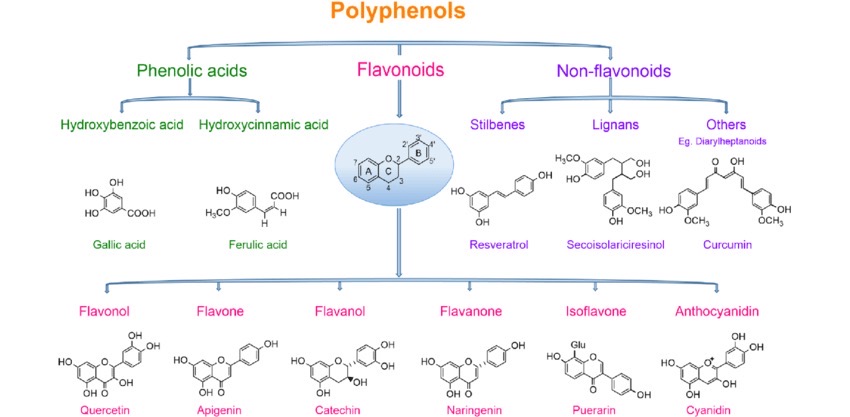
Polyphenols come from plants. There are about 8,000 polyphenols, of which roughly one-third are flavonoids. They give plants color and flavor and, in particular, help protect and defend them. 

Some of these defense functions include UV protection through absorption of UV light. They also include strengthening of cell walls and vascular tissues. Additionally, there is regulation of growth and development through interactions with plant hormones and reproduction. In fruits and seeds, polyphenols influence taste, color, and perceived freshness.

Examples: Quercetin (onions, apples), Epigallocatechin gallate (EGCG) in green tea, Anthocyanins (blue and purple berries), Resveratrol (red grape skin, wine), Curcumin (turmeric), Hydroxytyrosol (extra virgin olive oil).

What do they do for the human body?

Polyphenols are not essential nutrients like amino acids. However, they are known to exert substantial biological activity in the human body. This activity can protect cells from damage and includes antioxidant, anti-inflammatory, and potentially disease-protective effects. They may be linked to a lower risk of certain chronic diseases (e.g., cardiovascular disease, metabolic disorders, some neurodegenerative conditions) in studies, but results are mixed and often depend on dose and context. Given their vast diversity (there are 8000 polyphenols!) and the many unknowns many, many more studies are needed.

It makes sense to me that compounds that protect plants might also benefit humans. We humans, at least most of us, are not lettuce or apples, but we are living beings nonetheless. 

Treat health influencers with caution. As I said health influencers love polyphenols. We consumers have to be careful of course. Many of the health claims of polyphenols are not proven or they have only limited effect.

The other day I wrote about dark chocolate. It has a too positive health claim because of flavanols, which are a subcategory of polyphenols. I also wrote about Resveratrol and pterostilbene. They are both polyphenols. The main conclusion is that taking Resveratrol is not worth the money and effort, but Pterostilbene is.

What do polyphenols do for the brain?

Some health claims about polyphenols are intriguing, especially regarding brain health. While intriguing, these brain-related effects require more robust human evidence before drawing firm conclusions.

For example, Curcumin from turmeric is often cited as contributing to better brain health. Polyphenols are a broad class of plant-derived compounds, and brain-related claims vary widely by specific compound.

This topic could fill a book. Here are the main proposed brain benefits often discussed. There is protection against neuroinflammation linked to aging and neurodegenerative diseases. It may cause a potential reduction of oxidative stress in the brain. It influences brain-derived neurotrophic factor (BDNF). There are improvements in synaptic plasticity and neuronal survival signaling. It also leads to improvements in mitochondrial function. There could be reductions in mitochondrial dysfunction, which is a hallmark of aging and neurodegeneration. 

Some notes: BDNF plays an important role in healthy aging.

From where do you get your polyphenols?

The sources are the right ones and not difficult to obtain:  fruits, vegetables, tea, coffee, cocoa, wine, olive oil, nuts and whole grains. You will not find polyphenols in ultra processed food. 

One additional remark on coffee: caffeine is not a polyphenol (it is a purine alkaloid). Coffee does have many polyphenols, such as chlorogenic acid, and are often highlighted for their antioxidant properties

Warning

One warning: the fact that the source is healthy food, does not mean that polyphenols are always beneficial. They can interact with medicines or can cause certain physical reactions. As so much is still unknown about polyphenols it is preferable to get them through food, not through supplements.

Bioavailability and Metabolism Bioavailability and metabolism are important considerations. In the end, if only a small fraction of a compound reaches the bloodstream, it will have limited effect. 

Many polyphenols are poorly absorbed, with only a few percent entering systemic circulation. Fortunately, the original (parent) compounds are metabolized by the gut microbiota. The liver also metabolizes them into metabolites. These metabolites can be biologically active.

Interaction between different compounds (vitamins, hormones, amino acids, and polyphenols)

As mentioned, polyphenols are part of an integrated network. The main functions of these classes are:

  1. Nutrients (vitamins and minerals) and amino acids supply the building blocks and cofactors for metabolism.
  2. Hormones regulate how the body uses these building blocks and respond to energy and nutrient status.
  3. Polyphenols influence enzyme activity, signaling processes, and the metabolism of hormones and nutrients—often via the gut microbiome and redox signaling.

Experts note that mounting evidence highlights the vital interplay between immunity and metabolism. This interplay occurs in a range of immunometabolic disorders. These disorders include autoimmune and non-autoimmune conditions. The immune system modulates (=regulates) cellular metabolism in organs such as the brain, pancreas, and adipose (=fat) tissue. It senses fluctuations in the local nutrient environment. This process shapes metabolic pathways that influence pro- or anti-inflammatory phenotypes. Nutritional status supports immune function. However, we are only beginning to understand how individual nutrients or their combinations (immunonutrients) might guide immune cells. They could steer these cells toward a less inflamed, tolerogenic state. 

This last paragraph is a bit on the technical side. Perhaps the best summary is that polyphenols are abundant in Mediterranean foods. This sums it up pretty well I would say.

Enjoy your polyphenols, they are all around.

Robert, your health friend

The North Sea near Kijkduin

3A. DARK CHOCOLATE, ANOTHER MYTH (PARTLY) SCATTERED (health project99+)

Elephants in the Okavango delta

Dear reader, 

Do you sometimes have that feeling that “they” are taking away everything from you? Especially the things you like so much suddenly seem to be bad for your health. In short, are they robbing you of your last pleasures? I am sure you recognize this sentiment. 

At the moment, I feel a bit down as well. After years of diligently eating dark chocolate because it was supposedly so beneficial (and delicious), I have come to the conclusion that I should stop. Dark chocolate: farewell. Your health benefits are limited, and your negative impact on my health can be substantial. 

1.Red wine revisited 

Do you remember those discussions about red wine? One or two glasses a day were said to be good for your health because red wine contains resveratrol. Yet after years of serious drinking, many people learned that you would need around 100 glasses of red wine daily for resveratrol to have a meaningful impact. And later, while studying resveratrol, I learned that resveratrol has a short half-life and that pterostilbene may be a better option https://shakethehealthtree.com/index.php/2025/05/16/21-stay-healthy-100-glasses-of-red-wine-daily-or-resveratrol-pterostilbenehealth-project99/. I wrote a blog about this.

2.Okay, back to dark chocolate. Its main claim to health fame is that it is one of the few foods rich in flavanols. The other two are green tea and cocoa powder. Fewer flavanols are found in hazelnuts and red wine. Others that are often mentioned but contain very little flavanols are grapes, apples, blueberries, strawberries, and pears.

One oz (28 grams) of dark chocolate (70% cacao) provides 150–400 mg of total flavanols, a quantity that according to some could be enough. There are however two problems with dark chocolate: its saturated fat content and the way it is processed. If it is processed using the “Dutch process”, it can lose up to 90% of its flavanol content.

3.Summary 

Many of these beneficial flavanols are removed during the majority of manufacturing of dark chocolate. This means that dark chocolate processed in that way does not contain enough of these plant chemicals to be considered a health food. Chocolate also contains a lot of saturated fat and sugar. If you want your flavanols, go for green tea.

4. First, what are flavanols?

Flavanols are a subclass of flavonoids, a large family of plant compounds with antioxidant activity. They include flavan-3-ols (such as catechin and epicatechin) and their polymeric derivatives known as proanthocyanidins; some sources also mention related forms such as flavan-4-ols, isoflavan-4-ols, and flavan-3,4-ols. In total, many flavanol derivatives have been identified.

Flavanols are associated with health benefits in many studies.

You will often read the term monomeric flavanols. These are single-unit plant compounds and are the basic building blocks for larger, linked molecules called oligomeric flavanols. Some well-known monomeric flavanols are epicatechin, catechin, and EGCG (epigallocatechin gallate). These are among the flavanols most studied.

5.What are the reputed benefits of flavanols?

They act as antioxidants and may support cardiovascular health, reduce inflammation, and confer other health benefits in some studies. However, results in humans are mixed and often depend on dose, the specific flavanol form, bioavailability, and overall diet. My conclusion: worth the try.

Antioxidants protect cells from damage caused by free radicals—unstable molecules produced during normal metabolism.

6.Daily Recommended Quantity

There are no scientifically determined daily quantities. In general, the often-mentioned aim is 200–500 mg/day of total flavanols, but see caveats below.

One ounce (28 grams) of dark chocolate (70% cacao) provides 150–400 mg of total flavanols. Most people—myself included—do not stop at just 28 grams, but eat half or a whole bar. One cup of green tea contains about 150–300 mg of total flavanols (EGCG ~80–150 mg). Unsweetened cocoa powder (5 g) provides about 30–70 mg of total flavanols.

7.The main problem with dark chocolate is saturated fat.

Only those with a lot of discipline limit themselves to just one or two pieces. One or two pieces already account for about a quarter to one third of the daily recommended amount of saturated fat. Imagine what happens if you eat a 100 g bar of dark chocolate with about 80% cacao. Such a bar contains 35–45 g of total fat, of which saturated fat is 20–25 g, roughly the maximum recommended for women (20 g) and men (30 g) per day.

Assuming that saturated fat is not good for you (which I do), then having dark chocolate for its flavanol health component may not be worth it, in spite of all the claims by chocolate producers. This is especially true because many dark chocolate bars are processed in ways that cause most of the potential beneficial flavanols to disappear.

8.Two ways to process dark chocolate: the Dutch method (“Dutching”) and the other (much better), non-alkalized approach

In most dark chocolate bars, Dutch processing is applied, especially in cheaper ones. This is also called alkalization, which reduces the acidity of dark chocolate. Producers like it because it mellow‘s the acidity and deepens the brown color. Generally, more expensive brands use non-alkalized (natural) cocoa to preserve natural acidity and more complex flavors. The main downside of the Dutch process is the reduction of polyphenols and antioxidants, such as flavanols, which can be reduced by up to 90%. 

A challenge is that Dutch-processed cocoa, alkalized cocoa, or Dutched cocoa is often not clearly labeled. You may also see terms such as “Dutch-processed cocoa,” “alkalized cocoa,” or “Dutched cocoa,” or labels like “cocoa processed without alkali” or “natural cocoa.”  

On a different note, I wonder why the English language has so many negative expressions with the word Dutch included (perhaps because we destroyed their fleet in London in the 17e century).

9.Bioavailability 

Looking at the required dose is one thing, but bioavailability is what matters for each supplement. What is its half-life? How much of the flavanol intake actually reaches the bloodstream and is available to exert effects?

For flavanols, the issue of bioavailability is complex and highly variable, and therefore difficult to generalize, but for practical purposes, flavanol bioavailability is low, often only a few percent. For example, the well-known monomeric flavanols catechin and epicatechin show peak plasma levels within 1–3 hours after ingestion and are eliminated within a few hours.

Larger flavanols, such as proanthocyanidins (condensed tannins; polymers), are poorly absorbed in the small intestine. They are largely broken down by gut microbes in the colon into smaller metabolites that can be absorbed.

10.Can you take flavanols as supplements?

Yes. Flavanols can be taken as pills or supplements. The three most well-known types are: 1) Green tea extract or EGCG-heavy supplements (rich in monomeric flavanols such as catechin and epicatechin, and EGCG); 2) Cocoa flavanol extracts (rich in total cocoa flavanols); 3) Grape seed and pomegranate extracts (rich in proanthocyanidins and related metabolites). 

11.However, there are some important caveats. 

When you take a supplement always!! be aware of the general issue of quality. Only buy from reputable brands and always look for Good Manufacturing Practice (GMP) certification. 

And realize that these beneficial flavanols can also have some drawbacks, especially if you take too much. Safety-wise four points stand out.

A.Liver safety: high-dose green tea extract has been linked to rare cases of liver injury. If you have liver disease, start low and consult with a clinician. 

B.Caffeine content: many green tea extracts contain caffeine or related stimulants; this can affect sleep, anxiety, and heart rate in sensitive individuals. 

C.Drug interactions: they may interact with anticoagulants/antiplatelets and other medications; discuss with your doctor if you’re on prescription meds. 

D.Iron absorption: tannins can modestly reduce non-heme iron absorption; if you’re iron-deficient, consider taking flavanol supplements away from iron-rich meals. I wrote a blog about the importance of iron. https://shakethehealthtree.com/index.php/2025/08/14/21-to-iron-or-not-healthproject99/

Thank you for reading and my apologies for my negative conclusions about dark chocolate.

Take care and live a happy and healthy life,

Robert, your health friend

In the desert of Namibia

21. STAY HEALTHY: 100 GLASSES OF RED WINE DAILY OR …RESVERATROL/ PTEROSTILBENE?(health project99+)

Kenya, preparing for the great migration

Dear reader,

Some 20 years ago Resveratrol was the supplement to take. It was heavily promoted by longevity experts like Dr Sinclair. Resveratrol was also found naturally in wine. As a result, wine lovers jumped on the band wagon. More wine, for health benefits only of course.

To obtain a dose of Resveratrol that might have health benefits, one would need about 100 mg per day. This would require drinking approximately 100 to 1,000 glasses of red wine per day. I do not know about you, but drinking 100 glasses of red wine does not go hand in hand with longevity. This is true even for former diplomats.

In the end I decided for Pterostilbene and I stopped taking Resveratrol. Note: subscribing to my blogs is 102% free.

1.My thoughts about supplements in general

Before delving into the details of Resveratrol, let me first outline my general approach of this health project99+. The five key factors for longevity are: (1) diet, (2) stress management, (3) quality of sleep, (4) exercises and strength training, and (5) an active social life. 

By excelling in these five areas, you significantly increase your chances for a longer and healthier life. Supplements are the sixth category and, in my opinion, offer the most intriguing avenue for intervention.

Supplements provide hope—hope for a much longer life. Many studies are underway, and life is too short to wait for the results of all of them. Promising findings are emerging at an increasing pace, thanks in part to advancements in AI. I am among those open to taking certain supplements, even though their claimed effects are not yet scientifically proven. I adhere to the “do no harm” principle and choose to give them a try.

2.What can Resveratrol do? At first sight a lot.

Resveratrol is a natural polyphenol (see note below this blog on polyphenols). It has been detected in more than 70 plant species. It is especially found in grapes’ skin and seeds. It acts against pathogens (stuff that can make you ill), including bacteria and fungi. 

Many studies have demonstrated that Resveratrol possesses a very high antioxidant potential. It has other bioactive effects, like anti-inflammatory, anticarcinogenic (cancer), cardioprotective, vasorelaxant, phytoestrogenic and neuroprotective. 

Longevity experts have been interested in Resveratrol since the early 2000s. Their interest increased particularly following research that suggested its potential role in promoting health and longevity. One study found that Resveratrol could trigger sirtuins. Sirtuins are proteins that are believed to play a crucial role in aging and metabolic regulation. Resveratrol was also linked to calorie restriction, an intervention that has been linked to increased lifespan.

3. One big problem with Resveratrol

Its half-time is low (max a few hours, some studies talk about 15 minutes) and its bioavailability is very limited. Some talk about a few percentages only, others about a maximum of 20%. This means that your body processes most of the supplement before it can do its work. The remainder that works lasts a very short time only. Very disappointing. This covers a wider theme that one should always consider when taking supplements. Omega-3 fatty acids last three days and most of the intake is being used.

4.Pterostilbene comes to the rescue/what is Pterostilbene?

Pterostilbene is a natural substance found in small quantities in vegetables and fruits such as blueberries. Those quantities, however, are so small. You need to take supplements for it to have an effect. Pterostilbene is chemically similar to Resveratrol. Both are compounds known as stilbenes. It is rapidly emerging as a supplement to watch.

5. Differences between Resveratrol and Pterostilbene

Pterostilbene is considerably better absorbed by the gut compared to resveratrol. Pterostilbene has a bioavailability of about 80 percent, compared to 20 percent for Resveratrol. Some studies suggest that the bioavailability of Resveratrol may be even as low as 1-3%.

Pterostilbene also has a longer half-life, which may allow it to be effective at lower doses. Around 2 hours for Pterostilbene and 15 minutes up to one hour for Resveratrol.

Studies have already reported that Pterostilbene can be superior to Resveratrol for certain health conditions. It has shown promise for improving cardiovascular health. Pterostilbene may also enhance glucose levels and cognitive function. One minus is that there are far fewer studies on Pterostilbene than on Resveratrol.

6. Pterostilbene and Longevity/What does Pterostilbene do? A lot

Many studies demonstrate beneficial effects of pterostilbene on health and the aging process. The benefits of pterostilbene are promising, and supplements are likely safe for most people. Still, much more research has to be done. Results with mice is one step, with humans another.

  • Pterostilbene reduces inflammation and improves DNA repair. It activates sirtuins which are enzymes that repair DNA and improve metabolism. These enzymes can extend health span and lifespan.
  • Pterostilbene is also an autophagy inducer. Autophagy is the process that clears up cellular waste that accumulates in the cells. During aging, autophagy is reduced. Pterostilbene can also trigger AMPK. AMPK is an important energy sensor in the cells. This activation, in turn, inhibits mTOR, a strong inhibitor of autophagy.
  • Pterostilbene increases the production of powerful antioxidant enzymes, protecting the cells against oxidative damage. Pterostilbene can improve brain functioning and can protect the brain.
  • Pterostilbene has also been shown to increase levels of other antioxidants. These antioxidants are linked to everything from improved detoxification to reduced oxidative stress in mitochondria. Mitochondria are the energy powerhouses of our cells. They play a role in most age-related diseases. They also make sure you have enough energy to function optimally.2. It may help fight or prevent cancer.
  • Several animal studies have found that supplementing with pterostilbene lowers blood glucose levels. This suggests that this antioxidant may play a role in protecting against diabetes. It may also improve insulin sensitivity.
  • Some evidence even suggests that Pterostilbene and Resveratrol may mimic the effects of calorie restriction. This practice has been shown to increase life span and help prevent age-related disorders.

7. Side Effects of Pterostilbene

Both can on rare occasions have some side-effects. They vary from gastrointestinal symptoms and headaches to fatigue. Rare interactions can occur with some medicines, like blood thinners or medications that are metabolized by the liver. Various studies show that Pterostilbene improves many other biomarkers of cardiovascular health, including lowering blood pressure. This could be problematic for people with already low blood pressure or those on antihypertensive medications.

A recent study suggests a small but significant increase in cholesterol. This change may occur at the normal dose of 100 mg of Pterostilbene. This effect is observed at least for people with a higher-than-normal BMI. But as mentioned before, more studies are necessary. Conducting human trials with all the variables is quite difficult.

8. My experience

After finding out more about Resveratrol I decided to swap it for Pterostilbene. I take several other supplements, so it is difficult to say if and how it works. I find the studies convincing. I never experienced any side effects. A question I want to explore further is how to have the positive influence of Pterostilbene the whole day. Its half-life is 2 hours. This implies that it only works 4 hours per day if you take two per day.

Some experts also believe that pterostilbene and resveratrol are better when consumed together. They act synergistically to promote health and prevent a variety of diseases. This is why you’ll often find them packaged together in supplements. I have not seen much about this, so I only take Pterostilbene.

Enjoy your life, think about the big 5, do not forget your pills,

Robert, your health friend

Note: you often read about “polyphenols”. This is a large and diverse group of 8000 compounds with potential health benefits. They occur as  compounds in plants and are known for their antioxidant properties and potential health benefits. They do not directly influence the plant’s growth, development, or reproduction. However, they play important roles in protecting plants from ultraviolet radiation, pathogens, and herbivores.

Note. However, as with many compounds, the exact half-life can vary based on factors such as the dosage, individual metabolism, and form of pterostilbene (e.g., whether it is taken as a supplement or comes from food sources). Additionally, pterostilbene is reported to have improved bioavailability compared to resveratrol, which may influence its effects in the body.