7. GLYCEMIC INDEX: BLOOD SUGARS MATTER MORE THAN MANY THINK (health project99+)

The Atlas Mountains, Morocco

Dear reader,

The Glycemic Index (GI), invented in 1981, is very important. To all of us, not only to (pre)diabetics. Why? Scientific studies show that high blood sugar levels, even for short periods of time, can promote oxidative stress and inflammation. High blood sugar, whether they come in spikes or are semi-permanent, underlie many inflammatory diseases, including cardiovascular disease, the number one killer globally.

When blood sugar levels rise sharply and frequently, it can cause damage to the lining of blood vessels and promote inflammation. This damage and inflammation contribute to the development of atherosclerosis, a condition where fatty plaques build up inside the arteries, leading to clogs. Over time, these clogs can restrict blood flow and increase the risk of heart disease, stroke, and other cardiovascular problems.

For these reasons stay away from white bread, added sugars, white rice, sugary drinks, etc. Few carbs and no added sugars are the way to go. if you do take carbs, choose whole grains. However, be aware that in addition to GI there is also this thing called Glycemic Load (GL). Whole rice might have a lower GI than white rice but if you eat a lot of it, the GL and therefore its overall impact on your blood sugar level will still be higher than that of white rice.

Do not despair; there is still a lot to eat and drink, even if you reduce carbs drastically (and eliminate the white stuff 100%). Reread the first paragraph of this introduction again: “High blood sugar, whether they come in spike or are semi-permanent, underlie many inflammatory diseases, including cardiovascular disease, the number one killer globally.”

1 My personal bottom line: I stay away from carbs as much as possible in light of the fact that each spike in my blood sugar causes systemic stress, possibly leading to inflammation, which in turn is the basis for many diseases. Staying away completely is not realistic; therefore, I opt for whole grain versions and small carb portions thereof. Tonight we will eat brown rice, with a lot of vegetables and tofu—but the amount of brown rice in the overall meal will be modest.

Am I always 100% consistent? No, I do eat a white croissant now and then or a tasty sandwich. I am aware that each such culinairy excursion is a small attack on my health system. I tell myself that this occasional deviation is a far cry from eating carbs all day long. Which is true, but ten faults of another person do not compensate for mine.

2 One Concrete Example of Carbs Damage

One of my health heroes is Thomas Ford (check him out on YouTube). He tells us about the shock he experienced at the age of 57, when he found out that his arterial health was like that of someone who was 73. It was indeed an unpleasant surprise, as he lived very healthily—or at least he thought so—including running (half) marathons. However, he was on the verge of a heart attack. He totally reversed the situation by drastically cutting down on his carb-rich diet. 

I will write another blog on arterial health, but I just wanted to share with you this story of Thomas Ford, a health guru who only at a later age realized the potential negative impact of too many carbs.

3 What is the Glycemic Index (GI)?

The glycemic index (GI) is a measure that ranks carbohydrates in foods based on how quickly and how much they raise blood glucose levels after eating. Foods with a high GI cause a rapid spike in blood sugar, while those with a low GI result in a slower, more gradual increase. It helps guide food choices, especially for people managing diabetes. High 70 or more; Medium 56-70; Low less than 56. The ranking goes from 0-100.

Foods with a Glycemic Index (GI) of 0 or close to 0 are typically those that contain little to no carbohydrates. Some examples: Water; Plain black coffee, Plain tea (without sugar or milk); Eggs; Meat (beef, chicken, pork, turkey); Fish (salmon, tuna, cod); Oils (olive oil, coconut oil, butter); Cheese; Nuts (most varieties, e.g., almonds, walnuts) and Leafy green vegetables (spinach, kale, lettuce) 

4 What is Glycemic Load (GL)?

Glycemic load (GL) is a measure that combines both the glycemic index (GI) of a food and the amount of carbohydrates in a typical serving. It estimates the overall impact of that food on blood sugar levels. A food with a high GI but low carb content may have a low GL, meaning it causes a small blood sugar rise in typical serving sizes.

If you like formulas: take the GI of a product, multiply that by the carbs content of that product (for example 40 grams carbs out of the 100 grams product) and divide the outcome by 100.

Low GL: 10 or less; Medium: 11 to 19 and High 20 or more.

5 Is there a Threshold?

Keeping blood sugar levels within normal ranges helps minimise arterial inflammation and damage.

Fasting blood sugar below 100 mg/dL (5.6 mmol/L) is considered normal and less likely to cause damage. Maintaining HbA1c below 5.7% indicates good long-term blood sugar control, reducing cardiovascular risk.

Blood sugars consistently above 126 mg/dL (7.0 mmol/L) fasting or high post-meal spikes increase risk of arterial damage and cardiovascular disease. 

Unfortunately, it is not uncommon to find people with blood sugars almost 24/7 above 200 mg/dl. They start the day with white flower croissants, drinks sugary drinks, go for cakes, white rice, French fries etc. Their personal health system is under constant stress and is likely to end badly.

6 Emphasis on low fat

All those adds on low fat as the entrance to health heaven are very misleading. Not all types of fat are bad, on the contrary, and most of the times low fat products are full of carbs and sugar.

7 In practice, three differences between white rice and brown rice

The Glycemic Index (GI) of white rice is typically around 70-89, while the GI of brown rice is lower, usually around 50-65. So if you consume 100 grams of each the GL of white rice on your body is higher. But if your intake of brown rice is twice that of white rice, the GL on your body of brown rice is higher than that of white rice.

The curve for white rice has a steeper rise and higher peak, then falls relatively quickly, indicating a rapid increase and decrease in blood sugar. The curve for brown rice rises more gradually and peaks lower, resulting in a gentler blood sugar response, a process that your body can better handle.

So brown rice has two advantages: the Glycemic Load is less (assuming you eat the same portion) and it is better spread over time.

Two advantages only? No, three as brown rice also has a lot of excellent nutrients that white rice does not have.

8 What about fiber?

More and more the importance of enough fiber is stressed, also in my blogs. Yes, whole grains offer a lot of fiber, but a low carb approach with few grains should not impact your overall fiber intake as there are many other good sources, like seeds, nuts, fruits, vegetables.

9 What about fruits?

Most fruits contain at least some carbohydrates and have a measurable GI above zero. Some fruits have very low GI values, close to zero or very low (under 25). For fruits closest to zero GI-like effect, berries (strawberries, blackberries, raspberries) often have low to moderate GI values (around 25-40) and low glycemic loads due to high fiber content.

However, no fruit has a GI of exactly 0 because they contain natural sugars. Cherries (~20); Grapefruit (~25); Plums (~24); Apples (~28, slightly higher but still low); Pears (~30, low); Oranges (~40, moderate)  

10 Just to know (sleeping and breathing)

Cooking methods (potatoes!) and level of ripeness (bananas) can also make a big difference in GI. If your goal is to keep the GI low, boiling followed by cooling (and consuming cold or reheated gently) is a better choice than boiling followed by baking or roasting.

As always health is complicated. If you are a bad sleeper this plays havoc with your GI. Same with breathing. Breathing itself does not directly impact the Glycemic Index (GI) of foods, but breathing techniques can indirectly influence blood sugar control and insulin sensitivity through Stress Reduction: deep, slow breathing activates the parasympathetic nervous system, reducing stress hormones like cortisol that can raise blood sugar levels. Other elements also play a role like Improved Oxygenation (Better oxygen delivery may enhance metabolism and cellular function, possibly improving glucose utilisation) and Enhanced Relaxation (=Relaxed state which can improve insulin sensitivity and help maintain steadier blood glucose levels).

Dear reader, to cut a long story short: fully reduce the intake of white carbs and added sugars to zero. Reduce drastically the amount of whole grain carbs you eat.

It is doable. 

Take care and live a happy and healthy life.

Robert, your health friend

Sahara desert in Morocco

1. METHIONINE: REDUCTION OF THIS AMINO ACID HELPS LONGEVITY (health project99+)

Main square in Bogota, capital of Colombia

Dear reader,

The vegetarian lifestyle often comes up when I explore ways to achieve better longevity, with “better longevity” meaning a longer and healthier life.

This time, I want to talk about methionine. You can only get methionine through your diet, as your body does not produce this specific amino acid. Reducing methionine intake is a major contributor to better longevity; this insight has convinced me to move further toward a vegetarian lifestyle.

Methionine is essential because it is one of the 20 primary amino acids, but it is crucial to stick to the recommended amount—around 1000 milligrams daily. Especially those with a meat- and fish-rich diet often consume 2 to 3 times this amount. Research shows that too much methionine has a very negative effect on your longevity. Reducing the typically high levels of methionine in the Western diet can contribute to up to 50% of the maximum “better longevity” potential we currently understand (for example, living up to 100 years old). Fifty percent!

So, cutting down on methionine and only taking what you need has, according to all I have read, a big impact on both the quality and length of your life. To stay within the daily recommended amount, it is easiest to follow a vegetarian diet without eggs—so, roughly speaking, a semi-vegan diet.

1.Why is avoiding too much methionine so important?

Three out of five people worldwide die from diseases linked to chronic inflammation. Too much methionine plays an important role in this. Low-grade chronic inflammation is a silent killer—one that simmers quietly for years without our knowledge and can affect almost anyone. It contributes to cardiovascular disease, cancer, type 2 diabetes, and other conditions.

There are hundreds of theories about aging. The oldest and most well-known is the mitochondrial theory of aging. Mitochondria are parts of your cells better known as the “powerhouses” of each cell.

2.The mitochondrial theory of aging claims that aging results from accumulated damage to mitochondrial DNA and dysfunction in mitochondria, leading to decreased energy production and increased oxidative stress. This oxidative stress causes inflammation and premature death.

In short: Oxidation can cause inflammation, and inflammation can increase oxidation which damage your cells.

3.Oxidative stress occurs when there is an excess of free radicals or Reactive Oxygen Species (ROS). These ROS can damage cells, proteins, and DNA, triggering the inflammatory response. Inflammation, in turn, can produce more ROS, creating a vicious cycle.

Methionine, among all amino acids, is the main culprit of oxidative stress.

4.The mitochondrial aging theory has some compelling evidence, as it has been shown that the lower the rate of methionine free radical production, the longer animals live. To reduce methionine free radical production, you have two options: exercise and/or adapt your diet.

5.To cut down on methionine through diet

Calorie restriction is known to prolong life, but a constant state of semi-hunger is neither pleasant nor sustainable for most. The alternative, intermittent fasting, is only possible for the disciplined among us.

Why not at least focus on those elements that cause chronic inflammation? Of all amino acids, methionine stands out as causing oxidation and consequently chronic inflammation in a significant way when the intake is too high.

Unfortunately it is almost impossible to avoid consuming too much methionine on a non-vegetarian diet. Meat, fish, and eggs all provide 300–800 milligrams per 100 grams. In light of the daily requirement of 1000 mg, this is way too much.

Realizing that methionine contributes significantly to the oxidation of mitochondria (which in turn leads to chronic inflammation) brings us to an important conclusion: cut down on methionine intake! The only way to do this (apart from calorie restriction) is by adapting the typical Western diet, which is generally loaded with animal proteins. And exercise but I do not go into this topic.

6.Three ways to reduce methionine intake

1. Overall food reduction (fasting), but this is a difficult practice to maintain for many. I have read many studies indicating that, in general, people in the West eat too much food, and reducing food intake has general health benefits. 

2. However, putting this discussion aside, if you know that one component (in this case, methionine) has a big impact on longevity, why not concentrate on methionine? Studies have shown that reducing other amino acids has no impact on longevity, except for methionine.

3. Related to the previous point, an efficient strategy is to swap animal protein for plant protein. Some fish, chicken, or other meat can already easily push you beyond the 1000 mg limit. For example, 200 grams of salmon can contain as much as 1500 mg of methionine.

7.What is the role of Methionine?

Methionine influences mitochondrial function by regulating antioxidant defenses and methylation processes (see note).  

Mitochondria are membrane-bound organelles found in most cells that generate energy by producing ATP through cellular respiration. They are often called the “powerhouses of the cell.”

Note: Methylation is a natural chemical process where small molecules called methyl groups are added to DNA or proteins, helping to control how genes are turned on or off.

8.How much?  

The minimum daily requirement of methionine for adults is about 10–13 mg per kilogram of body weight, typically around 1,000–1,300 mg per day. Some recommendations go up to 2,000 mg per day, but in general, 1,000 mg is commonly mentioned.

Fruits and vegetables are generally low in methionine, so reaching 1,000 mg solely from them is challenging. However, if you have a mostly fruit and vegetable-based diet, it is possible to increase your methionine intake by including legumes, nuts, seeds, and whole grains, which contain more methionine per 100 grams, though still substantially less than meat, fish, and dairy.

– Fruits and vegetables: 10–150 mg per 100 grams  

– Beans, legumes, nuts: 50–200 mg per 100 grams  

– Fish, meat, dairy: 300–800 mg per 100 grams  

9.Methionine is distinct from other amino acids  

According to internet sources, methionine differs because it is crucial for all protein synthesis as it contains a sulfur atom in its thioether side chain, acts as a precursor to important methyl group donors like SAM (S-adenosylmethionine), and is an essential amino acid required from the diet. These features give methionine a unique and vital role in biology compared to other amino acids.

Research has shown that only one amino acid is prone to causing oxidation: methionine.  

10.It is not difficult for vegetarians to get all 20 primary amino acids (9 of which must be obtained through food).  

Meat and fish lovers often say that only meat and fish can provide all the necessary amino acids. This is not correct. Several plants contain all nine essential amino acids necessary for human nutrition, making them “complete proteins.”  

Note: The difference between essential and non-essential amino acids is not related to their importance. Both categories are equally important, but essential amino acids can only be acquired through food. 

Examples of complete proteins containing all nine essential amino acids include soybeans (tofu, tempeh, edamame), quinoa, buckwheat, hemp seeds, chia seeds, amaranth, spirulina, nutritional yeast, and some mushrooms. Additionally, one can take plant-based protein powders that provide all essential amino acids that your body does not produce. At home, we use Sun Warrior, which is, of course, GMP-certified.  

11.If methionine intake is too low (which is rare), it can lead to impaired protein synthesis; poor growth and tissue repair; reduced production of important molecules like cysteine, glutathione (an antioxidant), and SAM (a methyl donor); weakened immune function; liver problems; and possible neurological issues.

12.Added benefit of a low methionine diet 

People on a low methionine diet who get methionine from plant sources suffer 50% less from insomnia and snore less. My personal experience confirms this.  

To return to the beginning: the vegetarian lifestyle often comes up when I explore structural approaches to better longevity, with “better longevity” understood as a longer and healthier life. Reducing your methionine intake to the recommended level is very difficult if you are not vegetarian. If you decide to adopt such a diet, do not forget to take Vitamin B12 supplements!  

Enjoy life, whether you are a vegetarian or not.  

Take care,  

Robert, your health friend  

View of Bogota, capital of Colombia

13. FIBER: LET THERE BE PRAISE (health project99+)

Rare winter landscape in Kijkduin, The Netherlands

Dear reader, 

“Eat your vegetables.” “Get your vitamins and minerals.” “Do not forget your protein.” “Do not smoke”. These are common nutritional mantras that most of us already follow. But “get enough fiber”? This advice isn’t given very often; it should be, as there is a serious fiber deficiency worldwide. One culprit is modern living, which includes too much ultra-processed food. Many Americans eat less than half the fiber they need.

We often think of fiber as the food that relieves constipation. However, fiber is much more than that. It plays an important role in your overall health. Adequate fiber intake is one of the best ways to improve your health. Fiber impacts gut bacteria and aids in weight loss. It controls hunger cues and regulates blood sugar. Fiber is a fundamental part of a healthy diet. Therefore, it is fundamental to a healthy life.

As you will read in this blog, getting enough fiber is not easy. You need to eat whole grains, nuts, fruits, and vegetables. In my view, this is the better approach. I also place emphasis on including fermented foods (sauerkraut) and kefir in the diet.

What Is fiber? Fiber, also referred to as dietary fiber or “roughage,” is a plant nutrient. Fiber is a diverse group of carbohydrates that humans don’t digest in the small intestine; most of it is fermented in the colon.

Together with adequate fluid intake, fiber helps move food through the digestive tract and supports digestion.

Your body does not digest fiber with human enzymes. Most fiber passes through the small intestine largely undigested. It is then fermented by bacteria in the colon. In short, fiber is not absorbed in the small intestine; it travels through the gut largely intact.

Fiber functions to help regulate bowel movements, support healthy cholesterol and triglyceride levels, and promote colon health.

There are many types of fiber.

What is the best fiber? Fibers that are soluble, viscous, and fermentable seem to be particularly beneficial. Resistant starches are another healthy group of fibers. More about the meaning of soluble, viscous, and fermentable fibers below. It’s not necessary to worry too much—just eat a mix of whole grains, fruits, nuts, and vegetables. That should provide plenty of the best fibers. My approach to meeting daily fiber needs is described in detail at the end of this blog.

What does fiber have to do with feeding gut bacteria? You may wonder what your gut bacteria have to do with fiber. Just like any other organism, gut bacteria need to eat to get energy to survive and function. The issue is that most carbs, proteins, and fats are absorbed into the bloodstream early. They reach the large intestine with very little left for the gut flora. This is where fiber comes in. 

As human cells can’t digest fiber, it reaches the large intestine relatively unchanged. Intestinal bacteria do have the enzymes to digest many of these fibers. This is the most important reason some dietary fibers are so essential for your health. These dietary fibers are also labeled fermentable fibers (see below). They feed the “good” bacteria in the intestine, functioning as prebiotics. A good example is sauerkraut or kefir. I wrote a blog about the wonderful impact a daily portion of sauerkraut has on my gut health. And we all know that a happy gut means a happy owner. https://shakethehealthtree.com/index.php/2025/09/25/3-sauerkraut-ein-sehr-gutes-probiotikum-health-project99/

How much do you need daily? The recommended intake is 38 grams for men and 25 grams for women. About one quarter should come from soluble fiber. However, most people consume around half of that, roughly 15–17 grams per day. As you age, you may need slightly less.

How much fiber per day is too much? Around 70 grams of fiber is considered excessive. Consuming that level or more regularly may lead to unwanted side effects. These include temporary bloating, gas, and abdominal discomfort.

When you increase your fiber intake, pay attention to the following: If you’re adding high-fiber foods to your diet, do so gradually over a few weeks and drink plenty of water, too. This helps prevent adverse effects such as bloating and gas. Increasing gradually means adding about 5–10 grams more fiber per week to allow your gut to adapt. 

When I started increasing fermentable fiber (sauerkraut), I overdid it and felt uncomfortable for a few days. Aim for a mix of soluble and insoluble fiber from real foods (fruits, vegetables, legumes, whole grains, seeds). When bacteria ferment the fiber, they also produce gases. This is why high-fiber diets can cause flatulence and stomach discomfort in some people. These side effects usually go away with time as your body adjusts.

Sources of fiber: nuts and seeds. Legumes include beans, lentils, and peas. Whole grains such as brown rice and Ezekiel bread are good sources. Green vegetables like broccoli and other dark leafy greens also provide fiber. Cabbage and celery are included. Bran, specifically wheat bran and oat bran, is another source. Lastly, popcorn is a fiber-rich snack. The best whole-food sources of fermentable fibers are beans and legumes.

What are the benefits of sufficient fiber intake?

Improves heart health. Soluble fiber can lower LDL cholesterol and improve overall lipid profiles, which lowers heart disease risk.

1.Works against colon cancer. Fiber cleanses your colon, acting like a scrub brush. The scrub-brush effect helps clear bacteria and other buildup in your intestines and reduces your risk for colon cancer. This is supported by science. One reason may be that some types of fiber, such as the pectin in apples, may have antioxidant properties. The friendly bacteria produce nutrients for the body. They include short-chain fatty acids such as acetate, propionate, and butyrate. Butyrate appears to be crucial. These short-chain fatty acids can feed the cells in the colon. This leads to reduced gut inflammation. It also results in improvements in digestive disorders such as irritable bowel syndrome, Crohn’s disease, and ulcerative colitis.

2.Managing blood sugar: The body takes longer to break down high-fiber foods. This means glucose does not enter the bloodstream so quickly. This helps you maintain more consistent blood sugar.

3.Reducing cholesterol: Fiber in the digestive tract can help reduce the body’s cholesterol absorption. This is particularly true if you take statins. However, I would not use fiber supplements.

4.Promoting a healthy weight: High-fiber foods like fruits and vegetables tend to be lower in calories. In addition, fiber can slow digestion to help you feel fuller for longer.

5.Supports gut microbiome health: Many fibers act as prebiotics. They feed beneficial gut bacteria and produce short-chain fatty acids. This process supports colon health and boosts immune function. An estimated 100 trillion live bacteria reside in the human gut, mainly in the large intestine. These bacteria are crucial for optimal health. They play various roles related to weight management, blood sugar control, immunity, brain function, and mental health. They are so important that they are often referred to as the “forgotten organ.” 

Because humans can’t digest fiber, it ends up reaching the large intestine mostly unchanged. Fermentable fiber comes into play: these are fibers that friendly gut bacteria can digest (ferment) and use as fuel. Fermentable fibers include pectins found in apples with skin, citrus fruits, berries, and peaches. Beta-glucans are in oats and barley. Inulin and oligofructose are present in chicory root, Jerusalem artichoke (sunchoke), onions, garlic, leeks, asparagus, artichokes, and dandelion greens.

6.Important for energy: When our gut bacteria break down fiber, they produce short-chain fatty acids (SCFAs). Humans can digest SCFAs for energy, and a symbiotic relationship between the digestive system and our colon’s microbiome ensues.

7.Managing stool: Fiber increases the weight and size of your stool and softens it. A bulky stool is easier to pass, decreasing your chance of constipation. If you have loose, watery stools, fiber may help solidify the stool because it absorbs water and adds bulk. It is not a process that your body can do without fiber.

8.Nanoplastics: recent studies indicate that fibers could be a good way to get rid of most nano plastics. Something to follow!

Can humans survive without fiber? Yes, fiber is non-essential. It is not a nutrient in the traditional sense, since we derive no nutrition from fiber—it simply passes through us. However, describing it as “just passing through” understates the importance of sufficient fiber intake. It also serves as fuel for your gut bacteria.

Classifications of fiber Most people, including me, have a very basic understanding of fiber. We tend to lump it all into one category. However, not all fiber is created equal. Some types are highly beneficial, while others can cause digestive problems in some people. The three classifications are: Solubility (soluble vs insoluble), viscosity (viscous vs non-viscous), and fermentability (fermentable vs non-fermentable).

Soluble vs insoluble fiber

  • Soluble fiber dissolves in water to form a thick gel-like substance in the digestive tract. It supports healthy cholesterol levels. It also aids in maintaining balanced blood sugar.
  • Insoluble fiber does not dissolve in water and adds bulk to stool as it passes through the digestive tract. Its job is to promote regularity by increasing stool bulk and speeding transit through the gut. It does not ferment as much with bacteria in the colon.
  • Not all soluble fibers are highly viscous. Some dissolve without forming much gel; these are less chewy in the gut.

Why it matters: the gel from viscous soluble fiber slows gastric emptying. It also slows the rate at which sugars and fats are absorbed. This helps with blood sugar control and can lower LDL cholesterol. Visceral or viscous fibers are particularly associated with increased satiety and may support weight management.

All about resistant starches (a type of dietary fiber) Starches are the main type of carbohydrate in the diet. They are long chains of glucose molecules. These are found in potatoes, grains, and many other foods. When starch resists digestion in the small intestine, it is called resistant starch. It then behaves like soluble, fermentable fiber in the gut. For a note on fermented foods, see the related link.

Resistant starch has several health benefits. It supports digestive health, improves insulin sensitivity, helps regulate blood sugar, and may reduce appetite. Good sources include green bananas, certain legumes, and cooked-and-cooled potatoes and rice. Some starchy foods form larger amounts of resistant starch when they are cooled after cooking (e.g., white potatoes and white rice).

Thanks for reading. Please enjoy food, life, family and friends,

Robert, your health friend

Snow in Istanbul is not rare

Some notes on how I get my daily quantity of fiber

The whole fiber topic makes you realize how much the world and our diets have changed. Basically, you need to radically change your eating habits to get those 25 grams (women) or 38 grams (men) daily.

How to get there? Whole grains, fruits, vegetables and nuts; skip ultra processed food or white cereals. Please vary as different produce have different types of fiber. Also realize that some fruits or vegetables have a lot of sugar, like carrots (4.7 grams of sugar per 100 grams), beets (7 per 100) and even broccoli (1.7 per 100).

As I said, getting to the 38 grams (I pretend I am younger than 50) is not easy. I do not like beans. It is a shame because 100 grams of beans will get you 10 grams of fiber.

My liquid meals help a lot: the smoothie in the morning and the soup in the evening.

My morning smoothie contains 50 grams of broccoli (=1 gram), 100 grams of banana (=2,6 gram), 50 grams of oats (=5 grams), avocado 50 grams (=3,4 grams), 50 grams spinach (=1 gram). In total around 12 grams. This can be more when one adds for example berries, but these are low on fiber (1.2 grams per 50 grams).

My soup consists of carrots, beets, broccoli and pumpkin (broccoli 2.6 per 100, beets 2 per 100, carrots 2.8 per 100 0,5 pumpkin. Another 7.4 grams.

In addition, my lemon wonder drink. Every morning I make a few liters, using 2 lemons + 4 grams of ginger. I take the lemons whole, including peel, which has the most fibers. One lemon is 60 grams, the peels weighs 30 grams of which 10 % is fiber. So, another 3 grams of fiber per day; the other 3 grams are for my wife.

I also take some yogurt in the morning with home made granola including Chia seeds. Chia seeds are the best in fiber with 34,4 grams per 100 grams. I estimate I take some 10 grams of Chia seeds as part of my granola, so 3,4 grams. Plus some berries, 1 gram per 50 grams. In total 4.4 grams.

The readers sees that with this fiber rich approach I just make it to 27 grams. The remainder is nut snacking during the day, between 50 and 100 grams almonds (too much, I know). Almonds give you 13.4 grams of fiber per 100 grams.

3.PUMPKIN SEEDS: ROAST, EAT, ENJOY (health project99+)

Dear reader,

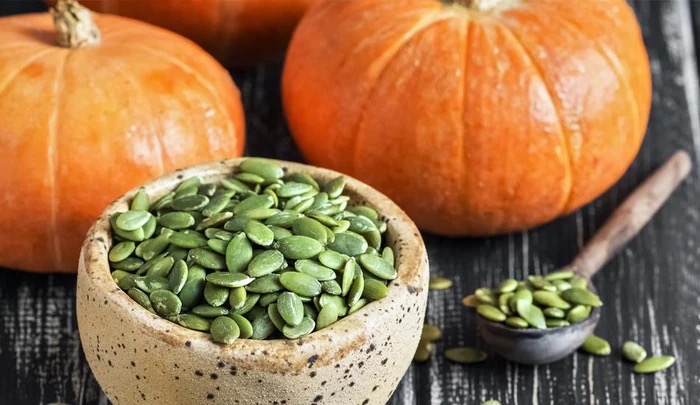
Often used in salads as toppings, these green-gold kernels, often labeled “pepitas,” are a compact source of affordable vegetarian protein, minerals, and healthy fats (about half of their weight is fat). Most people love pumpkin seeds, and I do as well.

1.Superfoods It is nice to see that “old” foods can be called superfoods. Pumpkin seeds are one of them. I do not like the term superfood as such, because it suggests wonders to be achieved by eating A, B, or C. Each with a loyal, at times fanatic fan base (and companies that just want to make money).

What many call superfoods is no more than excellent nutrient-dense food, rich in vitamins, minerals, antioxidants, and phytochemicals. They’re good for your health, can help prevent disease, and support overall wellness. To eat really good food for oneself is already an accomplishment, as most products in your supermarket are not great at all. “Superfoods” are part of my diet, like kale, avocado, wild salmon, and the occasional pumpkin seeds in my salad. Or as snack in the early evening.

“Superfoods” should be part of a holistic diet and healthy lifestyle, not a goal in themselves. They are not exclusive instruments to help you reach your health goals. Do not rely on them too much. So far, no supplements, pills (and definitely no superfoods) exist that cure or prevent everything.

2.Seeds compared. When you compare seeds, there are differences, of course, but most are not that big. Pumpkin seeds are average compared with other seeds when it comes to calories, relatively high in protein (about 25%), and higher than average in fat (but mostly healthy fat) with about 50%, carbohydrates are average and fiber is low. They are a good source of iron, potassium, zinc, and magnesium.

3.The Benefits of Pumpkin Seeds 1. The unsaturated fats in pumpkin seeds, along with magnesium and phytosterols, can contribute to a heart-healthy dietary pattern. Some research suggests that regular, moderate intake of pumpkin seeds may help improve lipid profiles and support blood pressure within certain populations.

2. The combination of protein, fiber, and healthy fats helps increase satiety, which can support better appetite control. For people trying to manage weight, substituting or pairing pumpkin seeds with other snack options can reduce hunger between meals. The fiber content also supports gut health and steady digestion when consumed as part of a balanced diet.

3. Pumpkin seeds contain antioxidants such as vitamin E and carotenoids, plus phytosterols that may support cholesterol balance. Some compounds may help reduce inflammation and oxidative stress.

4. Like many seeds and nuts, pumpkin seeds contain tryptophan, an amino acid that the body can convert to mood-regulating and sleep-related chemicals. Magnesium, another nutrient they supply, is also linked with better sleep quality for some people.

5. Some small studies and traditional use point to benefits for urinary function in men, particularly related to lower urinary tract symptoms (LUTS). The zinc profile in pumpkin seeds is often highlighted in this context. More robust, large-scale trials are needed to make definitive recommendations, but the existing data are encouraging. Men at my age (67) care about their prostate and welcome news like this.

6. In addition, studies indicate that pumpkin seeds contribute to immune support and a better mood and sleep.

4.Problems? Yes, (six minor) ones Pumpkin seeds are calorie-dense. The prepackaged roasted varieties often contain too much sodium (salt). Overconsumption can lead to digestive issues. Some people are allergic. Pumpkin seeds contain compounds like phytic acid that can modestly reduce mineral absorption when eaten in very large amounts, so I would not worry too much. If you have kidney disease, do not eat too much and consult your doctor.

5.Nuts vs. seeds in general Seeds are the plant’s embryos that can grow into a new plant. Nuts are a type of dry fruit with a hard shell around a single seed. True botanical nuts include chestnuts and hazelnuts, etc. Many “nuts” sold in stores (almonds, pistachios, walnuts, cashews) are actually seeds from fruits or drupes, not true botanical nuts.

Nuts (almonds, walnuts, pistachios, cashews, etc.) are frequently more expensive per pound than most seeds.

Both seeds and nuts have excellent nutritional profiles, with differences among them, of course. Seeds are often rich in polyunsaturated fats, certain minerals (magnesium, zinc, iron), and fiber. Nuts are often higher in monounsaturated fats and protein, with their own mix of minerals and phytochemicals.

The shelf life of raw nuts is substantially higher than that of seeds—two times or more. There is no difference when stored in the refrigerator or freezer. Some seeds, like pumpkin seeds, can be more prone to oil rancidity if exposed to heat and light for long periods.

6.How long do pumpkin seeds stay fresh? 4 months in a dark cupboard; keep them in airtight containers away from light, heat, and moisture. If they are roasted, shelf life is about 4 weeks only, before roasted taste disappears. Roasting also diminishes shelf life. For that reason, I freeze a few kilograms of roasted pumpkins and take out a few hundred grams each week. In the fridge: 3–6 months (roasted or not); in the freezer: 9–12 months (roasted or not).

7.Why soak and roast them? Soaking (especially in salted water) reduces the phytic acid in pumpkin seeds. Phytic acid can reduce the absorption by your body of important minerals from other foods. Soaking first will also make roasting easier and can improve digestibility for some people. Roasting will add a lot to the flavor. Some people claim that roasting alone produces a better taste result.

8.Is this a lot of work? No. I do these kinds of things during dinner preparation—Always a few kilograms at a time and storing most of the result in the freezer. A few kilograms should last 1–2 months. The soaking should last 4 hours (in salted water) and the roasting 20 minutes at 175°C (350°F). While roasting, add a bit of oil and salt.

It is getting dark, time for dinner and a nice evening snack. Tonight, as often, pumpkin seeds of course.

Take care, enjoy your food and live a happy and healthy life.

Robert, your health friend

Slowly preparing for the annual trek, Kenya

3. FLAXSEEDS ARE A SUPERFOOD. VIVA LA FLAX! (health project99+)

Drinks on our terrace in Kinshasa

Summary: I truly like flaxseeds. They are 100% loaded with nutrients. Gram for gram, they are not missing one beat. They are an excellent, affordable, and tasty food option. For me: viva la flax! (note: subscribe for free to my blogs, thanks!).

1.Where so flaxseeds fit in?

When we talk about food, it’s often about the big items: meat, dairy, nuts, fish, vegetables, and fruit. You know the routine. We should always aim for balanced and healthy eating. We should consider the impact of cholesterol, the good fats, protein (do we have enough?), and fiber. Doing this right can considerably increase the healthy part of your life (“health span”).

When it comes to food, we should look for diversity. We should spice up our meals. Let’s make our salads more tasty. It’s great to find something that is 100% healthy and provides nutrients that aren’t always easy to come by. Avocado is one such product, and so are flaxseeds! Flaxseeds are affordable and provide protein, fiber, omega-3 fatty acids, essential vitamins, and a wealth of minerals.

2. The health wonders of flaxseeds (according to the internet)

Flaxseed may help lower the risk of some cancers, mainly breast cancer. However, this is based on indications and not definitive science yet. They contain lignans, plant compounds that may also contribute to hormonal balance.

Flaxseed does more. It is said to stabilize blood sugar, being rich in both soluble and insoluble fibers. These fibers are abundant in flaxseeds, which can promote digestive health and regularity.

The combination of omega-3 fats, fiber, and lignans may enhance heart health. They lower cholesterol levels. They reduce blood pressure and decrease inflammation.

The omega-3 fatty acids and lignans in flaxseeds may help reduce inflammation in the body. This inflammation is linked to chronic diseases.

3. I take two spoons daily

I consume, on average, 2 tablespoons of flaxseed per day, which is about 15 grams. Flaxseeds are best consumed ground, as whole seeds may pass through the digestive system undigested, significantly reducing their health benefits.

To save money, buy whole flaxseed. Grind it in a coffee grinder. Then, store the ground flaxseed in an airtight container for easy use.

Instead of flaxseeds, you can use flaxseed oil. Still, it is very sensitive to heat and light. Flaxseed oil is best kept in dark glass bottles and stored in a dark, cool place like a kitchen cabinet. It isn’t suitable for high-heat cooking techniques, like frying.

4. So what does flaxseed give you?

One tablespoon of flaxseeds (=7 grams) already provides: complex carbs 2 g, “good fat” 3 g, fiber 2 g and protein 1 g. Not bad at all!

The “good fat” consists mainly of alpha-linolenic acid (ALA), an omega-3 fatty acid, primarily found in plant foods. Flaxseeds are one of the best sources in the plant world for ALA. Flax oil (which I do not use) has double the amount of ALA as the seeds.

One tablespoon of flaxseeds contains two grams of fiber. It might seem modest, but two tablespoons of flaxseeds is already 10% of your daily need. For women, that’s 14%. This is not the place to dwell on the importance of fiber, but just to recap. Most of us do not get enough fiber per day. Yet, it is essential for gut health and bowel movement. So just adding two tablespoons per day to your smoothie or salad is already a good step.

In addition, flaxseed has Thiamine: 10% of the Daily Value (DV), Copper: 9% DV, Manganese: 8% DV, Magnesium: 7% DV, Phosphorus: 4% DV, Selenium: 3% DV, Zinc: 3% DV, Vitamin B6: 2% DV, Iron: 2% DV, Folate: 2% DV

5. But take care in a few specific cases (according to internet)

As the reader knows I am no doctor. On internet I read the following warnings about flaxseeds.

If ground flaxseed or flaxseed oil goes rancid, it may cause cholesterol problems and inflammation. In general, but you have to eat really great quantities, it might cause diarrhea, cramping, gas, and bloating.

  • Rated POSSIBLY UNSAFE form pregnant & nursing women,
  • might slow blood clotting and affects other bleeding disorders,
  • affects diabetes & diabetes medication,
  • can cause intestinal obstruction,
  • affects those that have hormone sensitive conditions,
  • affects hormone medications (birth control)

6. Which is better, chia seed or flaxseed?

Chia and flax seeds are both very nutritious and offer similar benefits for heart health, blood sugar levels, and digestion. However, flaxseeds appear to have a slight advantage. They are particularly effective at reducing hunger and appetite. Additionally, they lower the risk of certain cancers. Plus, they’re often less expensive.

Time to make a nice salad for my wife. Some lettuce, tomatoes, avocado, shrimps, olive oil, cucumbers, all sprinkled with flaxseeds of course.

Enjoy a long and tasty life,

Robert, your health friend

Okapi/DRC