
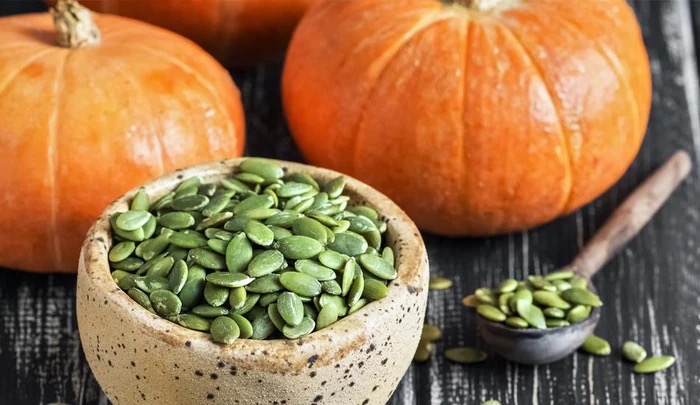
3.PUMPKIN SEEDS: ROAST, EAT, ENJOY (health project99+)

Dear reader,

Often used in salads as toppings, these green-gold kernels, often labeled “pepitas,” are a compact source of affordable vegetarian protein, minerals, and healthy fats (about half of their weight is fat). Most people love pumpkin seeds, and I do as well.

1.Superfoods It is nice to see that “old” foods can be called superfoods. Pumpkin seeds are one of them. I do not like the term superfood as such, because it suggests wonders to be achieved by eating A, B, or C. Each with a loyal, at times fanatic fan base (and companies that just want to make money).

What many call superfoods is no more than excellent nutrient-dense food, rich in vitamins, minerals, antioxidants, and phytochemicals. They’re good for your health, can help prevent disease, and support overall wellness. To eat really good food for oneself is already an accomplishment, as most products in your supermarket are not great at all. “Superfoods” are part of my diet, like kale, avocado, wild salmon, and the occasional pumpkin seeds in my salad. Or as snack in the early evening.

“Superfoods” should be part of a holistic diet and healthy lifestyle, not a goal in themselves. They are not exclusive instruments to help you reach your health goals. Do not rely on them too much. So far, no supplements, pills (and definitely no superfoods) exist that cure or prevent everything.

2.Seeds compared. When you compare seeds, there are differences, of course, but most are not that big. Pumpkin seeds are average compared with other seeds when it comes to calories, relatively high in protein (about 25%), and higher than average in fat (but mostly healthy fat) with about 50%, carbohydrates are average and fiber is low. They are a good source of iron, potassium, zinc, and magnesium.

3.The Benefits of Pumpkin Seeds 1. The unsaturated fats in pumpkin seeds, along with magnesium and phytosterols, can contribute to a heart-healthy dietary pattern. Some research suggests that regular, moderate intake of pumpkin seeds may help improve lipid profiles and support blood pressure within certain populations.

2. The combination of protein, fiber, and healthy fats helps increase satiety, which can support better appetite control. For people trying to manage weight, substituting or pairing pumpkin seeds with other snack options can reduce hunger between meals. The fiber content also supports gut health and steady digestion when consumed as part of a balanced diet.

3. Pumpkin seeds contain antioxidants such as vitamin E and carotenoids, plus phytosterols that may support cholesterol balance. Some compounds may help reduce inflammation and oxidative stress.

4. Like many seeds and nuts, pumpkin seeds contain tryptophan, an amino acid that the body can convert to mood-regulating and sleep-related chemicals. Magnesium, another nutrient they supply, is also linked with better sleep quality for some people.

5. Some small studies and traditional use point to benefits for urinary function in men, particularly related to lower urinary tract symptoms (LUTS). The zinc profile in pumpkin seeds is often highlighted in this context. More robust, large-scale trials are needed to make definitive recommendations, but the existing data are encouraging. Men at my age (67) care about their prostate and welcome news like this.

6. In addition, studies indicate that pumpkin seeds contribute to immune support and a better mood and sleep.

4.Problems? Yes, (six minor) ones Pumpkin seeds are calorie-dense. The prepackaged roasted varieties often contain too much sodium (salt). Overconsumption can lead to digestive issues. Some people are allergic. Pumpkin seeds contain compounds like phytic acid that can modestly reduce mineral absorption when eaten in very large amounts, so I would not worry too much. If you have kidney disease, do not eat too much and consult your doctor.

5.Nuts vs. seeds in general Seeds are the plant’s embryos that can grow into a new plant. Nuts are a type of dry fruit with a hard shell around a single seed. True botanical nuts include chestnuts and hazelnuts, etc. Many “nuts” sold in stores (almonds, pistachios, walnuts, cashews) are actually seeds from fruits or drupes, not true botanical nuts.

Nuts (almonds, walnuts, pistachios, cashews, etc.) are frequently more expensive per pound than most seeds.

Both seeds and nuts have excellent nutritional profiles, with differences among them, of course. Seeds are often rich in polyunsaturated fats, certain minerals (magnesium, zinc, iron), and fiber. Nuts are often higher in monounsaturated fats and protein, with their own mix of minerals and phytochemicals.

The shelf life of raw nuts is substantially higher than that of seeds—two times or more. There is no difference when stored in the refrigerator or freezer. Some seeds, like pumpkin seeds, can be more prone to oil rancidity if exposed to heat and light for long periods.

6.How long do pumpkin seeds stay fresh? 4 months in a dark cupboard; keep them in airtight containers away from light, heat, and moisture. If they are roasted, shelf life is about 4 weeks only, before roasted taste disappears. Roasting also diminishes shelf life. For that reason, I freeze a few kilograms of roasted pumpkins and take out a few hundred grams each week. In the fridge: 3–6 months (roasted or not); in the freezer: 9–12 months (roasted or not).

7.Why soak and roast them? Soaking (especially in salted water) reduces the phytic acid in pumpkin seeds. Phytic acid can reduce the absorption by your body of important minerals from other foods. Soaking first will also make roasting easier and can improve digestibility for some people. Roasting will add a lot to the flavor. Some people claim that roasting alone produces a better taste result.

8.Is this a lot of work? No. I do these kinds of things during dinner preparation—Always a few kilograms at a time and storing most of the result in the freezer. A few kilograms should last 1–2 months. The soaking should last 4 hours (in salted water) and the roasting 20 minutes at 175°C (350°F). While roasting, add a bit of oil and salt.

It is getting dark, time for dinner and a nice evening snack. Tonight, as often, pumpkin seeds of course.

Take care, enjoy your food and live a happy and healthy life.

Robert, your health friend

Slowly preparing for the annual trek, Kenya

3. NUTS FOR NUTS: ALMONDS FOR EVER (health project 99+)

Dear reader,

Summary: health wise nuts are great (I know you know) and among them almonds are among the best. Almonds (and other nuts) are an essential part of my diet and are also my go-to snack. I consume much more much than average, especially when craving something sweet—I simply go nuts for nuts (pardon the pun). Nuts, in general, contain a lot of the so-called good fats. Almonds certainly have fiber, proteins, and complex (=good) carbs, plus vitamins and minerals. But also some points of attention (see text below). I tend to overeat almonds and other nuts which is not without risks. See point 11 on 200 grams per day.

1. Why are almonds among the best of all nuts?

Almonds are often praised for their excellent nutrient profile. They are high in vitamin E, magnesium, fiber, and healthy monounsaturated fats. Almonds are also known for their high protein content compared to other nuts. Whether they are the “best” nut depends on what health benefits or nutritional aspects are most important to you. If you want more Omega3 fatty acids, then walnuts are to go for, more than almonds.

2. Raw or roasted, bitter or sweet?

Sweet almonds are the type commonly eaten, as bitter almonds contain amygdalin, which can convert to hydrogen cyanide. If an almond tastes bitter, spit it out! Consuming a bitter one is not deadly, but a few dozens can be. So, only sweet almonds, the type commonly sold, should be consumed. The use of bitter almonds? For cosmetic use and the production of almond oils.

Almonds are sold in four variations, with the first option being the best in my opinion: 1. Unpeeled, slightly roasted; 2. Unpeeled, raw; 3. Peeled, raw; 4. Peeled, roasted (very tasty though).

Unpeeled is preferred because also the peel contains beneficial nutrients. Roasting is better than raw, as raw nuts can pose health risks that roasting eliminates. On the other hand roasting may slightly affect some nutritional aspects but this impact is minimal. Roasting has the additional benefit that it enhances flavor.

3. Almonds for ever (summary of benefits)

Of all the nuts available, almonds provide the most health value per nut and are relatively affordable. We all know about the rich content of healthy fats in nuts. Almonds are particularly high in monounsaturated and polyunsaturated fats. They also contain protein and fiber. This makes almonds a serious energy source, providing moderate, sustained energy that is released over a longer period of time.

They also contain fiber, vitamins, and minerals that contribute to heart health, improve cholesterol levels, and reduce inflammation. Almonds have a very low content of saturated fat.

4. (limited) health risks of eating raw almonds

Eating raw almonds is generally safe, but there are some considerations: Roasting reduces potential contamination (bacteria) and it can significantly reduce enzyme inhibitors that negatively impact the absorption of the almond nutrients and its digestion in your body. For those who are unfamiliar, enzyme inhibitors are molecules. They can decrease or block the activity of enzymes. And what are enzymes? Enzymes are proteins that catalyze biochemical reactions, and their activity is essential for various processes in your body. Especially if you eat a lot of raw almonds, the enzyme inhibitors can even interfere with drug therapy. Almonds are known for the enzyme inhibitors phytic acid and tannins.

5. Almond Flour Compared to Wheat Flour

While wheat flour is cheaper and more versatile, almond flour is gluten-free, lower in carbs, higher in fiber, more nutrient-dense, and contains healthier fats (though higher in calories). Almond flour cookies and cakes are edible. However, I have to admit in my heart that I still prefer the less healthy ones made of wheat flour.

6. Almond Milk vs. Cow’s Milk

The “better” choice depends on individual needs. Almond milk is a plant-based, lower-calorie option suitable for those who are lactose intolerant or vegan. Regular milk offers more protein and other nutritional benefits. Almond milk also contains significantly less saturated fat.

7. Ecological Footprint (not too good)

Almonds have a notable ecological footprint due to their high water usage, estimated at up to 4 liters per almond. So a handful of almonds is easily 100 liters of water :(. However, they have lower greenhouse gas emissions per unit of protein compared to some animal-based foods.

8. Pesticide Impact (minimal)

Despite being subject to serious pesticide use, almonds’ thick shell offers protection to the edible part, unlike some fruits.

9. 100 Grams of Almonds: Nutrition Facts

Most recommendations suggest eating a handful of nuts per day, about 30 – 40 grams. Below is the nutritional profile per 100 grams. I easily do this also to compensate for the fewer carbs I eat.

Calories: Approximately 579 kcal (23 – 29% of daily intake).

Protein: Approximately 21.2 grams (20%+ of daily value).

Fats: Approximately 49.9 grams (71% of the daily value), with 3.7 grams saturated (19% of the 20 grams limit).

Carbohydrates: About 21.6 grams (8% of the daily value), mostly complex carbs.

Fiber: Approximately 40 grams, excellent for digestive health.

10. Additional Nutrients Provided by 100 Grams of Almonds

Vitamin E: 25 mg (171% of daily value)

Magnesium: 270 mg (64 – 87% of daily need)

Calcium: 269 mg (27% of daily value)

Iron: 3.7 mg (46% for men, 21% for women of daily need)

Phosphorus: 481 mg (69% of daily value)

Potassium: 733 mg (21 – 29% of daily value)

11. And what if you eat 200 grams of nuts/almonds per day?

For me this was an important question. I assumed that nuts are so healthy that you can eat them in almost unlimited quantities (apart from the calorie intake of course). Unfortunately this is not true. There are some serious health risks if you eat too much no matter how healthy they are. It is difficult to define “too much”, but in my experience 200 grams is too much. I stick/try to stick to 100 grams per day.

Eating a large amount of almonds, such as 200 grams per day, can have several potential negative impacts:

1. Consuming 200 grams of almonds provides about 1,158 kcal, over 50% of the daily intake. In itself this is not the biggest problem.

2. While almonds are high in healthy fats, 200 grams would provide about 100 grams of total fat, including roughly 7.4 grams of saturated fat. This is over the recommended limit of 70 grams of total fat and close to the limit of 20 grams of saturated fat. The so-called good fats are good for you but also here not too much. My mother was right.

3. The high fiber content (about 80 grams in 200 grams of almonds) could lead to digestive discomfort, including bloating, gas, or diarrhea, especially if your body isn’t used to such high fiber consumption. It is embarrassing but I have to admit that this is correct.

4. Phytic acid, present in almonds, can bind to minerals like iron, zinc, and calcium and reduce their absorption. Consuming large quantities could exacerbate this effect, potentially leading to mineral deficiencies over time. I am no specialist, but it sounds serious and something to avoid.

5. Almonds are a common allergen. Consuming large quantities could increase sensitivity in those with mild intolerances and potentially trigger allergic reactions.

6. Almonds contain oxalates, which can contribute to kidney stone formation in susceptible individuals if consumed excessively.

12. Most important; how to roast and enhance the taste

1. Preheat the oven to 175°C.

2. Place a single layer of almonds on a baking sheet lined with paper.

3. Use the oven’s fan and bake for 10 minutes, turning halfway through.

4. Optionally, add salt and olive oil for flavor.

Roasting at too high a temperature or for too long can cause the formation of unwanted compounds, so be cautious and keep the temperature at 175..

Nuts in general and almonds in particular contribute to a happy, healthy, long and tasty life.

Enjoy!

Robert, your health friend

shipwreck on Klein Curacao