21. LYCOPENE AN INCREASINGLY POPULAR COMPOUND: INTAKE VIA TOMATO PASTE OR A SUPPLEMENT? (health project99+)

Seagulls preparing for their annual gathering on a Dutch beach

Dear reader,

The medicinal use of plants has deep historical roots, dating back thousands of years, ingrained in the traditional healing practices of diverse cultures worldwide. It is interesting that modern science is (finally) recognizing the potential that is growing right in front of our eyes.

There are tens of thousands of bioactive compounds (phytochemicals) in plants, such as polyphenols and carotenoids. Much about these bioactive compounds remains unknown, but AI is accelerating research.

The jury is still out on longevity (living longer and healthier simultaneously): is the solution a holistic approach—a combination of many factors—or would it be possible to rely on just one compound that could bring you eternal life, the “holy grail” of life, so to speak? Most likely, it is a combination of factors (I believe), but among these, some can play bigger roles than others. Lycopene seems to have this potential.

Lycopene is, as I found out, one of the most researched phytochemicals, but much more research is needed, including answers to basic questions such as what the optimal doses are.

Summary

Lycopene is a compound with a lot of potential. Via food, the only viable route is daily consumption of processed tomato products. With the exception of some Italians among us, this is not realistic; therefore, supplements are the way forward. Its bioavailability is influenced by many factors, and my best guess is to take 40–50 mg of liposomal supplements daily to effectively obtain 25 mg of lycopene, the amount most commonly used in research.

  1. Lycopene

Lycopene, one of the 750 known carotenoids, is a very potent bioactive compound with diverse health benefits. This carotenoid is an organic pigment found in pink grapefruit, papaya, guava, apricot, watermelon, various vegetables, tomatoes, and is highly concentrated in tomato-derived products. Carotenoids are pigments and typically lipid (fat)-soluble. Carotenoids color carrots orange, bell peppers yellow, and tomatoes red.

Lycopene is produced by the tomato plant as a natural protective mechanism against harmful external factors such as UV radiation and heat. By neutralizing free radicals, lycopene protects the plant’s cells from oxidative damage. Similarly, lycopene functions as a powerful antioxidant in the human body. When we consume lycopene through food or supplements, it helps combat free radicals that can damage cells and contribute to aging and various diseases. Thus, lycopene activates a similar protective mechanism in our bodies as it does in the tomato plant, reducing cellular damage and supporting our health.

Lycopene is not an essential nutrient, meaning your body does not require it for basic survival or to avoid deficiency diseases like vitamins or minerals. However, lycopene can contribute to a healthier body and improved longevity. The number of lycopene-rich food sources is very limited, and the only viable option for significant intake is tomato sauce or ketchup. So, if you are convinced that lycopene is beneficial to you (as I have become convinced) and your diet does not include a daily intake of tomato sauce or to a lesser extent ketchup, you should consider taking supplements.

Lycopene acts at the cellular level. It reduces DNA damage, inhibits signals that can trigger uncontrolled cell growth, and supports the natural breakdown of damaged cells.

Its uniqueness lies in its molecular structure. Lycopene can absorb and bind excess electrons without becoming unstable itself. Free radicals, which steal electrons from molecules, are thus neutralized before they can cause damage. Lycopene does this more reliably than most other known plant compounds.

The consequences of uncontrolled oxidative stress are gradual but serious: accelerated skin aging, weakened blood vessels, and declining organ functions.

2. Phytochemicals
Phytochemicals are naturally occurring chemical compounds found in plants. They contribute to the color, flavour, and disease resistance of plants, and many provide health benefits.

The term comes from the Greek word phyto, meaning plant. Phytochemicals are not essential nutrients like vitamins or minerals, but they often have beneficial effects on human health. They can act as antioxidants, help modulate enzyme function, support the immune system, and reduce inflammation, among other roles.
Four main groups of phytochemicals include: flavonoids (found in fruits, vegetables, tea, and wine), carotenoids (like lycopene in tomatoes, beta-carotene in carrots), polyphenols (in berries, green tea, coffee), and glucosinolates (in cruciferous vegetables like broccoli and cabbage).

Earlier, I wrote a blog about polyphenols, of which there are at least 8,000. https://shakethehealthtree.com/index.php/2025/12/02/5-polyphenols-8000-interesting-plant-derived-compounds-health-project99/
In nature, over 750 carotenoids have been identified. About 40 to 50 are found in the human diet, and lycopene is the sixth most common carotenoid in food products.

3. Benefits Attributed to Lycopene
Lycopene is increasingly recognized not just as an antioxidant, but as a multifunctional compound with potential roles in cardiovascular protection, cancer support, neuroprotection, skin health, and gut microbiome modulation. Continued research is focusing on optimizing its mediocre bioavailability, understanding mechanisms of action, and integrating lycopene into preventative and therapeutic strategies.

A.Cardiovascular Health
Lycopene continues to gain recognition for its cardiovascular protective effects. New studies show that lycopene may improve endothelial function (the lining inside the arteries), reduce arterial stiffness, and lower markers of inflammation and oxidative stress, which are critical factors in heart disease. Meta-analyses of clinical trials suggest that lycopene supplementation can modestly reduce LDL cholesterol and blood pressure, contributing to better heart health.
Note: “Modestly” means around 5% to 10% reduction in LDL cholesterol and around 3% to 7% reduction in blood pressure.

B.Cancer Prevention and Adjunct Therapy
Ongoing research has strengthened evidence that lycopene has anti-cancer properties, particularly in prostate cancer. Its antioxidant and anti-inflammatory effects help reduce DNA damage and inhibit tumor growth. Novel insights reveal lycopene’s potential synergistic effects when combined with other therapies, enhancing the efficacy of conventional treatments and reducing side effects.

C.Prostate
The most extensive body of research on lycopene concerns protection against uncontrolled cell growth, particularly in the prostate. Men have the highest lycopene concentrations precisely here.

The Health Professionals Follow-Up Study, one of the largest nutrition studies in the world with more than 47,000 men, demonstrated a significant correlation: men with the highest lycopene consumption had a 21% lower risk of prostate disorders compared to those with the lowest consumption.

D.Eyes
As lycopene preferably accumulates where oxidative stress is highest, it is also beneficial for the eyes. It gathers in the retina and macula, where the burden from free radicals is particularly high.

E.Liver
As a detoxification organ, the liver is continuously exposed to free radicals. Lycopene protects liver cells against oxidative damage.

F.Neuroprotection
Recent findings suggest lycopene may protect against neurodegenerative diseases such as Alzheimer’s and Parkinson’s. Its ability to combat oxidative stress and inflammation in the brain supports cognitive function and may slow disease progression. Some preliminary human studies indicate improved memory and executive function with higher dietary lycopene intake.

G.Skin Health and Photoprotection
Lycopene has been shown to improve skin health by protecting against UV radiation-induced damage. It helps reduce skin redness and inflammation and reduces the risk of photoaging. New clinical trials have explored topical and dietary lycopene as complementary approaches to traditional sun protection.

Lycopene accumulates in all layers of the skin. There, it protects the cells at the molecular level against UV-related damage. One study demonstrated that regular consumption of tomato puree for twelve weeks significantly reduced the degree of skin redness caused by UV radiation—a measurable protective effect from within.

At the same time, lycopene inhibits the enzymes activated by sunlight that break down collagen. Regular intake can demonstrably contribute to slowing down premature skin aging and the long-term preservation of the skin’s appearance.

H.Gut Microbiome Interaction
Emerging research is exploring how lycopene interacts with the gut microbiota, potentially modulating microbial composition and activity linked to systemic immune and metabolic health. This area is still in its early stages but offers promising avenues for understanding lycopene’s broader systemic effects.

4. Bioavailability
Lycopene’s bioavailability varies a lot but is, in general, not great. For its most important food source (tomatoes), it improves tenfold when consumed in processed or cooked tomato products rather than raw tomatoes. It is fat-soluble, so dietary fats enhance its absorption.

Caveat: A fiber-rich diet has been proven to decrease the absorption of lycopene. Such fibrous diets also mediate the absorption of lycopene, resulting in over 40% reduction in plasma lycopene.

Several factors, among these alcohol, smoking, gender, age, hormonal status, and other dietary elements, also negatively affect the absorption of lycopene.

5. The Bioavailability of Lycopene Supplements
The bioavailability of lycopene supplements varies significantly depending on the formulation and how they are consumed; in general, it ranges between 10-30%, although liposomal formulations are said to go up to 70%, which is great, of course.

Regular capsules only fully activate if the body simultaneously has sufficient fat available. If lycopene is taken on an empty stomach or after a low-fat meal, a large portion of the active ingredient simply is not absorbed.

Oil-based formulations tend to have better absorption than dry tablets or powders because lycopene is dissolved in oils that facilitate uptake.

Liposomal formulations are, as mentioned, probably the best (but generally also the most expensive) approach. A liposome is a tiny capsule made of a fat layer, structured just like the membrane of human cells. The active ingredient is enclosed within it and transported directly to where it needs to work. Stomach acid and digestive enzymes cannot affect it.

The result is significantly higher bioavailability. The body absorbs more of the active ingredient, and the gastrointestinal tract is less burdened compared to regular capsules.

When taking supplements, make sure they are produced according to certain standards. I always look for a GMP indication, where GMP stands for Good Manufacturing Practice. In the case of lycopene, take your supplements together with something fatty.

6. Some figures
The typical lycopene supplement bioavailability is between 10% to 30%. When the suggested intake of lycopene is 25 mg daily, realize that a 25 mg pill is not enough as you have to compensate for its bioavailability! If the bioavailability is 30%, it means that only 30% of the ingested amount is actually absorbed into the bloodstream and can exert its effects, meaning you will only get 7.5 mg daily (30% of 25 mg).

100 grams of raw tomatoes contains approximately 2.5 to 3 mg of lycopene, while 100 grams of tomato paste gives you 10 times more, 25 to 30 mg of lycopene. The practical implication of this is that to get a lycopene dose similar to that used in many clinical studies (around 25 mg), you would need to eat roughly 800 to 1000 grams (8 to 10 servings) of fresh tomatoes or 100 grams of tomato paste every day. If your mama is not Italian, this is not practical 😊.

Ketchup is another way to go, but hopefully not in the amounts needed. And do not forget that, in general, ketchup contains a lot of sugar.

The reason for the difference between raw and processed is nature. Thermal processing (cooking tomatoes into pastes or sauces) breaks down plant cell walls and shifts lycopene into a more absorbable chemical form. This happens with many vegetables. I wrote about spinach including the recommendation to always cook spinach, also for your smoothie as its benefits multiply when cooked.

7. How Much You Need Per Day?
There is no officially established Recommended Dietary Allowance (RDA) for lycopene yet. However, studies often use doses ranging from 6 mg to 30 mg per day in supplementation trials to investigate health benefits. Most trials involve 25 mg.

A typical daily intake of lycopene from a normal tomato-rich diet usually falls between 3 mg and 15 mg per day, depending on how much tomato and tomato products a person consumes. Caveat: This figure is not corrected for bioavailability.

8. Side Effects
There are no known side effects of daily lycopene intake, but it is advised to avoid very large doses (i.e., much higher than these days “recommended” 25 mg daily).

Dear reader, this was a fun blog to write and made me realise, once again, how plants can benefit our health. I also came to the conclusion that I have to write something about bioavailability as this topic causes a lot of confusion and suboptimal use of supplements or nutrition.

Enjoy life, enjoy food and discover lycopene.

Robert, your health friend



Elephants crossing a road in Botswana


17. AGE SPOTS: EAT THEM AWAY (health project99+)

Snow man meets Randy in Istanbul


Dear reader

Who is not vain? I am, for sure. I did not like it at all when, some years ago, so-called age spots started to appear on my hands. As they multiplied, I started using expensive creams, trying to get rid of these “older people” symptoms. The Internet is rife with alternative methods, so I tried some of those as well. Neither the expensive creams nor the alternative methods — for which I was not patient enough — worked for me. I do not say that none works, but most probably do not, even if one is patient and consistent. Laser treatment is supposed to be effective in fading age spots, but I considered it too expensive.

So, after trying several methods, I left my hands more or less in peace and only applied daily sunscreen protection.

Because of a recent video on YouTube about the relationship between food and age spots, I looked carefully at my hands again. To my very pleasant surprise, the age spots had faded! The fact that I had not noticed this development says a lot about me… Somehow, I missed the gradual disappearance of my age spots over the past few years. Whatever the case, the difference is striking and I am quite happy.

It is, of course, difficult to determine the cause of this improvement, but I suspect it may be linked to changes in diet and lifestyle, as also described in the YouTube video I watched. Subsequent scientific literature I read confirms there is a strong link between lifestyle/environment, nutrition, and age spots.

The moment you realize the importance of this link is also the moment you realize that almost all creams being promoted are nothing but expensive marketing gimmicks. A few creams might work, but I have no personal experience and do not consider them in this blog.

This blog is about how food impacts age spots, how sunscreen protects your hands, and the importance of a healthy lifestyle and environment.

1.My approach to avoiding/caring for age spots:
Healthy lifestyle, stay away from negative circumstances (pollution, etc.), eat well (no ultra-processed foods, sugars, etc., and concentrate on antioxidant-rich food). In addition, I take collagen daily. I have no confirmed idea if collagen positively affects age spots, but additional collagen is needed to compensate for the gradual loss of collagen after your 20s. I wrote a blog about this topic. https://shakethehealthtree.com/index.php/2025/06/24/21-collagen-loss-what-to-do-health-project99/

And do not forget to put sunscreen on your hands too. Sun is one of several important factors in skin ageing and pigmentation changes and it can contribute to the development and darkening of age spots.

2.A few statistics about skin in general:
The human skin is the largest organ of the body, covering an average surface area of 1.5–2.0 square meters and accounting for approximately 15% of total adult body weight. It is not easy to find the exact number of skin cells as sources vary a lot and sometimes mix up millions, billions, and trillions. The reliable number of skin cells is in the trillions!

Each body has between 1.6 trillion (= 1,600 billion) and 2.0 trillion skin cells. Every hour you shed a few billion dead skin cells. The skin completely renews itself every 27–30 days. When you age, the renewal process takes longer, up to two months. A large percentage of the dust in a home is actually composed of dead human skin cells. Hoovering and dusting now and then is not a bad idea.

Your skin is composed of three primary layers: the epidermis, dermis, and hypodermis. The epidermis is the outermost layer of the skin, the dermis is the middle layer, and the subcutaneous layer (hypodermis) is the innermost layer.

The skin acts as a waterproof barrier, sensory interface, and immunological border. Do not underestimate the importance of this last point. When the skin loses its capacity to function as an immunological border, it will add to the overall chronic inflammation in your body. Moisturizing your body is therefore an important health move as it reinforces the immunological border.

3.Skin aging and pigmentation

Age spots are caused by overactive pigment cells. Ultraviolet (UV) light speeds up the production of melanin, a natural pigment that gives skin its color.

As mentioned, when the skin ages, its ability to repair itself and renew cells slows down. This reduced cell turnover, combined with the thinning of the skin (a result of aging), makes it easier for these pigment clusters to form and persist. Sun exposure accelerates this process, and age spots appear when melanin becomes clumped or is produced in high concentrations. But, as said before, the sun is not the only culprit. From what I have read, there are many endogenous factors (gene mutation, cellular metabolism, hormonal factors, and food) and exogenous factors (UV, pollutants, chemicals, and toxins).

Your skin renews itself every 28 days. As you age, your skin takes longer to renew. Aging causes skin to become thinner, drier, paler, less elastic, and more fragile due to reduced collagen (1% annually after age 25) and reduced elastin. Collagen and elastin break down, leading to sagging, particularly around the jawline and neck. To compensate, I take collagen supplements.

Because blood vessels become more fragile with age, older adults tend to bruise more easily. Also, older adults may produce less sweat and oil from the glands in their skin.

Caffeine, nicotine, and alcohol constrict blood vessels and prevent nutrients from feeding the skin, therefore speeding up the aging process.

4.Why your mother insisted on washing your face before going to bed

Going to bed with makeup on can age your skin up to seven times faster than normal. Toxins and pollutants remain on the skin if you do not cleanse each night. So don’t forget to wash your face nightly!

5.What are dark spots/liver spots/age spots?

While often called “liver spots,” they are not caused by liver dysfunction; the name refers only to their color. Often in the literature, age spots are exclusively linked to sun exposure, which is not correct. The sun does play a role, but an important cause of age spots is your nutrition.

Age spots may affect people of all skin types, but they are more common in adults with skin that sunburns easily. They range from freckle size to about 1/2 inch (13 millimeters) across. Unlike freckles, which are common in children and fade without sun exposure, age spots do not fade. Instead of being evenly distributed, this excess melanin becomes concentrated or “clumped” together, forming a visible dark spot on the epidermis (the top layer of skin). They’re very common in areas that get repeated sun exposure, such as the back of the hand, tops of feet, face, shoulders, and upper back.

They are a sign that the skin has activated a protective mechanism against UV damage.

6.The cause of age spots?

Your skin is constantly attacked from both the outside and the inside.

The outside: First and foremost, the sun, but also toxic air and chemicals. Use of commercial tanning lamps and beds can also cause age spots. Over time, repeated UV exposure causes certain melanocytes (pigment-producing cells) to become overactive and produce an excess amount of melanin.

The inside: Smoking, a diet high in refined sugars and fats, a lack of vitamins, and overconsumption of poor-quality saturated oils. Diets consisting of these products accelerate cellular damage, leading to premature aging and pigmentation. More generally, as we know, diets high in refined carbohydrates and unhealthy fats increase systemic inflammation.

How? Excess sugar in the blood binds to proteins (collagen/elastin) through a process called glycation, forming Advanced Glycation End products (AGEs). Glycation damages proteins, which accelerates skin aging and contributes to spots. Consuming high amounts of sugar can also lead to spikes in blood sugar levels, which in turn cause a rise in insulin levels. Elevated insulin can increase oil production in the skin, leading to clogged pores, spots, and acne.

7.The role of the sun

When skin is exposed to sunlight (or artificial UV light from tanning beds), it produces melanin to protect itself, resulting in a tan. The link with age spots is that these are caused by overactive pigment cells. Ultraviolet (UV) light speeds up the production of melanin, a natural pigment that gives skin its color. On skin that has had years of sun exposure, age spots appear when melanin becomes clumped or is produced in high concentrations.

The general “be careful of the sun” rules help you prevent getting spots or at least prevent the acceleration of the process.

8. What can you do to get rid of age spots?

Maintain a healthy lifestyle. Limit your sun exposure and always apply sunscreen when you go outside, including on your hands. Think about chemicals, plastics, toxic products, and air—in short, the environment.

Stick to healthy food and stay away from smoking, alcohol, and ultraprocessed food. Follow nutrient-dense diets rich in antioxidants and vitamins to help protect against these marks. The best foods for your skin include those rich in antioxidants, omega-3 fatty acids, beta-carotene, and phytoestrogens. Some specific foods that boost skin health are red peppers, blackberries, edamame, salmon, grapes, and almonds. Drinking plenty of water and green tea can also improve the appearance of your skin.

Many creams are marketed to get rid of age spots. I have no idea which ones work and which ones do not. Probably a few do, but they have one thing in common: very expensive and exaggerated claims.

Aggressive treatments, such as chemical peels, may show results over a short period but often require multiple sessions. Severe cases of hyperpigmentation, such as deep melasma, can take a year or more to resolve.

Laser treatment works, sometimes including guarantees by dermatologists. I have not tried it but was considering it.

Passed on by our grandmothers, there is an abundance of alternative methods—just check the internet. I do not know which ones work, but I understand that you have to be patient and consistent. Only then might alternative methods work.

Apple cider vinegar is often mentioned. It contains alpha-hydroxy acids and makes an excellent skin exfoliator. Dab some onto age spots right before bed and leave it on overnight. If this is too drying for your skin, you can mix it with some olive oil.

Mild hyperpigmentation can begin to fade within 3-6 months with consistent treatment.

And then there are always the 10-14 skin steps of the Koreans!

9.When to see a doctor

Age spots don’t require medical care. Have your doctor examine spots that are black or have changed in appearance, have irregular borders, and/or are bleeding. These changes can be signs of melanoma, a serious form of skin cancer.

One last glance at my almost age spots free hands and I finish this blog. Thanks for reading and respect your vanity.

Robert, your health friend.

Randy looking (in vain) for lizard in Kinshasa

3. SWEET POTATOES: GO FOR THEM (health project99+)

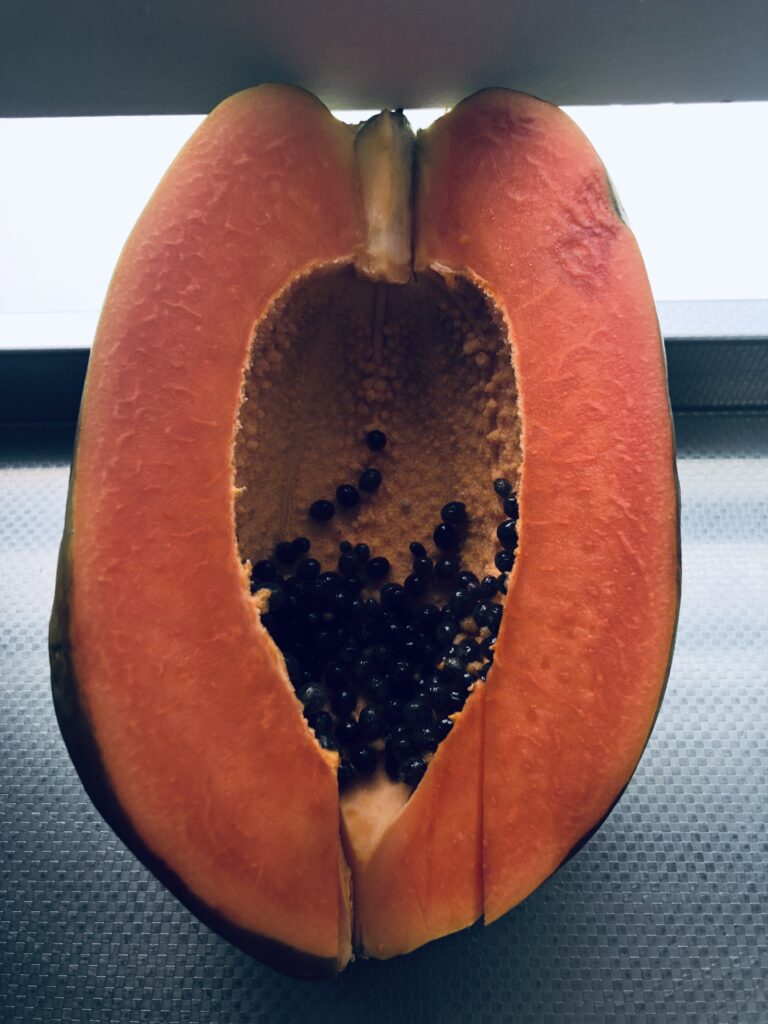
Sweet papayas are also great! From my own tree in Venezuela

Dear reader,

When writing about sweet potatoes, we should focus on more than just the (overhyped) concept of super foods. It’s neither the comparison between sweet potatoes and regular potatoes either. It’s also a story about pesticides conflicting with the great health contribution of peels.

Finding a balance between nutritious peels and harmful pesticides is not easy. Bio is best, but not always available or sometimes too expensive. It is difficult to make the right decision, because we do not know exactly how harmful pesticides are. Neither do not know how much the peels positively impact health.

Sweet potatoes a super food?

Sweet potatoes are a delicious vegetable and are often labeled as a super food. As written before, I am skeptical about the label of super food. Super food lacks a scientific definition and one can use it at will.

Super food sounds like superman, the guy who can solve everything. Well, super food can not and are not a direct way to health heaven. They offer a lot of excellent nutrients per unit which in itself is very important. Much food offers little good nutrients, like soppy white bread, white rice or the ever present ultra-processed food. All full of empty calories.

Sweet or regular potatoes?

It is often suggested that sweet potatoes are much better than regular potatoes. They are not much better, except for perhaps one cancer-fighting reason. This reason is not fully proven yet scientifically (more about this point below).  There are differences between sweet and regular potatoes of course, but the health balance of each is not much different.

Sweet potatoes offer significantly more Vitamin A and fiber. Regular potatoes generally provide more potassium, iron, and B vitamins like B6. Both are nutritious root vegetables with similar carbs. Sweet potatoes lean sweeter and higher in sugar. Regular potatoes are starchier. Preparation heavily influences their glycemic impact. 

Calories? Sweet potatoes and regular (white/Russet) potatoes have very similar calorie counts. The differences in calories are usually minimal, around 85–110 calories per 100 g raw. Frying drastically increases calories in both, while baking or boiling keeps them lower in calories. I always choose the oven without adding oil.

Resistant starches from potatoes have about 2.5 calories per gram, while regular starches contain about 4 calories per gram. As such, it may help to swap other starches for resistant starches if you’re looking to lose or maintain weight.

Both regular potatoes and sweet potatoes contain significant amounts of digestible (regular) starch, but they also provide resistant starch. This is a type of fiber that resists digestion and promotes gut health. Cooling cooked potatoes (including sweet potatoes) significantly increases their resistant starch content. Advice: always precook your (sweet) potato and let it cool before using it in the preparation of your meal.

The reasons I prefer sweet potatoes

First, the taste! The only drawback is figuring out how to make excellent French fries from sweet potatoes without frying them in oil. I do this in the oven, but with precooked regular potatoes it turns out well. Sweet potatoes, on the other hand, remain a challenge. One day it will work out fine; I am sure of it.

Second, there are indications that sweet potatoes have anti-cancer properties. While the majority of this research has been conducted in laboratory cell cultures and animal models, the findings are promising. Human clinical trials are needed to confirm these effects fully.

More about the peels

Why peels? Peels often contain more nutrients than the pulp. While exact percentages vary by produce, studies indicate that skins can contain 50% or more of certain nutrients. In some cases, they have over 300% more antioxidants than the pulp. So throwing away peels, as many of us do, means discarding a lot of essential nutrients.

Some examples of nutrients in peels

An apple with skin contains up to 332% more vitamin K than a peeled apple. The skin also has 142% more vitamin A. It contains 115% more vitamin C and 20% more calcium.

Removing the tomato skin can result in a loss of up to 80% of its lycopene.

The peel of a fresh carrot makes up only 11% of its weight. However, it contains 54% of its phenolic acids (antioxidants).

A citrus peel can contain twice as much vitamin C as the fruit’s flesh. • Boiled potato skin can contain up to 175% more vitamin C than a peeled potato. It holds 115% more potassium. Additionally, it contains 110% more magnesium and phosphorus.

Peels and pesticides

The problem, however, is that peels often contain pesticides. These can remain on many fruits and even penetrate the first few millimeters of the pulp. So peels contain high levels of nutrients, but they also carry a high concentration of pesticides.

Debates about pesticides are numerous and often contradict one another. Companies and farmers claim that there are safe levels of pesticides, or that some pesticides are safe for humans. I would like to believe this, but I do not.

To minimize exposure, it is recommended to wash all produce. However, washing is only half as efficient as peeling. As mentioned before, organic is the best option, but cost can be an important factor. Take kiwis. I love kiwis. In general, organic kiwis are twice as expensive as the regular ones. So, in the case of kiwis, I prefer to peel.

Produce with thin or no skin, like apples, strawberries, and peaches, tends to hold more pesticides in the peel. This is not surprising. Thick-skinned produce (avocados, bananas) are much less affected.

Blueberries and strawberries are among the worst when it comes to pesticide residues. Unlike kiwis, which at least can be peeled, this option does not exist with these berries. Conclusion: only eat blueberries and strawberries when you can buy them organic.

What Is Resistant Starch? And Why Is It So Important?

Resistant starch is a type of complex carbohydrate that resists digestion in the small intestine. It functions as a prebiotic fiber. It escapes digestion in the small intestine. The starch is fermented in the large intestine by gut bacteria. This fermentation produces short-chain fatty acids (SCFAs), such as butyrate, acetate, and propionate. These fatty acids can be absorbed and used by the body. They may support gut and metabolic health. Note that resistant starch provides energy mainly through SCFAs rather than glucose.

Carbohydrates can be simple or complex. Simple carbohydrates have a simple chemical structure and are digested quickly into glucose. They are common in foods like candy, white bread, and white rice.

Anti-cancer

The potential anti-cancer effects attributed to sweet potatoes arise from several bioactive compounds found in the plant. Anthocyanins are abundant in purple-fleshed varieties. They are powerful antioxidants. These antioxidants have shown anti-cancer effects in test-tube and animal studies.

These effects include inhibition of growth in cancer cells and promotion of apoptosis (programmed cell death). Beta-carotene gives orange-fleshed sweet potatoes their color. In the body, it is converted to vitamin A. Some epidemiological studies have associated it with a lower risk of certain cancers. Dietary fiber supports gut health and may reduce colorectal cancer risk. Sweet potatoes also contain sporamins (a storage protein) with antiproliferative effects in laboratory and animal studies. Polyphenols and flavonoids are found in leaves, stems, and the edible roots. They help modulate inflammatory pathways. They also inhibit cell-cycle progression and protect DNA. I wrote a blog on the many potentials of the 8.000 polyphenols. https://shakethehealthtree.com/index.php/2025/12/02/5-polyphenols-8000-interesting-plant-derived-compounds-health-project99/

In summary, my way forward:

  • Choose sweet potatoes, preferably with the peel and, when possible, organic.
  • Use cooking methods that preserve resistant starch (e.g., boil, then cool before reheating) to maximize resistant starch content.
  • Include them a few times per week, with oven-baked, oil-free French fries as a tasty option.

Enjoy life, enjoy your dinners with sweet potatoes and take care!

Robert, your health friend

A day in the cactus woods of Curacao