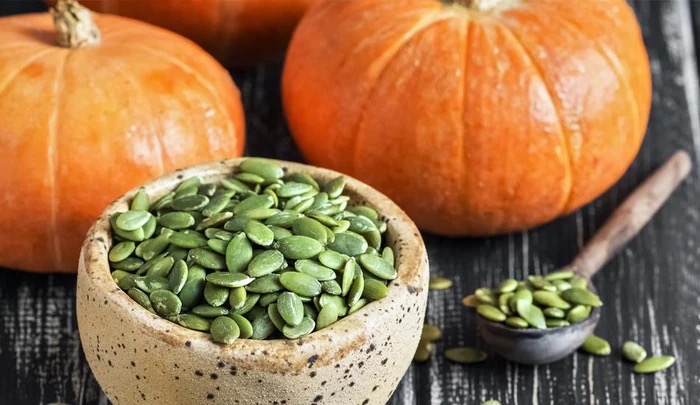
3.PUMPKIN SEEDS: ROAST, EAT, ENJOY (health project99+)

Dear reader,

Often used in salads as toppings, these green-gold kernels, often labeled “pepitas,” are a compact source of affordable vegetarian protein, minerals, and healthy fats (about half of their weight is fat). Most people love pumpkin seeds, and I do as well.

1.Superfoods It is nice to see that “old” foods can be called superfoods. Pumpkin seeds are one of them. I do not like the term superfood as such, because it suggests wonders to be achieved by eating A, B, or C. Each with a loyal, at times fanatic fan base (and companies that just want to make money).

What many call superfoods is no more than excellent nutrient-dense food, rich in vitamins, minerals, antioxidants, and phytochemicals. They’re good for your health, can help prevent disease, and support overall wellness. To eat really good food for oneself is already an accomplishment, as most products in your supermarket are not great at all. “Superfoods” are part of my diet, like kale, avocado, wild salmon, and the occasional pumpkin seeds in my salad. Or as snack in the early evening.

“Superfoods” should be part of a holistic diet and healthy lifestyle, not a goal in themselves. They are not exclusive instruments to help you reach your health goals. Do not rely on them too much. So far, no supplements, pills (and definitely no superfoods) exist that cure or prevent everything.

2.Seeds compared. When you compare seeds, there are differences, of course, but most are not that big. Pumpkin seeds are average compared with other seeds when it comes to calories, relatively high in protein (about 25%), and higher than average in fat (but mostly healthy fat) with about 50%, carbohydrates are average and fiber is low. They are a good source of iron, potassium, zinc, and magnesium.

3.The Benefits of Pumpkin Seeds 1. The unsaturated fats in pumpkin seeds, along with magnesium and phytosterols, can contribute to a heart-healthy dietary pattern. Some research suggests that regular, moderate intake of pumpkin seeds may help improve lipid profiles and support blood pressure within certain populations.

2. The combination of protein, fiber, and healthy fats helps increase satiety, which can support better appetite control. For people trying to manage weight, substituting or pairing pumpkin seeds with other snack options can reduce hunger between meals. The fiber content also supports gut health and steady digestion when consumed as part of a balanced diet.

3. Pumpkin seeds contain antioxidants such as vitamin E and carotenoids, plus phytosterols that may support cholesterol balance. Some compounds may help reduce inflammation and oxidative stress.

4. Like many seeds and nuts, pumpkin seeds contain tryptophan, an amino acid that the body can convert to mood-regulating and sleep-related chemicals. Magnesium, another nutrient they supply, is also linked with better sleep quality for some people.

5. Some small studies and traditional use point to benefits for urinary function in men, particularly related to lower urinary tract symptoms (LUTS). The zinc profile in pumpkin seeds is often highlighted in this context. More robust, large-scale trials are needed to make definitive recommendations, but the existing data are encouraging. Men at my age (67) care about their prostate and welcome news like this.

6. In addition, studies indicate that pumpkin seeds contribute to immune support and a better mood and sleep.

4.Problems? Yes, (six minor) ones Pumpkin seeds are calorie-dense. The prepackaged roasted varieties often contain too much sodium (salt). Overconsumption can lead to digestive issues. Some people are allergic. Pumpkin seeds contain compounds like phytic acid that can modestly reduce mineral absorption when eaten in very large amounts, so I would not worry too much. If you have kidney disease, do not eat too much and consult your doctor.

5.Nuts vs. seeds in general Seeds are the plant’s embryos that can grow into a new plant. Nuts are a type of dry fruit with a hard shell around a single seed. True botanical nuts include chestnuts and hazelnuts, etc. Many “nuts” sold in stores (almonds, pistachios, walnuts, cashews) are actually seeds from fruits or drupes, not true botanical nuts.

Nuts (almonds, walnuts, pistachios, cashews, etc.) are frequently more expensive per pound than most seeds.

Both seeds and nuts have excellent nutritional profiles, with differences among them, of course. Seeds are often rich in polyunsaturated fats, certain minerals (magnesium, zinc, iron), and fiber. Nuts are often higher in monounsaturated fats and protein, with their own mix of minerals and phytochemicals.

The shelf life of raw nuts is substantially higher than that of seeds—two times or more. There is no difference when stored in the refrigerator or freezer. Some seeds, like pumpkin seeds, can be more prone to oil rancidity if exposed to heat and light for long periods.

6.How long do pumpkin seeds stay fresh? 4 months in a dark cupboard; keep them in airtight containers away from light, heat, and moisture. If they are roasted, shelf life is about 4 weeks only, before roasted taste disappears. Roasting also diminishes shelf life. For that reason, I freeze a few kilograms of roasted pumpkins and take out a few hundred grams each week. In the fridge: 3–6 months (roasted or not); in the freezer: 9–12 months (roasted or not).

7.Why soak and roast them? Soaking (especially in salted water) reduces the phytic acid in pumpkin seeds. Phytic acid can reduce the absorption by your body of important minerals from other foods. Soaking first will also make roasting easier and can improve digestibility for some people. Roasting will add a lot to the flavor. Some people claim that roasting alone produces a better taste result.

8.Is this a lot of work? No. I do these kinds of things during dinner preparation—Always a few kilograms at a time and storing most of the result in the freezer. A few kilograms should last 1–2 months. The soaking should last 4 hours (in salted water) and the roasting 20 minutes at 175°C (350°F). While roasting, add a bit of oil and salt.

It is getting dark, time for dinner and a nice evening snack. Tonight, as often, pumpkin seeds of course.

Take care, enjoy your food and live a happy and healthy life.

Robert, your health friend

Slowly preparing for the annual trek, Kenya

5. ELECTROLYTES: ESSENTIAL FOR HEALTH (health project99+)

The Wall, Berlin

Dear reader,

Sports people buy expensive bottles filled with electrolytes. Electrolytes themselves are necessary, to buy expensive bottles not at all.

What are these electrolytes, a fancy word for minerals such as salt? Do you need them (yes), can you make drinks with them yourself (yes), are there reliable tests to check if you have a shortage of electrolytes (yes). Is a regular diet sufficient (not always). 

Salt (sodium) as the best-known electrolyte has a mixed reputation. Many people easily have a too high salt intake (processed food for example is loaded with salt) with often serious health consequences. However, if you are a vegetarian who prepares his/her own food, does a lot of sports, lives in a warm climate and sweat a lot, you will almost for sure get an electrolyte’s deficit. Which has serious consequences as I experienced myself on several occasions.

What are electrolytes?

Electrolytes are charged minerals dissolved in body fluids that carry an electric charge. They help with (1) Fluid balance between compartments (inside and outside cells); (2) Nerve impulses and muscle contractions (including the heart), (3)  Acid-base (pH) balance (it is essential that your blood and bodily fluids stay within a narrow pH range (7.35-7.45) and (4) overall metabolism.

The key electrolytes are sodium (Na+), potassium (K+), chloride (Cl−), calcium (Ca2+), magnesium (Mg2+), bicarbonate (HCO3−), and phosphate (PO4^3−).

When do you need to top up your electrolyte’s intake?

Most people get the electrolytes they need from a balanced diet. You may need more if you are a vegetarian, sweat a lot, are ill with vomiting/diarrhea, have certain medical conditions or live in hot climates. 

Especially vegetarians have to make sure that they get enough salt (sodium) and other electrolytes. The same applies to people like me who lived in hot climates and do a lot of sport. But even if you live in cold and rainy The Netherlands but bike and walk regularly, you easily might have high electrolyte losses. Working outdoor is another situation that can cause problems.

Young children and older adults are more vulnerable to dehydrations and electrolyte imbalance in hot weather.                                                     

What are the signs that you might have an electrolytes deficit?

Signs you might need electrolyte support (unless you have a medical condition): persistent dizziness, cramping, unusually dark urine, fatigue with dehydration, or if you’re unable to replace fluids after sweating or illness. Drinking water then is not enough! It needs to be fluid with electrolytes.

When to seek professional advice

If you have kidney disease, heart failure, high blood pressure, or are on a doctor-prescribed electrolyte or fluid restriction.

If dehydration is severe (very low urine output, dizziness on standing, confusion, or if you cannot keep fluids down), seek urgent medical care.

In children, the elderly, or people with chronic illnesses, use caution and consult a clinician before using homemade electrolyte drinks, especially during illness.

To buy or make yourself?

Of course you could and should make your own electrolytes solution. Most recipes suggest 25 grams of sugar as for better taste and better absorption. This is almost half of the “allowed” daily added sugar intake, so I would not do it. Only in cases of serious dehydration (diarrhea and/or vomiting) I would add sugar. The ORS packages for emergency hydration standard contain glucose.

My solution consists of adding low sodium salt (30%) that also contains potassium salt (69%). The brand is called JOZO. I add a few grams each to my fresh lemon drink, the smoothie and the evening soup. With these combinations I do not taste the salt at all.

After intense sports, sauna or during warm weather I add a bit more. For the rest I do not add any salt to my food and at home we rarely eat processed food.

Some standard recipes per 1 liter of water (without sugar) on internet: (1) 1/2 teaspoon table salt (about 2.5 g NaCl) and 1/4 teaspoon potassium chloride (about 1 g); (2) 1/2 teaspoon table salt (about 2.5 g NaCl), 1/4 teaspoon potassium chloride (about 1 g) and 1/4 teaspoon baking soda (about 1.2 g, provides bicarbonate). 

As I use JOZO (btw, no advertisement) NaCl and KCl are already combined.

Testing

Who should get tested? From what I read on internet testing is to be considered under the following three circumstances.

  • Athletes or individuals in extreme heat or endurance activities may have testing in clinical or sports-medicine settings, especially if there are symptoms or a planned intensive training/competing regimen.
  • Symptomatic concerns: confusion, dizziness, weakness, cramps, seizures, irregular heartbeat, swelling, or persistent symptoms of dehydration.
  • People with conditions or on medications that affect electrolyte balance (kidney disease, heart failure, uncontrolled high blood pressure with diuretic use, endocrine disorders, certain cancer therapies).

Personally, I plan to do a test once, and, assuming it is normal, I will not do a follow-up test.

There are several tests that can measure your electrolyte levels, either in blood or urine, and in some cases to assess related acid–base balance or kidney handling of electrolytes. 

Common reference ranges (approximate; can vary by lab)

  • Sodium (Na): 135–145 mEq/L
  • Potassium (K): 3.5–5.0 mEq/L
  • Chloride (Cl): 98–106 mEq/L
  • Bicarbonate (HCO3−): 22–28 mEq/L
  • Calcium (total Ca): ~8.5–10.5 mg/dL (ionized Ca is a separate test)
  • Magnesium (Mg): ~1.7–2.2 mg/dL
  • Phosphate (PO4): ~2.5–4.5 mg/dL

Conclusion

It is a bit surprising that those who live healthy, stay away from processed foods and move a lot are advised to have a good look at their electrolytes’ intake and often are recommended to take more salt (and potassium and other electrolytes, in particular when you feel dizzy when you stand up.

I know it is your own money, but paying good money for expensive electrolyte bottles for me ranks very high on the list of silly things.

Take care, live a happy and healthy life and think of this blog when you feel dizzy.

Robert, your health friend

Dutch dog in Congolese rain

5.LIPOSOMES: ALL ABOUT WHAT IS BASICALLY (ONLY) AN INTERESTING SUPPLEMENT’S WRAPPING PAPER (health project99+)

This can be only one city, Istanbul

Dear reader,

In a few cases, liposomal supplements, i.e., supplements delivered in liposome-encapsulated form, are useful. That said, they are most of the time not necessary, and you can save money by choosing traditional solid tablets or capsules.

Are they completely useless and mainly a marketing gimmick? No. Liposomes do have added value for (1) protecting certain medicines and some supplements from degradation before they reach the gut, (2) helping people who have difficulty swallowing, and (3) assisting those with specific postoperative issues.

There are a few compounds, such as vitamin C, that may benefit from liposomal delivery compared with ordinary tablets, since it can lead to higher absorption. This is supported by pharmacokinetic data, but robust clinical benefits beyond higher blood levels are not consistently demonstrated. Most people do not need extra vitamin C, anyway.

1.My main conclusion: despite substantial marketing by the health-and-beauty industry to promote liposome-encapsulated supplements, there are often good reasons not to choose them. In general, the clinical payoff (improved outcomes) is uncertain or small, and therefore the cost-benefit ratio may be unfavorable for many users, since liposomal products are typically more expensive.

2.Do not fall for advertisements (as I do now and then).

The world in which money is to be made is full of pitfalls, hype, and deceit. Do I fall for it? Yes, more often than I’d like to admit. The other day I needed to order vitamin D3 and K2 and was persuaded to buy them in liposome form (liquid rather than pills). They were much more expensive than standard pills, harder to measure the exact dose, and carried a risk of buying an inferior product, since liposome production is not tightly regulated and can yield unstable results. 

Will I do it again? Not at all, but the advertising copy was so convincing—claims of a higher absorption rate and delivery directly to the places where the vitamins should work—that I tried it once. Only then did I start investigating what liposomes are. As always, I share my results with you. 

We see it everywhere: great marketing in order to persuade us to buy supplements wrapped in liposomes, presented as a superior delivery method to traditional capsules and tablets. 

The idea of better delivery and higher bioavailability in itself appeals to me, since absorption percentage is an important factor in understanding how supplements work. If your daily need for a compound is 10 grams and you take a 10-gram supplement, you may feel misled if you learn that the absorption rate is only 20%. The moment I realized the importance of absorption rate (and half-life) changed how I view the necessary intake quantities for certain supplements. However, the solution is easy, take the absorption rate into account and take the additional pill.

As a side note, a higher blood level of a nutrient is not always linked to better health outcomes. What matters is whether that higher level translates into clinically meaningful effects, but this is a truly technical medical issue, going beyond the scope of this blog.

3.What are liposomes? 

Liposomes are tiny phospholipid vesicles used to encase compounds like vitamins. This leads to the next question: what are phospholipid vesicles? They are tiny bubbles made from phospholipid molecules (the same fat-like substances that make up cell membranes) that wrap around a substance to protect it and help it be absorbed in the body. 

The roots of the word liposomes are Greek: lipos meaning fat and soma meaning body. The word liposome was coined in English in the 1960s. Liposomal is the English adjective formed from liposome by adding the suffix -al (from Latin/English) to indicate “pertaining to liposomes.”  Technically “liposomal” refers to a delivery method that uses lipid bubbles to encase the nutrient, which can affect how the nutrient is absorbed.

4.How are supplements taken in general? There are seven broad ways to take a supplement, plus a variety of delivery-system variations. Most everyday supplements are taken orally (capsules, tablets, powders, or gummies). There are other ways, including sublingual (under the tongue), creams, inhaled, rectal/vaginal, and injectables. 

With supplements that are taken orally, there are a number of delivery-system variations: (1) liposomal (the topic of this blog), nanoemulsified, or other encapsulation systems to improve stability and absorption; (2) microencapsulation or phytosome formulations; (3) emulsions or oil-based suspensions (especially for fat-soluble nutrients); and (4) fortified foods and beverages (functionally enhanced rather than separate pills). 

5.Which compounds stand to benefit from a liposomal approach? Vitamin C, vitamin B12, curcumin, and other polyphenols (e.g., flavonoids such as quercetin and stilbenes such as resveratrol) and coenzyme Q10 are sometimes cited as compounds that could benefit from a liposomal approach. However, there is not a single study that conclusively demonstrates that liposomal delivery is superior to the old-fashioned tablets and capsules. Overall, findings are mixed and not uniformly convincing. 

Most claims are marketing-driven; robust, high-quality randomized trials demonstrating meaningful clinical benefits are generally not present to support these claims.

6.Safety Liposomal products are generally considered safe for most people, since the ingredients are typically phospholipids and the nutrient itself. However, watch for potential allergens (soy, egg, sunflower lecithin) in some formulations, as well as additives or contaminants. 

Like all dietary supplements, liposomal products unfortunately are not uniformly regulated worldwide, and there are no universally accepted quality standards. 

Product quality can vary a lot: liposome size and stability, encapsulation efficiency, dosage accuracy, and batch-to-batch consistency differ across brands. Storage conditions and shelf life can also affect performance. While liposomes can improve stability and absorption for some nutrients, this does not guarantee better health outcomes, and higher blood levels may not translate into meaningful benefits. 

I know next is standard text, but it remains true. Always check and follow labeling directions, consider potential interactions with medications, and consult a healthcare professional if you are pregnant, nursing, have a medical condition, or are taking prescription drugs. Best of course is always to look for products with reputable third-party testing and transparent ingredient lists.

Thanks for reading, take care and live a long, happy and healthy life,

Robert, your health friend

Wooden house in Jurmula, Latvia

21. CREATINE: REALLY NECESSARY OR HYPE?(health project99+)

More street art in Brussels, great city!

Dear reader,

Creatine is one of the most promoted (hyped) supplements around. Many professional athletes cannot live without it, with some good reason as there is solid science behind its performance enhancing claims.

For regular persons the added value is less pronounced (more for older people though) but enough for me to take 3-5 grams daily (creatine monohydrate has the strongest evidence, of good quality), in the morning. The reasons why I take it; some (not much) additional strength, improved mood, better brain energy, better reasoning and neuroprotection. Research is ongoing if creatine supplements may help people with cognitive conditions, including dementia.

Its use is generally safe for healthy people. If you have kidney disease or other major health issues, or you’re pregnant/breastfeeding, talk to a doctor first. One indication that either you take too much, or your kidney cannot process creatine well is an elevated creatinine, the breakdown product of creatine.

1.What is creatine?

Creatine is a naturally occurring compound, found in your muscles, brain, that helps your cells produce energy. It is commonly taken as a supplement to improve exercise performance, increase muscle mass, and enhance strength and power, particularly in high-intensity activities. It has other advances as well, like a positive impact on your mood and improving your brain functions. Not all is scientifically proven though, and studies are ongoing.

While the body produces some creatine, dietary sources and supplements provide more, which can benefit athletes, vegetarians, and older adults.

In general, 1-2 gram is produced by your body (liver and kidneys) and 1-2 gram through dietary intake. Red meat, fish, poultry and animal milk are good sources of creatine. 

2.What happens to creatine?

Creatine is transported in the blood and taken up into tissues; around 95% of the body’s creatine is stored in skeletal muscle, the remainder is in brain, heart, kidney, and other tissues. The total body creatine “pool” is often estimated around 100-200 grams. Older adults often have lower storage levels due to muscle loss (sarcopenia) and sometimes lower food intake.

3.What does creatine do?

Many people take creatine supplements to build strength and promote brain health. It tends to improve performance in short, intense efforts (sprints, heavy lifts, jumping), support small gains in muscle mass over time, and may help with recovery after intense work. 

Many top sporters use creatine. The performance boost is likely small or negligible if your activities are mostly low intensity (steady walking, casual cycling, light workouts). You might still see small gains in strength or lean mass over months if you occasionally do higher-intensity efforts or resistance training, but this isn’t guaranteed with light activity alone.

4.Impact of age on creatine

Your own creatine production generally continues with age, which is good news, but the amount you can store in muscle tends to decline mainly because of age-related loss of muscle mass (sarcopenia).  Sometimes lower dietary intake can also be a negative factor.

As older adults often have lower intramuscular creatine/phosphocreatine stores than younger adults, this might be one reason they may respond well to creatine supplementation when combined with resistance training.

5.How to take?

There are many options: powders, tablets, capsules, liquids and energy bars. From what I read the best option are powders. And not any powder, but specifically creatine monohydrate. Quality is an issue as with all supplements which in the case of creatine can be powders contaminated with heavy metals.

6.How to guarantee quality?

For me it is important for a supplement to be GMP (Good Manufacturing Practice) compliant which in the case of creatine is not easy to find. Only a limited number of producers explicitly mention that they are GMP compliant. 

This of course does not mean that other producers sell bad products, but at least look out for the following elements: Third-party testing or certification (USP or NSF Certified for Sport; Informed-Sport / Informed-Choice; Clear COA (certificate of analysis) for the batch on the brand’s site.

Another way to go is to check the label for transparency with A) Pure creatine monohydrate as the only ingredient (or with very few safe excipients); No added stimulants or unlisted substances; Clear dosage info and an expiration date.

Buy from reputable brands or retailers with good return policies and reviews.

Most important: be very cautious with cheap products or “no-name” brands, especially from unknown online sources.

7.When to take and how much?

Professional athletes have their own holy grail of elaborated schemes, but for the ordinary person like you and me an easy regime is the best. 

Depending on muscle mass and activity level, the body needs to replenish at least between 3-5 grams of creatine a day. Athletes who do a lot of intense training may need to consume 5-10 gramm of creatine a day.

Most sources suggest that a supplement of 3 grams per day should be sufficient, although using 10 grams daily for up to 5 years is considered safe, but I should emphasize that for most people this is not necessary. Consistency over a longer period matters most. Take with a meal or split across meals; you don’t need to take it immediately before workouts. Drink plenty of water. If you take creatine late in the evening it will most likely give you an additional trip to toilet during the night, so I prefer to take it in the morning.

8.Bio availability

Oral bioavailability for creatine monohydrate (the amount that reaches the bloodstream after you swallow it) is very high—roughly in the 90–100% range in healthy people. Peak plasma levels occur within about 1 hour of ingestion, but meaningful increases in intramuscular stores accrue over days to weeks with consistent dosing.

Muscle uptake: how much actually gets stored in your muscles depends on transport into muscle cells (creatine transporter) and factors like insulin/meal timing, training status, and baseline stores. That step is more variable than gut absorption.

Meat/fish eaters have higher stores; vegetarians/vegans tend to have lower stores (roughly 10–30% less), partly depending on muscle mass. With proper supplementation and strength training, this can be corrected.

This was it for today, take care and live a happy and healthy life,

Robert, your health friend,

Freedom fighter Tula, Curacao

21. LET THIS ZINC IN (health project99+)

Street art in Brussels

Dear reader,

Zinc is a trace mineral that is involved in hundreds of enzymes and proteins in your body. It is essential for many processes, but it is not stored in your body in large amounts. You need to top it up regularly. Daily doses required are generally limited (8–11 mg/day), but a diet alone is often not sufficient, especially (but not exclusively) if you are vegetarian. For context, see the Trace minerals section below.

1.My takeaway is to add a modest zinc supplement to your daily regime, in the order of magnitude of 10 mg. The official line of health sites is that most people will meet their trace-mineral needs with a balanced diet, but that very much depends on your definition of “balanced.” A sufficient-zinc diet should include red meat (which many people do not eat anymore) or oysters (which very few people eat). Those who eat mainly vegetables, fruits, and grains run a risk of not getting enough zinc.

2.Challenge

For those focusing on vegetables, carbohydrates, and poultry, it will be a challenge to get enough zinc. One can do a zinc test, of course, but since the upper intake level for zinc is high, a low-dose zinc supplement will not hurt (and remember that even the most efficient zinc supplement, for example 10 mg, will in practice only contribute about 5 mg toward your daily zinc needs).

3.Trace minerals

Let me first refresh your knowledge on trace minerals. Your body needs them in very limited quantities, but they’re essential for many functions. They differ from major minerals (like calcium and magnesium) because of the small amounts required. Main examples: iron, copper, zinc, and manganese (all measured in mg/day) and iodine, selenium, chromium, and molybdenum (all measured in micrograms/day). Deficiencies in each of them cause problems, including zinc’s effects on the immune system and growth.

4.What happens if you do not have enough zinc?

• Slower growth in children; potential delays in puberty. • Immune system problems: more frequent or longer infections; poorer response to vaccines. • Slower healing of cuts and injuries. • Skin and hair: dermatitis, itchy or scaly skin; hair loss. • Reduced appetite; possible mood changes or irritability. • Diminished ability to taste or smell (hypogeusia/ageusia). • Digestive issues: diarrhea may occur in some cases. • Several hormonal pathways (e.g., insulin, growth hormone) will not work well.

5.Who is at risk for zinc deficiency?

• Vegetarian diets can put you at risk of zinc deficiency because such diets often include phytates that reduce zinc absorption (phytates are discussed later under Phytates). • People with very poor diets or absorption problems (malnutrition, eating disorders, Crohn’s disease or celiac disease, and other malabsorption conditions). • Older adults, pregnant or lactating people with increased needs. • Heavy alcohol users and people with certain chronic illnesses.

6.What happens if you get too much zinc?

• Short-term (acute) effects: nausea, vomiting, stomach cramps, diarrhea, abdominal pain, headaches, a metallic taste, and sometimes dizziness. • Long-term (chronic) effects: copper deficiency (which can cause anemia, low white blood cell counts, and nerve/hematologic problems), possible immune dysfunction, and potential impacts on blood lipids and mineral balance. • Zinc can interfere with the absorption of other minerals (notably copper and iron) and can interact with some medications and antibiotics (e.g., tetracyclines and fluoroquinolones), reducing their effectiveness if taken together. The good news is that it is not easy to get too much zinc, as the upper intake levels are quite high.

7.How much zinc do you need?

Based on US and EU guidelines • Infants birth to 6 months: about 2 mg/day; 7–12 months: about 3 mg/day. • Children and teens: increasing with age; for example, around 4–8 mg/day in early childhood, rising to about 8–11 mg/day for older boys and about 8–9 mg/day for girls. • Adults: men about 11 mg/day, women about 8 mg/day; during pregnancy about 11 mg/day and during lactation about 12 mg/day. •

8.Upper intake levels: In the US, the tolerable upper intake level (UL) for zinc is 40 mg/day for adults. In the EU, EFSA uses a lower UL for adults (about 25 mg/day). This is important to know because it signals that even if you do not need your zinc supplement, it will not hurt you as long as you stay below the UL in total.

9.Food and zinc?

As always, rough estimates are provided. The internet can flood you with many more details.

Meat, poultry, and seafood are heme zinc and generally better absorbed than plant sources. • Oysters: about 74 mg zinc per 100 g; absorption roughly 20–40% • Beef steak (cooked, lean): about 4–5 mg/100 g; absorption roughly 25–40% • Pork (cooked): about 2–3 mg/100 g; absorption roughly 15–35% • Chicken (white meat, cooked): around 1–2 mg/100 g; absorption roughly 15–30% • Salmon or sardines (cooked): about 1–2 mg/100 g; absorption roughly 20–40%

Do the math. Take chicken. In order to get 10 mg of effective zinc, one would need (best scenario) over 1.5 kg of chicken meat per day.

10.Plant-based sources

• Spinach (cooked): about 0.8–1 mg/100 g; absorption roughly 5–15% • Beans (kidney, cooked): about 2–3 mg/100 g; absorption roughly 10–20% • Tofu (firm, depending on fortification): about 1–3 mg/100 g; absorption roughly 5–15% • Quinoa (cooked): about 1–2 mg/100 g; absorption roughly 10–20% • Pumpkin seeds (roasted): about 7–8 mg/100 g; absorption roughly 10–25% • Sesame seeds (raw): about 9–10 mg/100 g; absorption roughly 10–20% • Fortified cereals (varies by product): often 5–20 mg/100 g; absorption roughly 10–25%

Do the math here as well. In order to get 10 mg of absorbed zinc from plant sources, one would need almost 2 kilograms of tofu daily. Not feasible, at least not for me (and I do not like tofu that much anyhow).

Only a few fruits have around 1 mg/100 g of zinc, the others much less. Plus a very low absorption rate.

• Dried apricots: about 1–2 mg/100 g; absorption roughly 5–15% • Raisins: about 0.5–2 mg/100 g; absorption roughly 5–15% • Prunes: about 0.5–1 mg/100 g; absorption roughly 5–15%

11.Practical tips to maximize zinc absorption

If your diet is rich in phytates (lots of unprocessed grains and legumes, see explanatory note at the bottom of this blog) and you’re concerned about zinc or iron, consider pairing meals with phytate-reducing prep (soaking/fermenting) and including some animal protein or vitamin C-rich foods to help absorption.

Another option is to oak, sprout, or ferment grains and legumes to reduce phytates that inhibit zinc absorption.

Avoid taking large amounts of calcium or iron at the same time as a zinc-rich meal, as they can compete for absorption.

12.The several half-lives of zinc

• If you’re thinking in terms of half-life for planning supplements or interpreting zinc status, focus on the fact that there are multiple pools with different kinetics. Short-term changes (days) mainly reflect plasma zinc and gut absorption changes; longer-term status reflects tissue stores and overall balance over weeks to months, including bone and other long-term stores. They turn over slowly and are not quickly altered by daily dietary changes or short-term supplementation. For a practical planning approach, see the Absorption and Bioavailability section above.

13.What kind of supplement and how to use it?

There are many different zinc supplements around. Some (like the one I used to take from Kruidvat) are zinc oxide, which has low absorption and is one of the many brands without generally recognized quality controls. In short, for a few years I have been taking a basically useless supplement.

So when choosing a zinc supplement, start with 1) zinc citrate or a chelated form. The absorption rate of zinc citrate is about 30%, so you would need roughly 33 mg ingested daily to reach about 10 mg effective (i.e., doing its zinc work!). Chelated forms (zinc bisglycinate/glycinate and zinc picolinate) are even better with a 40–45% absorption rate. 2) Make sure it is GMP (Good Manufacturing Practice) produced or produced in GMP-compliant facilities. 3) If you’re aiming to maximize absorption, take zinc with a meal that contains protein, and avoid taking it simultaneously with large doses of calcium or iron. A zinc supplement strengthened with vitamine C does not hurt.

14.GMP: general advice

I know it is cumbersome to look for supplements with a GMP label, but trust me, it is worth it. For every supplement there are some GMP-certified producers; just search the internet. Be careful, most are not and do not go for the 1+1 offers from the regular chains unless these products meet all the criteria, like GMP.

15.There is more beyond GMP to look for

Check also for Third-party verification: USP Verified, NSF Certified for Sport, Informed-Choice, or similar certifications add independent testing for potency and contaminants.

Batch-specific COA (certificate of analysis): a lab-tested result showing exact zinc content per serving and purity/heavy-metal testing for the current batch.

Clear labeling: exact zinc dose per capsule/tablet, other ingredients, and expiry date. Reputable brand with transparent sourcing and manufacturing information. Avoid marketing claims that only say “GMP” without evidence or documentation.

Testing to see if you have a zinc deficiency

Blood tests (serum/plasma zinc) are commonly used but aren’t perfect indicators on their own, especially during periods of inflammation, like when you have an infection. Clinicians may consider dietary history, symptoms, and sometimes other labs.

Thanks for reading, take care and live a happy, healthy and long life,

Robert, your health friend

Going to Paris (again)

Explanatory note on Phytates

Phytates (also called phytic acid) Phytates are naturally occurring compounds found in many plant foods. They are phosphorus-containing compounds stored in seeds, grains, legumes, nuts, and some seeds. The main practical concern of phytates is related to mineral absorption, especially if you rely heavily on plant-based sources. Phytates can be mitigated by soaking, sprouting, or fermenting foods and by pairing plant sources with animal proteins or vitamin C-rich foods to aid absorption.