Dominican Republic, Santo Domingo
Dear reader,
This blog I wrote because I wanted to understand what biological age is. I wanted to learn how it is measured. I was curious about the benefits of grasping the details of this topic.
It turns out that by enlarging their knowledge about this topic, health experts are increasing health improving options. These options can enlarge interventions for a healthier and longer life.
I stay very much tuned as research into biological aging is rapidly evolving and exciting progress lies ahead.
1.Introduction “real” and biological age
Chronological (“real”) age and biological age refer to two different measurements of aging. There can be a huge difference between these two.
The twelve hallmarks of aging, like your telomeres, give insights about a person’s health and overall well-being. They explain possible differences between real and biological age.
At this moment, thanks to AI and quantum technology, interesting developments are happening. These developments aim to understand all the mechanisms related to the hallmarks of aging. They also seek to influence them. Understanding is an important step, followed by effective interventions.
Practical frameworks are being developed for assessing aging through a functional lens. This approach aligns with the priorities of both older adults. It also aligns with health systems aiming to shift from reactive to preventative care.
Aging is a system-wide, heterogeneous process. It is not a uniform decline. Accepting this requires a nuanced way of looking at one’s biological age. Tools are being developed that answer the question “how are you aging” instead of “how old are you”.
Many health specialists want aging to be recognized as a disease. They also want it to be a target for drug development or treatment. We are not there yet. However, it’s very interesting that serious people are starting to look at aging as a treatable disease.
1. Chronological Age (Real Age)
This is the actual age of a person based on their birth date, measured in years. It is a simple count of the number of years a person has lived since birth. Chronological age is a blunt instrument. It does not capture the intricate mosaic of decline and resilience. These factors shape individual trajectories of aging. Now we look very differently at people in their 60s than 40 years ago. 60 = the new 40!
2. Biological age
The biological age is much more interesting. It can provide a more accurate representation of an individual’s health and functional status. Biological age shows the effect of the aging process on your body’s physical and mental functions. It also affects your appearance. In short, it is a time-dependent development, or decline. A person may be chronologically 50 but biologically 40 if they have a healthy lifestyle. Alternatively, they may be chronologically 50, but biologically 60 if they have significant health issues.
3. Hallmarks. What explains the difference between chronological age and biological age?
The hallmarks of aging determine the difference between chronological age (how many years since you were born) and biological age. The hallmarks of aging are determined mainly by our genetics, but environmental factors can cause or exacerbate them also. Each hallmark contributes to the damage that occurs and accumulates with age and is ultimately responsible for age-associated illnesses.
There are 12 hallmarks of aging, and each will be treated in separate blogs. Let me just mention them here. Telomere attrition, genomic instability, mitochondrial dysfunction, and cellular senescence. Stem cell exhaustion, loss of proteostasis, and deregulated nutrient sensing. Epigenetic alterations, altered intercellular communication, and disabled macro autophagy. Chronic inflammation and dysbiosis.
Dividing the 12 hallmarks into three groups is useful. The first group is integrative hallmarks, such as stem cell exhaustion. The second group is primary hallmarks, like telomeres. Finally, the third group is antagonistic hallmarks, which are responses to damage.
4.How do we test our biological age? Introduction
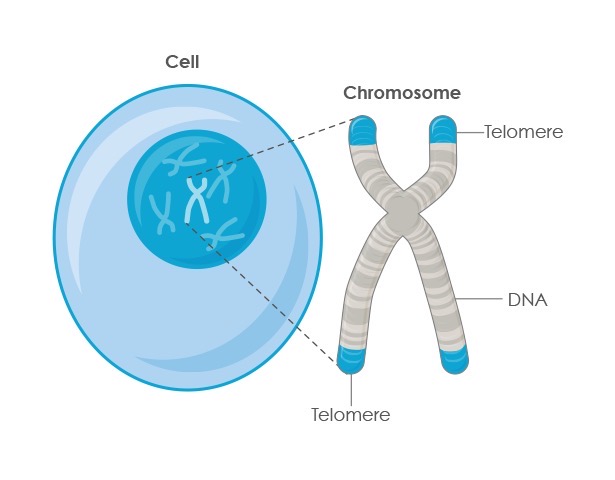
This has been possible for decades, but only very partial. What we have been doing is looking at separate biomarkers like blood pressure, cholesterol levels, and body mass index (BMI). We have also taken genetic tests. These tests indicate potential health risks or aging traits. They also measure physical fitness, strength, and endurance. Newer tests include examining telomere length measurements. Telomeres are protective caps on the ends of chromosomes. They shorten as we age.
However, biological age in reality is a holistic concept, not a series of separate biomarkers. Slowly the attention of experts moved towards the overall situation with emphasis on functions. A first practical implementation started in 2013 with the epigenetic clock by Steve Horvath. Horvath’s clock, used methylation data to create a “age estimator” that could predict biological age across different tissue types.
The overall conclusion is that the epigenetic clock represents a significant advancement in our understanding of biological aging. It also provides new intervention possibilities.
5.Before explaining the epigenetic clock a few words about Frailty Index
The Frailty Index (FI) is a clinical tool used to assess an individual’s frailty, typically in older adults. It has been in use now for about 20 years. Frailty is a complex syndrome. It is marked by a decline in physiological reserves. There is also increased vulnerability to adverse health outcomes. These outcomes include falls, disability, hospitalization, and mortality. The Frailty Index is one approach to quantify this frailty and can help in care planning and intervention strategies.
The FI calculation involves taking the number of health deficits a person has. This number is divided by the total number of possible deficits assessed. For example, a frailty index assesses 30 possible deficits. If an individual has 10 of them, their FI would be 10/30 = 0.33. This suggests a moderate level of frailty.
6.Body clock/epigenetic clock
Frailty Indexes are useful, but not enough. Its introduction 20 years ago was a great improvement, but great need remained for a total approach. One such an example is the recent development of Body Clocks. It is a composite score based on the weighted severity of diseases across systems. This development allows clinicians and researchers to track systemic health over time. It offers greater precision than traditional indices such as Frailty scores or number of chronic conditions.
The Body Clock predicts future multimorbidity, functional decline, and mortality. It does so more accurately than the frailty index, the number of diseases, and age. It also offers suggestions for intervention.
7.Body Clocks are Epigenetic clocks
An epigenetic clock is a biological marker. It is a tool used to estimate the biological age of an individual. This estimation is based on DNA methylation patterns. DNA methylation is a key epigenetic mechanism. It involves the addition of methyl groups to DNA. This process affects gene expression without altering the underlying DNA sequence. Methyl groups are functional groups in organic chemistry. They consist of one carbon atom bonded to three hydrogen atoms. This is represented by the chemical formula -CH₃.
As mentioned before, the physiological age (chronological age) and biological age (as measured by the epigenetic clock) can correlate. However, they do not always align perfectly. Environmental factors and lifestyle choices can lead to variations in biological aging.
8.How does it work?
The epigenetic clock analyzes specific sites on the genome where methylation changes occur with age. These changes can indicate the aging process and have been linked to various health outcomes, including age-related diseases. An epigenetic clock offers a practical framework. It assesses aging through a functional lens. This approach aligns with the priorities of both older adults and health systems. It aims to shift from reactive to preventive care.
Epigenetics refers to the study of modifications that affect gene expression without changing the DNA sequence itself. These modifications are crucial for regulating biological processes. They can be influenced by environmental and lifestyle factors. Such factors play a significant role in health and disease.
9.What is epigenetics?
Researchers have developed the first epigenetic clocks. Since then, they have refined and validated these tools across various populations and age ranges. Multiple studies have confirmed their accuracy and applicability in different biological contexts, including blood samples, skin, and even brain tissues. Some epigenetic clocks are adjusted for assessing aging in cancer patients. They are also adjusted for other specific health conditions, utilizing different sets of CpG sites.
Research has expanded to investigate the role of epigenetic clocks in various areas. This includes aging-related diseases, such as Alzheimer’s disease and cardiovascular health. It also covers lifestyle interventions, like diet and exercise. Moreover, researchers are studying the effects of environmental factors, such as pollution, on aging.
Epigenetic changes play critical roles in development, cellular differentiation, and responses to environmental stimuli. Abnormal epigenetic modifications are associated with a range of diseases, including cancer, neurological disorders, and cardiovascular disease.
Definition of Epigenetic: It pertains to the study of heritable changes in gene expression. These changes do not involve alterations to the underlying DNA sequence. This can include modifications such as DNA methylation and histone modification.
10.Some latest developments
Stanford University and others came up with the idea of a Body Clock (the “Health OctoTool” in 2023). This Body Clock is using real-world clinical data. It is preparing for personalized interventions by mapping how different organ systems function at different rates. The concept is getting accepted that aging is not a linear process, but a system-wide, heterogeneous process.
In late 2023, Xprize Healtspan announced a seven-year, $101 million global competition. The aim is to develop therapies to extend the years we spend in good health. By mid 2025, 100 teams from 58 countries have reached the semifinal. Some teams have proposals that soon might enter early-stage clinical trials.
The prize sets a clear goal. It aims to restore muscular, cognitive, and immune function by a minimum of ten years. The aim is to extend these functions up to 20 years in adults aged 50 to 80. This should be achieved within a 12-month timeframe. It’s a challenging mandate. Yet, it neatly reflects the evolving ethos of longevity science. The focus is not on achieving eternal life. Instead, it aims for a (much) longer and more healthy life.
As said, an exciting topic to follow. Which I will do!
Take care and live a happy and healthy life,
Robert, your health friend,

Pollution in the Caribbean Sea