Many eat yoghurt. Why? First of all, it’s a cultural thing. Most of us have grown up with it. No breakfast is complete if yoghurt is not served. I’ve never been in a hotel without yoghurt. Secondly, yoghurt is an easy, quick-to-prepare dish that is quite healthy, as long as you eat it in moderation. Always plain, with some fresh fruit and/or homemade granola.
By the way, I have to correct myself when I write “quite healthy,” because most yoghurts sold worldwide are sweetened, easily giving you 15–20 g of sugar per 100 g. In some countries it’s almost impossible to buy unsweetened yoghurt, as I noticed on my travels.
Plain yoghurt offers a lot of good things. In these days of the protein craze, yoghurt is often promoted as a primary source of protein. There are better alternatives (see below), but it is a reasonably ok protein source. It also offers vitamins, minerals (calcium), and in some cases probiotics.
However, it is also a source of saturated fat, carbohydrates, sugar, and calories. They easily add up, as portions are generally at least 100 g. We all know that yoghurt contains lactose; not everyone knows that lactose is one of the hundreds of natural sugars. So even unsweetened yoghurt will bring you some grams of sugar (approximately 4 g).
Comparing
The Dutch are dairy specialists, and I took it upon myself to taste and compare: regular yoghurt (full-fat and fat-free), Greek-style yoghurt (full-fat and low-fat), regular Icelandic Skyr, quark (full-fat), and French quark (fat-free/low-fat). A tough job, but someone had to do it.
For taste, the full-fat versions were the best, with Skyr, to me, the most tasty. By far the least tasty is plain fat-free regular yoghurt. Surprisingly, the taste of fat-free quark—the so‑called French quark—is very agreeable, which is a good thing, as French quark scores in all categories among the best. Only in the area of probiotics does it score low.
More below, but my takeaway from this blog is: if you fancy yoghurt, eat plain French quark instead, especially offering more of the good stuff.
The facts
For protein, the best are both the French quark (fat-free) and Skyr, at 10–12 g per 100 g. The others are much lower; plain yoghurt is only around 4 g.
Fat is about the same for the full-fat versions. The least is in full-fat yoghurt, the most in full-fat quark (about 3.5 g vs 7 g, most of it saturated fat). The fat-free versions are, as the name indicates, essentially fat-free.
Carbohydrates and sugars are largely the same: about 4–5 g of carbs and 4–5 g of sugar, with Skyr a bit higher and yoghurt a bit lower.
Energy varies a lot, between about 40 and 120 kcal. Full-fat Greek yoghurt tends to be highest; French quark is in the middle.
I give the recommendation to turn to French quark with conviction. It costs a bit more than plain yoghurt, but not that much more.
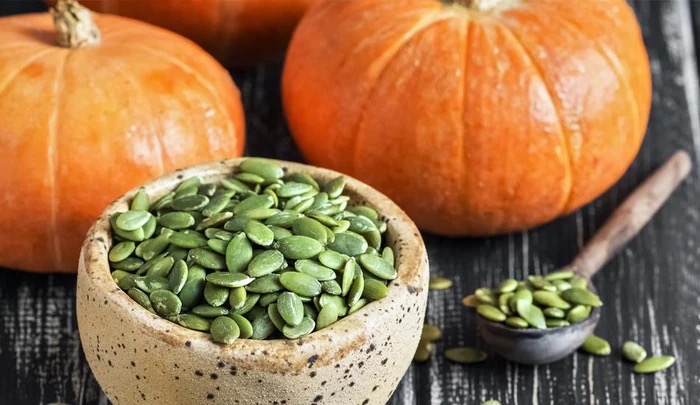
Often used in salads as toppings, these green-gold kernels, often labeled “pepitas,” are a compact source of affordable vegetarian protein, minerals, and healthy fats (about half of their weight is fat). Most people love pumpkin seeds, and I do as well.
1.Superfoods It is nice to see that “old” foods can be called superfoods. Pumpkin seeds are one of them. I do not like the term superfood as such, because it suggests wonders to be achieved by eating A, B, or C. Each with a loyal, at times fanatic fan base (and companies that just want to make money).
What many call superfoods is no more than excellent nutrient-dense food, rich in vitamins, minerals, antioxidants, and phytochemicals. They’re good for your health, can help prevent disease, and support overall wellness. To eat really good food for oneself is already an accomplishment, as most products in your supermarket are not great at all. “Superfoods” are part of my diet, like kale, avocado, wild salmon, and the occasional pumpkin seeds in my salad. Or as snack in the early evening.
“Superfoods” should be part of a holistic diet and healthy lifestyle, not a goal in themselves. They are not exclusive instruments to help you reach your health goals. Do not rely on them too much. So far, no supplements, pills (and definitely no superfoods) exist that cure or prevent everything.
2.Seeds compared. When you compare seeds, there are differences, of course, but most are not that big. Pumpkin seeds are average compared with other seeds when it comes to calories, relatively high in protein (about 25%), and higher than average in fat (but mostly healthy fat) with about 50%, carbohydrates are average and fiber is low. They are a good source of iron, potassium, zinc, and magnesium.
3.The Benefits of Pumpkin Seeds 1. The unsaturated fats in pumpkin seeds, along with magnesium and phytosterols, can contribute to a heart-healthy dietary pattern. Some research suggests that regular, moderate intake of pumpkin seeds may help improve lipid profiles and support blood pressure within certain populations.
2. The combination of protein, fiber, and healthy fats helps increase satiety, which can support better appetite control. For people trying to manage weight, substituting or pairing pumpkin seeds with other snack options can reduce hunger between meals. The fiber content also supports gut health and steady digestion when consumed as part of a balanced diet.
3. Pumpkin seeds contain antioxidants such as vitamin E and carotenoids, plus phytosterols that may support cholesterol balance. Some compounds may help reduce inflammation and oxidative stress.
4. Like many seeds and nuts, pumpkin seeds contain tryptophan, an amino acid that the body can convert to mood-regulating and sleep-related chemicals. Magnesium, another nutrient they supply, is also linked with better sleep quality for some people.
5. Some small studies and traditional use point to benefits for urinary function in men, particularly related to lower urinary tract symptoms (LUTS). The zinc profile in pumpkin seeds is often highlighted in this context. More robust, large-scale trials are needed to make definitive recommendations, but the existing data are encouraging. Men at my age (67) care about their prostate and welcome news like this.
6. In addition, studies indicate that pumpkin seeds contribute to immune support and a better mood and sleep.
4.Problems? Yes, (six minor) ones Pumpkin seeds are calorie-dense. The prepackaged roasted varieties often contain too much sodium (salt). Overconsumption can lead to digestive issues. Some people are allergic. Pumpkin seeds contain compounds like phytic acid that can modestly reduce mineral absorption when eaten in very large amounts, so I would not worry too much. If you have kidney disease, do not eat too much and consult your doctor.
5.Nuts vs. seeds in general Seeds are the plant’s embryos that can grow into a new plant. Nuts are a type of dry fruit with a hard shell around a single seed. True botanical nuts include chestnuts and hazelnuts, etc. Many “nuts” sold in stores (almonds, pistachios, walnuts, cashews) are actually seeds from fruits or drupes, not true botanical nuts.
Nuts (almonds, walnuts, pistachios, cashews, etc.) are frequently more expensive per pound than most seeds.
Both seeds and nuts have excellent nutritional profiles, with differences among them, of course. Seeds are often rich in polyunsaturated fats, certain minerals (magnesium, zinc, iron), and fiber. Nuts are often higher in monounsaturated fats and protein, with their own mix of minerals and phytochemicals.
The shelf life of raw nuts is substantially higher than that of seeds—two times or more. There is no difference when stored in the refrigerator or freezer. Some seeds, like pumpkin seeds, can be more prone to oil rancidity if exposed to heat and light for long periods.
6.How long do pumpkin seeds stay fresh? 4 months in a dark cupboard; keep them in airtight containers away from light, heat, and moisture. If they are roasted, shelf life is about 4 weeks only, before roasted taste disappears. Roasting also diminishes shelf life. For that reason, I freeze a few kilograms of roasted pumpkins and take out a few hundred grams each week. In the fridge: 3–6 months (roasted or not); in the freezer: 9–12 months (roasted or not).
7.Why soak and roast them? Soaking (especially in salted water) reduces the phytic acid in pumpkin seeds. Phytic acid can reduce the absorption by your body of important minerals from other foods. Soaking first will also make roasting easier and can improve digestibility for some people. Roasting will add a lot to the flavor. Some people claim that roasting alone produces a better taste result.
8.Is this a lot of work? No. I do these kinds of things during dinner preparation—Always a few kilograms at a time and storing most of the result in the freezer. A few kilograms should last 1–2 months. The soaking should last 4 hours (in salted water) and the roasting 20 minutes at 175°C (350°F). While roasting, add a bit of oil and salt.
It is getting dark, time for dinner and a nice evening snack. Tonight, as often, pumpkin seeds of course.
Take care, enjoy your food and live a happy and healthy life.
Personally, I love testing so do not be surprised that this blog is a long and a bit boring one. Statistical data comfort me, especially of course when they show that health is moving in the right direction. Heart disease remains the leading cause of death in many Western countries. Regular testing is important as it helps spot risk early by checking cholesterol, blood pressure, blood sugar, weight, smoking status, lifestyle factors, and family history. Alcohol use is also relevant. Genetics contribute to risk in ways that are sometimes underappreciated.
Among heart-related diseases, arterial calcification is a common issue and a key target for assessment. It’s a fascinating topic with ongoing discussions about how much calcification can be prevented, stabilized, or even reduced.
We must interpret these figures carefully, and non-experts like me need excellent specialists to guide us. It is vital that test results are analyzed by an “open-minded” and skilled clinician who looks further than just the numbers.
A good clinician goes beyond labeling LDL as “bad” and HDL as “good,” and looks at the bigger picture—how your risk changes over time and what other factors matter for you.
This blog consists of five parts
First, I explain that many factors determine your risk for heart disease. The main take-away is that you should never focus too much on just a few markers. LDL-cholesterol (=LDL to which cholesterol is attached) for example at times gets too much attention. Other factors are important as well such as particle number (LDL-P) or ApoB (= apolipoprotein B, the protein component of atherogenic lipoproteins (mainly LDL, VLDL, and IDL), and its level reflects the number of these particles and overall cardiovascular risk).
Then I will go in depth into the comprehensive lipid test (not only measuring LDL-C and HDL-C).
Third, I will look at several other ways to test your vascular health beyond lipid tests, including non-standard tests like MRI scans.
Part 4 will cover targets for LDL-C and other markers, and Part 5 deals with ratios.
1.Some of the factors that determine one’s risk for heart disease
Take, for example, the most discussed (and most feared) marker: LDL-C, often labeled the “bad cholesterol. LDL-C = the cholesterol carried by low-density lipoprotein (LDL) particles; the combination is commonly referred to as LDL-C.
I have written a separate blog on cholesterol which is essential for life—our cells cannot function without it. The liver is its major producer. While cholesterol can play a role in heart-related problems, it is not the sole cause. Lifestyle, genetic history, weight, alcohol, and other factors are often more important. Here my link to that cholesterol blog. https://shakethehealthtree.com/index.php/2025/09/05/10-cholesterol-all-you-need-to-know-and-do-health-project99/
One has to be careful interpreting figures: there are two main categories of LDL particles. One group consists of larger particles, the other of smaller ones. Research suggests that smaller, denser particles may be more atherogenic (= promoting the formation of fatty plaques in the arteries), so your testing should ideally include the proportion of large versus small particles!
There are so many factors that play a role and should be taken into account! Diets such as the ketogenic diet can, in some people, raise LDL-C, even if other aspects of health are good. There is a technical reason for this. Effects vary by person, and other lipids (like HDL-C, triglycerides) also matter. Genetics also play a substantial role and can influence LDL statistics. In the literature there are cases of people following all the right guidelines and still developing clogged arteries, and vice versa. For me, this is a reason to monitor my arteries as well, even though I’m not officially classified as high risk (aside from age).
A few words about HDL-C, referred to by many as the “good cholesterol.” Like LDL, HDL-C is a lipoprotein that carries cholesterol, but its role is very different. But, as with LDL, reports from health experts are mixed. Some tell us to celebrate high HDL-C numbers because HDL can help remove cholesterol from arteries, but HDL is heterogeneous. They vary in their effectiveness at reverse cholesterol transport: some are very good at removing cholesterol from the bloodstream and arterial walls, while others are less protective or can become dysfunctional.
All in all, from the literature, it’s clear that scientists still don’t have a complete picture of LDL and HDL. However, a reliable synthesis of evidence suggests that lowering LDL can significantly reduce risk, whereas simply raising HDL-C does not consistently yield the same positive effects.
2.LIPID PROFILE ASSESSMENT/TESTING LDL ETC
A lipid profile assessment is a blood test that measures key lipid components to estimate your risk of atherosclerotic cardiovascular disease and to guide prevention or treatment decisions. It serves as a baseline and follow-up measure to track response to therapy.
To remind: Lipids are a broad family of fat-related molecules that are essential for health. They include triglycerides (fats stored in body tissue), cholesterol and cholesterol esters, phospholipids, and other fat-like substances.
Recommended frequency of the test is every 4-6 years, but more in case of high risk situation. I prefer to do tests annually.
Labs should report both mg/dL and mmol/L, since both units are used internationally.
A Standard lipid panel looks at Total cholesterol (TC); HDL cholesterol (HDL-C); Low-density lipoprotein cholesterol (LDL-C); Triglycerides (TG) and Non-HDL cholesterol (non-HDL-C = TC − HDL-C).
B comprehensive lipid test, which I prefer should include 6 elements: (1) ApoB (apolipoprotein B) that counts the number of atherogenic particles (VLDL, IDL, LDL). (b) ApoA-I and HDL functionality provides more detail about HDL particles and function. (c) Lp(a) (lipoprotein[a]) is considered if there is a strong family history of premature ASCVD or if LDL-C is well-controlled, but risk remains high. (d) LDL particle number and size. (e) Remnant cholesterol: calculated as non-HDL-C minus LDL-C; reflects cholesterol in TG-rich lipoproteins (VLDL/IDL remnants) and can be informative when TG are elevated. (f) HDL-related metrics(rarely used in routine practice): HDL particle size distribution or cholesterol efflux capacity are mainly research measures.
What these Lipid tests can tell you
LDL-C is the main target for reducing atherosclerotic risk in most adults. Just to remind: smaller, denser LDL particles are often considered more atherogenic. Testing of particle size/number (LDL-P) can therefore have added value.
HDL-C reflects “good” cholesterol, but its size and function are not routinely targeted.
Triglycerides reflect another pathway of risk (TG-rich lipoproteins); very high TG can signal higher ASCVD risk and pancreatitis risk.
Non-HDL-C captures all atherogenic particles (LDL, VLDL, IDL, Lp(a) remnants) and is particularly helpful when TG are high or when a broader view of risk is needed.
ApoB measures ApoB counts total atherogenic particle number, not just LDL.
3.MANY OTHER WAYS TO CHECK YOUR CARDIOVASCULAR HEALTH
There isn’t a single test that guarantees “no cardiovascular issues,” especially in asymptomatic people. Beyond abovementioned lipid tests, there are other, some very common ways doctors evaluate heart and artery health. I will note what each test can show, plus practical pros and cons.
Routine broad imaging (such as CAC, CIMT, or MRI in healthy people) is not universally recommended and rather expensive. Tests should be chosen based on your age, risk factors, symptoms, and a shared decision with your clinician. I prefer to be safe than sorry.
A Non-imaging risk checks
Blood pressure and heart rate monitoring
Pros/cons: Simple and essential; no special preparation. If consistently high, it guides lifestyle changes and treatment.
Blood sugar (glucose, HbA1c) and weight/waist measurement/It tells you about Diabetes/prediabetes risk and overall metabolic health.
Pros/cons: Low-cost, actionable; helps with overall risk reduction.
Lifestyle factors like smoking, physical activity, diet, sleep, and stress.
Pros/cons: Modifiable with clear steps; no special equipment needed.
B Imaging and more targeted tests
Coronary artery calcium (CAC) scoring shows the amount of calcium in the heart’s arteries, a marker of atherosclerosis.
Pros/cons: Helpful to refine risk in people at intermediate risk; uses a low-dose CT with minimal radiation.
Coronary CT angiography (CTA) shows detailed images of the coronary arteries, including blockages.
Pros/cons: Very informative but more costly and uses contrast with some radiation.
Exercise or pharmacologic stress tests show whether the heart is getting enough blood flow during stress; can reveal ischemia or limited exercise capacity.
Echocardiography (ultrasound of the heart) shows heart structure, valve function, and how well the heart pumps (ejection fraction).
Pros/cons: Very informative for certain conditions (myocarditis, cardiomyopathy, complex congenital issues) and avoids radiation.
Carotid artery ultrasound (Carotid CIMT and plaque assessment) shows plaque buildup in the carotid arteries and wall thickness.
Pros/cons: Radiation-free, not routinely recommended for people without symptoms.
Ankle-brachial index (ABI) shows signs of peripheral artery disease (PAD).
Pros/cons: Simple, low-cost; helps identify systemic artery problems that raise cardiovascular risk. Not a general “heart check” but useful in people with leg symptoms, diabetes, or a history of smoking.
4.Suggested targets (practice-oriented, with caveats)
A. LDL-C: General/primary prevention: LDL-C < 100 mg/dL (2.6 mmol/L).Very high risk or established ASCVD: LDL-C < 70 mg/dL (1.8 mmol/L)
B. HDL-C: There isn’t a universal target for HDL-C, but higher is generally better when possible. Men: HDL-C > 40 mg/dL (>1.0 mmol/L); Women: HDL-C > 50 mg/dL (>1.3 mmol/L)
C. Non-HDL-C: Primary prevention: < 130 mg/dL (3.36 mmol/L); Very high risk: < 100 mg/dL (2.59 mmol/L)
E. ApoB: Common target for high-risk individuals: ApoB < 90 mg/dL (0.90 g/L)
5. RATIOS
Here are the most commonly discussed lipid ratios in cardiovascular risk.
Ratios are helpful summaries, but they don’t replace individual lipid values and overall risk assessment. Below are the five most common ones. Always interpret ratios in the context of your age, sex, blood pressure, glucose status, smoking, family history, and overall risk, in line with current guidelines; in other words, discuss them with your clinician.
A.Triglycerides to HDL-C ratio (TG/HDL-C) reflects balance between triglyceride-rich particles and protective HDL; a higher number can indicate insulin resistance and higher cardiovascular disease risk.
B.Total cholesterol to HDL-C ratio (TC/HDL-C) reflects: Overall cholesterol balance; a lower ratio suggests more protective cholesterol relative to total cholesterol.
2019 ACC/AHA Guideline on the Primary Prevention of Cardiovascular Disease. (Journal of the American College of Cardiology, 2019)
Provides risk-based targets and risk-factor management guidance.
European Society of Cardiology (ESC) / European Atherosclerosis Society (EAS). 2019 ESC/EAS Guidelines for the Management of Dyslipidaemias.
European guidelines on lipid targets and treatment strategies.
CAC scoring and risk stratification literature (e.g., Multi-Ethnic Study of Atherosclerosis, MESA) and reviews on when CAC adds value to risk assessment.
General references: CAC scoring in risk stratification literature; reviews in prominent cardiology journals.
Non-imaging risk checks and providers’ statements:
AHA/ACC statements on non-imaging risk assessment and routine screening in asymptomatic individuals.
AHA statements on CIMT and carotid ultrasound use in risk assessment.
The world of cholesterol is full of misperceptions, misunderstandings and misleading statements, that are not completely false but do not cover the whole picture. The food and health industry play on our fears and present easy solutions (“low in fat”, “no cholesterol”) for complex issues. And we consumers fall for this, time and again.
Simple people like me are at a loss when it comes to fats, LDL, HDL, cholesterol etc. In particular, when we talk about cholesterol, we are concerned about the negative impact it can have on our heart and our artery system. Hearth failure is still cause of death no 1 in the Western world, often because of plaque inside your arteries, so there is reason to be concerned when your cardiovascular system is involved.
Plaque in your arteries is strongly connected with cholesterol. At the same time all our cells need cholesterol, so the question is how we keep the good part of cholesterol and stay away from the bad part.
The key to understand the whole fat/cholesterol topic is the following: the fat you eat (saturated vs unsaturated) changes how your body handles that cholesterol.
Although LDL and cholesterol are different compounds, often they team up and are then presented as LDL cholesterol (aka “bad cholesterol”). It took me a long time to understand this, namely that we talk about two different things that are presented as one. In this blog I write about the different relationships that cholesterol has and how cholesterol fits in the whole spectrum of fats/lipids/lipoproteins/triglycerides.
Your body does not need food that contains cholesterol (the “dietary cholesterol”) as the body (liver) produces enough cholesterol itself. Cholesterol keeps your body quite busy as it has to manage its production, absorption, transport by lipoproteins (LDL and HDL) and its clearance.
It is essential to point out that the impact of everything concerning cholesterol is not the same for every person: absorption efficiency, total saturated fat intake, fiber intake, body weight, genetics (e.g., LDL receptor function), and overall diet pattern. In other words, the main driver for blood cholesterol isn’t how much cholesterol you eat, but how fat you eat and how your liver handles fats and lipoproteins.
Vitamin D is linked to cholesterol because we need cholesterol in our skins cells to make vitamin D from sunlight. The vitamin D is later transformed again in the liver and kidneys, but cholesterol is needed for the first step.
2. Recommendation As I see it all the different values, like the LDL cholesterol, are important, but are of relative importance only. One reason is that the reaction of each person to cholesterol and other lipids is very individual. Not for nothing sometimes seemingly very healthy people die because of an unexpected hearth failure, that is often related to blocked arteries, something not visible from the outside. Yes, I do an annual blood test, but will also do a MRI scan of the arteries.
3. Plague removal Whether it is possible to remove plague that has already settled in the arteries is a good topic for another blog (short answer: it seems possible to at least partly remove plague from the arteries).
4. What is cholesterol? Cholesterol is a stereol, a type of lipid, meaning a fat-like molecule. As opposed to fat, cholesterol cannot be consumed for energy, sweated or burned. Dietary cholesterol is found in animal products; plant foods contain no cholesterol. The animal products include beef, chicken, fish, poultry, organic meat, and high-fat dairy foods.
From a nutrition perspective, fats are mainly triglycerides and provide about 9 kcal/g; fatty acids and phospholipids are other lipids with different roles. The other difference is that from a caloric perspective, an oil is a fat. For example, let’s consider olive oil. Clearly, it is an oil according to a chemist’s definition, but from a caloric standpoint it is a fat because it provides 9 kcal/g Lipids also consist of triglycerides, fatty acids, phospholipids, waxes, and sterols (like cholesterol).
These compounds are grouped together because of their structural and physical property similarities. Of these, triglycerides are best known. All lipids have hydrophobic (water-fearing) properties. Chemists further separate lipids into fats and oils based on their physical properties at room temperature.
5. What produces cholesterol? Your liver is the body’s main cholesterol factory. It makes a type of particle called VLDL, which ships out triglycerides and cholesterol. As VLDL releases triglycerides in the bloodstream, it becomes IDL and then LDL. So LDL is largely produced and processed inside your body, not simply created by what you eat. Dietary factors can influence LDL production and clearance.
Your diet can influence how much LDL is made or cleared, but LDL itself isn’t a food ingredient. HDL and other lipoproteins play different roles, often helping remove cholesterol from arteries. The liver not only produces cholesterol; it also receives dietary cholesterol (via dairy and meat) via the bloodstream, and some of that cholesterol ends up in a free (unesterified) form in the blood, but most circulating cholesterol is carried inside lipoproteins as cholesterol esters. Free cholesterol isn’t produced as a separate circulating substance on its own; it’s part of the overall cholesterol pool.
6,The functions of cholesterol (1) It helps build cell membranes—the thin, flexible membranes that surround every cell and regulate what goes in and out. (2) It’s also a precursor, which means it’s a starting material the body uses to make other important things, like hormones (for example, those that control growth and reproduction) and bile acids (substances the liver makes to help digest fats). (3) It is also a precursor to vitamin D because we need cholesterol in our skin’s cells to make vitamin D from sunlight.
Vitamin D is later activated again in the liver and kidneys, but cholesterol is needed for the first step. In your blood, cholesterol exists in two main forms: some is free cholesterol, not attached to other molecules like lipoproteins, but most of the cholesterol is carried inside lipoproteins—tiny particle ships that transport cholesterol and other fats around the body.
7.What is the link between certain fats and LDL? There is a strong link between the wrong kinds of fats (saturated/trans fats) and higher LDL (attached to) cholesterol in the blood. However, there are more sources for LDL.
If you do not eat any saturated fat at all, will there still be LDL for the cholesterol to attach to? The short answer is yes. There are several sources of LDL, and the almost exclusive focus on saturated fat is not helpful. It should be stressed that neither saturated nor unsaturated fats directly “make” cholesterol in the sense of a simple one-step conversion.
Cholesterol is made mainly in the liver through a complex pathway, and the type of fat you eat influences that process and how blood cholesterol is handled, not as a direct one-to-one production switch. LDL comes from the liver’s own production and from how all fats and sugars in your diet affect that process. It’s not created only when you eat saturated fat.
Other dietary factors matter too. Trans fats tend to raise LDL and lower HDL. One should therefore replace saturated fats with unsaturated fats (like olive oil, nuts, and fish) that often (but not always) lowers LDL. Often not well understood is that refined carbohydrate or sugar intake can raise triglycerides, another part of the whole lipid spectrum that can change upward the LDL particle size/number. Another issue is dietary cholesterol (the cholesterol in foods, not to be confused with saturated or non-saturated fat) has a smaller, more variable effect on blood LDL for many people. To add to the picture and confusion: genetics also play a big role—some people naturally have higher LDL regardless of diet.
8.What happens if you eat products high in cholesterol? The liver produces enough cholesterol to supply the body’s needs. However, a person can also consume cholesterol in their diet. If someone consumes foods high in cholesterol, their liver responds by slowing down cholesterol production, but not necessarily proportionally. The response varies between people. Some are “hyper-responders” and see larger rises in LDL-cholesterol with higher dietary cholesterol; others show little to no change. This balances out cholesterol levels and keeps them more or less constant, meaning that dietary sources of cholesterol, including eggs, typically have little or no impact on blood cholesterol.
9.How much cholesterol one needs daily? There is not a required daily amount of cholesterol you need to eat. The body makes all the cholesterol it needs, and it adjusts its production of cholesterol according to its needs. Dietary intake, i.e., via foods like eggs, is not needed. The current guidelines say (roughly): • No specific daily limit for dietary cholesterol for the general population. • Focus on overall diet quality: limit saturated fats to less than about 10% of daily calories, avoid trans fats, eat fiber-rich foods, and maintain a healthy weight. • If you have high cholesterol or cardiovascular risk, a clinician may advise more careful management of cholesterol intake, sometimes with a target around 200–300 mg per day, but this is individualized.
10.What is the difference between LDL and HDL? The difference between these two is huge. They are both so called lipoproteins and function as “ships” that carry cholesterol and other fats in the bloodstream.
LDL stands for Low-density Lipoprotein and is like the delivery truck that carries cholesterol from the liver to cells that need it; if there are too many of these trucks or they become damaged, cholesterol can build up in artery walls as LDL deposits the cholesterol in arteries and start atherosclerosis.
HDL is the recycling truck that picks up excess cholesterol from tissues and other lipoproteins and brings it back to the liver to be reused or excreted.
There are other lipoproteins too, such as VLDL and chylomicrons, which mainly transport triglycerides and can be converted into LDL or HDL as they unload. Each lipoprotein has surface proteins that help cells recognize and take up the particle. Clinically, we usually measure LDL-C and HDL-C to estimate how much cholesterol is carried by these main ships and to assess heart disease risk
11.What can move LDL up or down? What to do? (1) Saturated fats and trans fats tend to raise LDL for many people. (2) Unsaturated fats (like those from olive oil, nuts, and fish) tend to lower LDL or improve the overall cholesterol pattern. (3) Refined carbs and sugar can raise triglycerides and influence LDL particle size/number. (4) Dietary cholesterol (the cholesterol in foods) has a smaller, more variable effect on LDL for most people. (5) Genetics also plays a big part—some people naturally have higher LDL regardless of diet. (6) Certain foods have been proven to lower LDL, like fatty fish, green tea, oats, nuts and beans. Others to raise it: red meat, processed meat, full-fat diary, baked goods, fried foods, butter, tropical oils. (7) Overweight causes your body to produce extra cholesterol. (8) Exercise and fiber-rich food will move LDL down.
12.What is a cholesterol profile? A cholesterol profile consists of 4 main items.
(1)LDL cholesterol (the “bad” one); (2) HDL cholesterol (the “good” one as it helps remove cholesterol from arteries; (3) Non-HDL cholesterol and ApoB (what this is see below): these reflect all the atherogenic (artery-clogging) particles, not just LDL; (4) Triglycerides.
13. No, avocados do not contain cholesterol. Cholesterol is not a fat, but lipid, specifically a sterol; it is not a fat. Itis found only in animal products. Since avocados are plant-based, they are naturally cholesterol-free.
14. What about eggs? Discussions often focus on your cholesterol intake, which in itself is misleading, as most if not all of your cholesterol is produced by your liver.
Remember the egg debate. One egg (the yellow part) contains about 185 mg of cholesterol. Although there is no precise figure for how much cholesterol your body needs, 185 mg is substantial. For this reason eggs are traditionally considered potentially damaging for your cardiovascular health.
Recent studies however are drawing other, less damaging conclusions on egg consumption and I can see why. It is your liver itself that produces all the cholesterol you need, a production that will go down when your dietary intake goes up. It is a bit more nuanced than this and for some people dietary cholesterol can have a noticeable effect. More studies are needed, but there are indications that for many of us, eggs are less of a cholesterol villain than normally described.
15.Triglycerides (another lipid, just as cholesterol is a lipid) Earlier I wrote a blog on triglycerides as I was fascinated (and became very concerned) about the clear link between eating too much easy sugars and refined carbs like white bread and its impact on the quantity of fat in your bloodstream!
Tryglycerides are the main storage form of fat in your blood: a molecule made of a glycerol backbone with three fatty acids attached. Your body uses them for energy, and when you eat more calories than you need (especially from sugars and refined carbs), the liver often packages the excess into triglycerides and releases them into the bloodstream in VLDL particles. This is why high intake of sugars and refined carbohydrates can raise blood triglyceride levels.
Not all carbs have the same effect—whole, fiber-rich carbs tend to have a gentler impact than sugary drinks or sweets. Other factors—weight, insulin sensitivity, alcohol, genetics, and overall diet—also influence triglycerides.
16.What is ApoB, an important but neglected indicator of heart health Interestingly enough in the discussions on cholesterol there is little or no interest for ApoB. Strange as apolipoprotein B, is the main protein component of the lipoprotein particles that carry fats and cholesterol in your blood.
Because most atherogenic (artery-clogging) particles carry one ApoB molecule, the blood level of ApoB roughly reflects the number of these potentially harmful particles, not just how much cholesterol they carry. Clinically, ApoB is used to assess heart disease risk, and you can think of ApoB as a count of the delivery trucks circulating in your bloodstream. Next time when I visit a lab I will definitely ask for my ApoB to be checked!
Dear reader, this was a long one, but too difficult to write about this complex topic in just a few lines.
Take care, keep in mind what I wrote about cholesterol and hopefully it will benefit you.
Fats are necessary for life, and a fat-free diet is a bad idea, but the wrong types of fats can be harmful. Opinions about fats change over time. Butter was once out of favor, but now many health experts recommend eating butter as part of a balanced diet. (Note: you’re welcome to subscribe to my free blog posts.)
This blog focuses on triglycerides. They’re the main storage form of fat in the body, though many people don’t know much about them.
First a few words on cholesterol. Before going into details, here is a very short summary: cholesterol has different characteristics and functions from fat. Cholesterol is a lipid (a sterol), not a fat. Lipids are a broad category of molecules that include fats, oils, waxes, and steroids. Cholesterol is a waxy, fat-like substance found in every cell of the body. It is crucial for various bodily functions. These include the production of hormones, vitamin D, and bile acids that help digest fats.
What produces cholesterol? Your liver is the body’s main cholesterol factory. It makes a type of particle called VLDL, which carries triglycerides and cholesterol. As you know cholesterol is technically a sterol, not a fat.
As VLDL releases triglycerides in the bloodstream, it becomes IDL and then LDL. So LDL is largely produced and processed inside your body, not simply created by what you eat. Your diet can influence how much LDL is made or cleared, but LDL itself isn’t a food ingredient. HDL and other lipoproteins play different roles, often helping remove cholesterol from arteries.
The liver not only produces cholesterol; it also receives dietary cholesterol (via dairy and meat) through the bloodstream, and some of that cholesterol ends up in a free (unesterified) form in the blood, but most circulating cholesterol is carried inside lipoproteins (LDL and HDL) as cholesterol esters. Free cholesterol isn’t produced as a separate circulating substance on its own; it’s part of the overall cholesterol pool
Ok, returning to triglycerides. I didn’t know their importance until recently. The body produces triglycerides naturally, but most come from food. When not needed for energy, excess calories—especially from carbohydrates—are converted into triglycerides for storage. The body then uses this storage for energy between meals.
Essence of triglycerides. An important realization for me was that most of the fat in your body comes from the calories you consume, not only from directly fat-containing foods. In addition to fat in foods, simple carbohydrates can be converted into triglycerides in the liver (“de novo lipogenesis” which is the process of the liver converting excess carbohydrates into triglycerides).
What if your triglyceride levels are too high? Regularly consuming more calories than you need will most likely lead to elevated triglyceride levels. These levels are also influenced by factors like lack of exercise, smoking, and certain health conditions. High triglyceride levels may not present symptoms, yet they are linked to serious health risks, including heart disease, stroke, and non-alcoholic fatty liver disease (NAFLD). NAFLD occurs when too much fat builds up in the liver. In a healthy adult, the liver should contain little fat, but a little only.
This para above illustrates how food can impact the liver similarly to excessive alcohol consumption.
Elevated triglycerides can also contribute to atherosclerosis. This condition occurs when triglycerides and cholesterol accumulate in arteries. They narrow the arteries and increase the risk of cardiovascular events.
Important to know. High triglyceride levels are often, but not always, accompanied by high cholesterol levels. If they are both high, then there is a serious risk of further aggravating the associated health risks. Cardiovascular risk is part of a wider topic as it is influenced by multiple factors (LDL, HDL, inflammation, smoking, blood pressure, etc.).
The Relationship Between Triglycerides, HDL, and LDL There is a significant relationship among triglycerides, HDL (high-density lipoprotein), and LDL (low-density lipoprotein). The favorable relationship is with HDL; HDL is the “good” cholesterol that helps move cholesterol away from arteries. Conversely, higher triglycerides are often associated with a less favorable pattern: elevated triglycerides can accompany a low HDL-Cholesterol and a more atherogenic LDL profile. The relationships are interrelated but not simple; they influence each other and overall cardiovascular risk.
Normal Levels of Triglycerides Hyperlipidemia—defined as high cholesterol and/or high triglycerides—affects a sizable portion of the population and increases cardiovascular risk. People may not have symptoms but should monitor triglyceride and cholesterol levels to assess risk. Triglyceride screening is typically part of a standard lipid panel; many people have this test annually. This panel also checks total cholesterol, HDL-C, and LDL-C. Normal triglyceride levels are below 150 mg/dL for adults; for children and adolescents, normal ranges vary by age and sex, so consult pediatric guidelines.
One is possible without the other Don’t assume that low triglycerides equal low risk; it’s still possible to have elevated LDL. The sources of cholesterol and triglycerides differ. Therefore, always test for the full lipid spectrum. In my case, I have very low triglycerides but a moderate LDL level.
How to Keep Triglycerides Within a Healthy Range (no surprises here) To keep triglycerides within a healthy range, manage your weight. Follow a balanced diet and engage in regular exercise. It’s important to avoid excess calories. Additionally, steer clear of added sugars and processed foods. In general, it’s vital to consume only the calories your body will use that day as energy. Familiar dietary recommendations include plenty of vegetables, fruits, fish, olive oil, and nuts.
Doctors often recommend diet and exercise as the first line of treatment. They help in lowering triglyceride levels. They also maintain them within range. As a second line of defense, medications like statins may be prescribed. I am not a doctor. Medicines are needed at times. However, in most cases, your own actions can solve fat-related issues.