3.PUMPKIN SEEDS: ROAST, EAT, ENJOY (health project99+)

Dear reader,

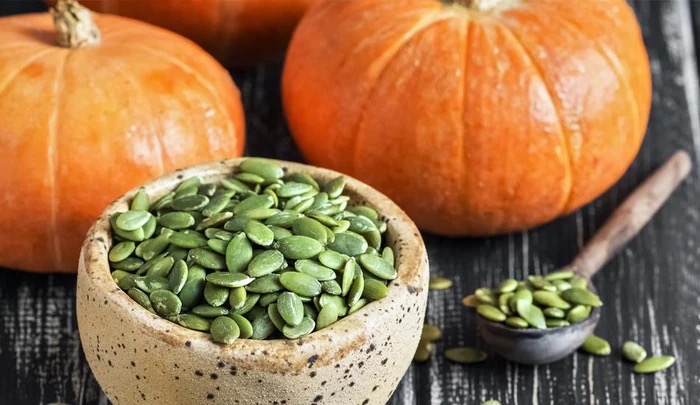
Often used in salads as toppings, these green-gold kernels, often labeled “pepitas,” are a compact source of affordable vegetarian protein, minerals, and healthy fats (about half of their weight is fat). Most people love pumpkin seeds, and I do as well.

1.Superfoods It is nice to see that “old” foods can be called superfoods. Pumpkin seeds are one of them. I do not like the term superfood as such, because it suggests wonders to be achieved by eating A, B, or C. Each with a loyal, at times fanatic fan base (and companies that just want to make money).

What many call superfoods is no more than excellent nutrient-dense food, rich in vitamins, minerals, antioxidants, and phytochemicals. They’re good for your health, can help prevent disease, and support overall wellness. To eat really good food for oneself is already an accomplishment, as most products in your supermarket are not great at all. “Superfoods” are part of my diet, like kale, avocado, wild salmon, and the occasional pumpkin seeds in my salad. Or as snack in the early evening.

“Superfoods” should be part of a holistic diet and healthy lifestyle, not a goal in themselves. They are not exclusive instruments to help you reach your health goals. Do not rely on them too much. So far, no supplements, pills (and definitely no superfoods) exist that cure or prevent everything.

2.Seeds compared. When you compare seeds, there are differences, of course, but most are not that big. Pumpkin seeds are average compared with other seeds when it comes to calories, relatively high in protein (about 25%), and higher than average in fat (but mostly healthy fat) with about 50%, carbohydrates are average and fiber is low. They are a good source of iron, potassium, zinc, and magnesium.

3.The Benefits of Pumpkin Seeds 1. The unsaturated fats in pumpkin seeds, along with magnesium and phytosterols, can contribute to a heart-healthy dietary pattern. Some research suggests that regular, moderate intake of pumpkin seeds may help improve lipid profiles and support blood pressure within certain populations.

2. The combination of protein, fiber, and healthy fats helps increase satiety, which can support better appetite control. For people trying to manage weight, substituting or pairing pumpkin seeds with other snack options can reduce hunger between meals. The fiber content also supports gut health and steady digestion when consumed as part of a balanced diet.

3. Pumpkin seeds contain antioxidants such as vitamin E and carotenoids, plus phytosterols that may support cholesterol balance. Some compounds may help reduce inflammation and oxidative stress.

4. Like many seeds and nuts, pumpkin seeds contain tryptophan, an amino acid that the body can convert to mood-regulating and sleep-related chemicals. Magnesium, another nutrient they supply, is also linked with better sleep quality for some people.

5. Some small studies and traditional use point to benefits for urinary function in men, particularly related to lower urinary tract symptoms (LUTS). The zinc profile in pumpkin seeds is often highlighted in this context. More robust, large-scale trials are needed to make definitive recommendations, but the existing data are encouraging. Men at my age (67) care about their prostate and welcome news like this.

6. In addition, studies indicate that pumpkin seeds contribute to immune support and a better mood and sleep.

4.Problems? Yes, (six minor) ones Pumpkin seeds are calorie-dense. The prepackaged roasted varieties often contain too much sodium (salt). Overconsumption can lead to digestive issues. Some people are allergic. Pumpkin seeds contain compounds like phytic acid that can modestly reduce mineral absorption when eaten in very large amounts, so I would not worry too much. If you have kidney disease, do not eat too much and consult your doctor.

5.Nuts vs. seeds in general Seeds are the plant’s embryos that can grow into a new plant. Nuts are a type of dry fruit with a hard shell around a single seed. True botanical nuts include chestnuts and hazelnuts, etc. Many “nuts” sold in stores (almonds, pistachios, walnuts, cashews) are actually seeds from fruits or drupes, not true botanical nuts.

Nuts (almonds, walnuts, pistachios, cashews, etc.) are frequently more expensive per pound than most seeds.

Both seeds and nuts have excellent nutritional profiles, with differences among them, of course. Seeds are often rich in polyunsaturated fats, certain minerals (magnesium, zinc, iron), and fiber. Nuts are often higher in monounsaturated fats and protein, with their own mix of minerals and phytochemicals.

The shelf life of raw nuts is substantially higher than that of seeds—two times or more. There is no difference when stored in the refrigerator or freezer. Some seeds, like pumpkin seeds, can be more prone to oil rancidity if exposed to heat and light for long periods.

6.How long do pumpkin seeds stay fresh? 4 months in a dark cupboard; keep them in airtight containers away from light, heat, and moisture. If they are roasted, shelf life is about 4 weeks only, before roasted taste disappears. Roasting also diminishes shelf life. For that reason, I freeze a few kilograms of roasted pumpkins and take out a few hundred grams each week. In the fridge: 3–6 months (roasted or not); in the freezer: 9–12 months (roasted or not).

7.Why soak and roast them? Soaking (especially in salted water) reduces the phytic acid in pumpkin seeds. Phytic acid can reduce the absorption by your body of important minerals from other foods. Soaking first will also make roasting easier and can improve digestibility for some people. Roasting will add a lot to the flavor. Some people claim that roasting alone produces a better taste result.

8.Is this a lot of work? No. I do these kinds of things during dinner preparation—Always a few kilograms at a time and storing most of the result in the freezer. A few kilograms should last 1–2 months. The soaking should last 4 hours (in salted water) and the roasting 20 minutes at 175°C (350°F). While roasting, add a bit of oil and salt.

It is getting dark, time for dinner and a nice evening snack. Tonight, as often, pumpkin seeds of course.

Take care, enjoy your food and live a happy and healthy life.

Robert, your health friend

Slowly preparing for the annual trek, Kenya

3. (DIET) SODAS: STAY AWAY FROM LIQUID POISON (health project99+)

Do not remember if these Congolese drinks were healthy 🙂

Dear reader,

When preparing this blog, I wonder why I ever drank Coke daily. I mean, a drink that can derust iron cannot be good for your stomach, can it? Just to name one reason not to drink these types of sodas. 

I used to love drinking both Coke and later Diet Coke—for decades. Let’s be honest: a cold Coke tastes great. The fizz and the bubbles are refreshing. The taste and ice cubes add to the experience. All of this is accompanied by appealing advertisements. Sweet memories! Still, avoid (Diet) Coke, 7-Up, Fanta, Red Bull, and any other soda. You should stay away from them as far as possible.

The original, non-diet versions contain a lot of sugar, up to 40 grams per regular can. These soda calories are empty calories, not accompanied by fiber or other beneficial nutrients. Recent studies indicate that over consumption of empty calories is almost unavoidable with all its potential health problems. The sudden glucose spike is a problem in itself. Your body’s health systems can become overwhelmed by the rapid influx of glucose.

The diet versions of sodas do not have calories. However, studies indicate that many sweeteners affect your metabolism similarly to sugar. They can influence dopamine levels. 

Both diet and non-diet sodas are considered UPF (Ultra-Processed Foods). The long-term impact of UPF on your body over decades seems to be negative. An increasing number of studies attribute a lowered biological age to UPF consumption. They also identify a contribution to over 30 serious diseases.

There is no scientific proof that sweeteners cause cancer, but neither can the possibility be excluded. For me, it’s a bit like the issue with Nanoplastics entering our cells. There’s no scientific proof of their potential health damage yet, but it doesn’t seem acceptable to me. I have similar concerns about the long-term effects of all these artificial sweeteners.

While (Diet) Coke addiction is not scientifically proven, there are strong indications that it is at least partly addictive. On the internet (admittedly not always the best source), I have read horrific stories. People try to rid themselves of their Coke addiction. However, they often fail. My impression is that Diet Coke seems to pose more addiction problems than regular Coke. Science does not back this conclusion—it’s just my impression.

Are there alternatives to Cola and other sodas? Of course, and some of those other drinks are quite exciting!

1.What are sodas like Coke doing to your body?

Your body needs energy (in the form of glucose/ATP). The source of this energy is crucial because you need meaningful calories, not empty calories from sodas. Technically/organically, added sugar is not different from naturally occurring sugars. In other words, sugar in fruit is not healthier than sugar in other products. Your body does not distinguish between naturally occurring sugars and added sugars. Two lumps of sugar give you the same amount of sugar as one banana. 

However, there is a world of difference between a lump of sugar and a banana. The lump of sugar gives you a fast but short spike in your energy level. In contrast, the sugar in the banana comes with vitamins, minerals, and other important compounds. Not to forget the starch, which can be up to 80% of the weight of unripe bananas. This starch is primarily resistant starch. It improves gut health by acting as a prebiotic. It also helps with blood sugar management. Furthermore, it increases satiety.

These empty soda calories increase the likelihood of several diseases, including Alzheimer’s and cancer. A lot of research is ongoing; not all is proven, but there is also a correlation between too much sugar (i.e., easy carbs) and refined starch with certain types of cancer.

Rapid glucose delivery was for a long time an unknown problem. When sugar is dissolved in liquid, it floods the system quickly. According to the latest science, this rapid delivery overwhelms the body’s ability to process it in a healthy way. When the liver is hit with a sudden, high dose of fructose, it can’t keep up. When this happens, it diverts more of the excess fructose into fat production. This buildup of fat in the liver can interfere with insulin signaling. It can also contribute to metabolic dysfunction. These issues lead to an increased risk of type 2 diabetes.

There are no universally fixed daily recommended quantities for sugar intake, but there are various dietary guidelines regarding sugar intake. Many recommend limiting added sugars to around 10% of total daily calories. This translates roughly to 50-60 grams for women. The amount is slightly higher for men for added sugars. There are an additional 30 grams for natural sugars. 

As mentioned, it is essential to differentiate between added sugars and natural sugars found in whole foods. Added sugars are typically of much greater concern for health. A person might not realize this fact. A single sugary drink from a can will contribute up to 40 grams of sugar or more. You quickly exceeds any daily limit, just by drinking a few cans of a regular, non-diet soda.

2.Many switch to Diet versions.

Studies are ongoing comparing types of artificial sweeteners vs sugar. Diet sodas do not contain calories. However, some recent studies have indicated that certain artificial sweeteners might elicit metabolic responses similar to those of sugar. This raises questions about their long-term health impacts.

It might also explain the addictive nature not only of regular sodas, but also of the diet sodas.

It’s worth noting that not all studies agree on the effects of artificial sweeteners. The effects can vary widely depending on the type of sweetener, the individual’s metabolism, and overall dietary context. Thus, while some research suggests potential metabolic similarities between sugar and certain sweeteners, the topic is still nuanced and requires careful interpretation and, as always, further study.

3.Sodas are ultra-processed food (UPF)

Dear reader, just to remind you that in general, ultra-processed foods lead to an acceleration in biological age. This means that your body ages quicker than your nominal years. It also results in a 10% increase in mortality risk. An important study in February 2024 reported a link between ultra-processed food consumption and 32 negative health issues. These issues include colorectal and pancreatic cancer. Additionally, they include sleeping issues, high blood pressure, and Crohn’s disease. 

The composition of regular coke includes high fructose corn syrup or sucrose (sugar). It also contains carbonated water, caramel color, phosphoric acid, natural flavors, and caffeine. In contrast, diet coke consists of carbonated water and artificial sweeteners (like aspartame or acesulfame potassium). It has caramel color, phosphoric acid, natural flavors, and caffeine.

Both regular and diet sodas are UPF with all its already known and still unknown negative health consequences.

4.Drinking Coke or other caffeinated sodas seems like an addiction for many people. 

Sugar is potentially addictive. Some studies suggest that sugar can trigger the release of feel-good chemicals like dopamine in the brain. This is akin to the effects observed with various addictive substances. This can lead to cravings and an increased wish for sugary foods. This creates a cycle that mirrors the behaviors linked to substance addiction. While not everyone experiences this phenomenon, evidence suggests that sugar can strongly influence our eating habits. 

Addiction or not, when someone (and there are many) drinks 1.5 liters of 7Up or six cans of Diet Coke daily, it certainly resembles addiction. They find it very difficult to stop. The discussions in Coke self-help groups closely resemble those among people struggling with addiction.

Studies have not conclusively determined that Diet Coke or soda is more addictive than regular soda. It often depends on personal factors. These factors include an individual’s body response to caffeine, preferences for sugar versus artificial sweeteners, and habits.

5.Tasty and Healthy Alternatives to Sodas

Many people enjoy the bubbles in carbonated drinks. Fortunately, there are numerous products on the market that can make your regular water as fizzy as a Coke. It may sound silly, but it works!

You can also make water tasty by flavoring it with fruit or herbs. Always keep a stainless steel (no plastic!) water bottle filled and ready to go. Take them with you when you’re out on a trip.

Use your imagination to create exciting drinks yourself. Every morning, we make two liters of lemon juice. We add ginger and a bit of cayenne pepper. You can make this with carbonation, of course. https://shakethehealthtree.com/index.php/2025/02/25/5-lemons-and-limes-health-project-99/

We also have a liter of delicious smoothie ready to go. Additionally, there are great teas and the occasional coffee to enjoy. https://shakethehealthtree.com/index.php/2025/03/10/9-four-drinks-a-morning-afternoon-smoothie-health-project-99/

In the evening, we eat soup, which serves as another “watery” drink. I didn’t use to like soups very much. Now, I find them great. Just like other drinks, there is plenty of room for experimentation. https://shakethehealthtree.com/index.php/2025/03/15/9-four-drinks-c-the-evening-vegetables-soup-health-project99/

In my experience, it is important to have these drinks ready, preferably stocked in stainless steel bottles. So, when you feel like having something to drink, grab one of these bottles. You honestly don’t need a can of soda; the alternatives can be exciting and definitely healthier.

Many people consider fruit juice from packages to be a healthy alternative to such drinks. It may contain fewer potentially harmful additives. However, it still contains a significant amount of sugar. It’s better to stay away from this liter pack with apple or orange juice.

To finish on this serious note: A recent meta-study found alarming results. For each 12-ounce daily serving of a sugar-sweetened drink, the risk of diabetes increased by 25%. This is relative to their existing level of risk.

Thanks for reading. This is quite serious stuff. However, it is something within reach to change. You can spend a life without sodas like Coke.

Take care and drink healthy!

Robert, your health friend,

In the dunes near The Hague

3. FLAXSEEDS ARE A SUPERFOOD. VIVA LA FLAX! (health project99+)

Drinks on our terrace in Kinshasa

Summary: I truly like flaxseeds. They are 100% loaded with nutrients. Gram for gram, they are not missing one beat. They are an excellent, affordable, and tasty food option. For me: viva la flax! (note: subscribe for free to my blogs, thanks!).

1.Where so flaxseeds fit in?

When we talk about food, it’s often about the big items: meat, dairy, nuts, fish, vegetables, and fruit. You know the routine. We should always aim for balanced and healthy eating. We should consider the impact of cholesterol, the good fats, protein (do we have enough?), and fiber. Doing this right can considerably increase the healthy part of your life (“health span”).

When it comes to food, we should look for diversity. We should spice up our meals. Let’s make our salads more tasty. It’s great to find something that is 100% healthy and provides nutrients that aren’t always easy to come by. Avocado is one such product, and so are flaxseeds! Flaxseeds are affordable and provide protein, fiber, omega-3 fatty acids, essential vitamins, and a wealth of minerals.

2. The health wonders of flaxseeds (according to the internet)

Flaxseed may help lower the risk of some cancers, mainly breast cancer. However, this is based on indications and not definitive science yet. They contain lignans, plant compounds that may also contribute to hormonal balance.

Flaxseed does more. It is said to stabilize blood sugar, being rich in both soluble and insoluble fibers. These fibers are abundant in flaxseeds, which can promote digestive health and regularity.

The combination of omega-3 fats, fiber, and lignans may enhance heart health. They lower cholesterol levels. They reduce blood pressure and decrease inflammation.

The omega-3 fatty acids and lignans in flaxseeds may help reduce inflammation in the body. This inflammation is linked to chronic diseases.

3. I take two spoons daily

I consume, on average, 2 tablespoons of flaxseed per day, which is about 15 grams. Flaxseeds are best consumed ground, as whole seeds may pass through the digestive system undigested, significantly reducing their health benefits.

To save money, buy whole flaxseed. Grind it in a coffee grinder. Then, store the ground flaxseed in an airtight container for easy use.

Instead of flaxseeds, you can use flaxseed oil. Still, it is very sensitive to heat and light. Flaxseed oil is best kept in dark glass bottles and stored in a dark, cool place like a kitchen cabinet. It isn’t suitable for high-heat cooking techniques, like frying.

4. So what does flaxseed give you?

One tablespoon of flaxseeds (=7 grams) already provides: complex carbs 2 g, “good fat” 3 g, fiber 2 g and protein 1 g. Not bad at all!

The “good fat” consists mainly of alpha-linolenic acid (ALA), an omega-3 fatty acid, primarily found in plant foods. Flaxseeds are one of the best sources in the plant world for ALA. Flax oil (which I do not use) has double the amount of ALA as the seeds.

One tablespoon of flaxseeds contains two grams of fiber. It might seem modest, but two tablespoons of flaxseeds is already 10% of your daily need. For women, that’s 14%. This is not the place to dwell on the importance of fiber, but just to recap. Most of us do not get enough fiber per day. Yet, it is essential for gut health and bowel movement. So just adding two tablespoons per day to your smoothie or salad is already a good step.

In addition, flaxseed has Thiamine: 10% of the Daily Value (DV), Copper: 9% DV, Manganese: 8% DV, Magnesium: 7% DV, Phosphorus: 4% DV, Selenium: 3% DV, Zinc: 3% DV, Vitamin B6: 2% DV, Iron: 2% DV, Folate: 2% DV

5. But take care in a few specific cases (according to internet)

As the reader knows I am no doctor. On internet I read the following warnings about flaxseeds.

If ground flaxseed or flaxseed oil goes rancid, it may cause cholesterol problems and inflammation. In general, but you have to eat really great quantities, it might cause diarrhea, cramping, gas, and bloating.

  • Rated POSSIBLY UNSAFE form pregnant & nursing women,
  • might slow blood clotting and affects other bleeding disorders,
  • affects diabetes & diabetes medication,
  • can cause intestinal obstruction,
  • affects those that have hormone sensitive conditions,
  • affects hormone medications (birth control)

6. Which is better, chia seed or flaxseed?

Chia and flax seeds are both very nutritious and offer similar benefits for heart health, blood sugar levels, and digestion. However, flaxseeds appear to have a slight advantage. They are particularly effective at reducing hunger and appetite. Additionally, they lower the risk of certain cancers. Plus, they’re often less expensive.

Time to make a nice salad for my wife. Some lettuce, tomatoes, avocado, shrimps, olive oil, cucumbers, all sprinkled with flaxseeds of course.

Enjoy a long and tasty life,

Robert, your health friend

Okapi/DRC

3. FISH IS HEALTHY, BUT THERE IS BIG BUT (health project99+)

Picture AI generated

Dear reader,

Eating fish is healthy. And tasty! However, due to an increasing number of foreign substances like mercury, one has to limit fish consumption. When I realized this I cut down my fish consumption by half. Just think of mercury! But there is unfortunately more.

Fish: great, but from now on a cautious “yes”

At home, we used to eat fish almost every day over the past five years. The health benefits of fish are well known. However, we neglected important dangers. Issues like PCBs, nano plastics, and mercury are truly concerning. Other heavy metals and antibiotics in farmed fish also worry me as an enthusiastic fish consumer. 

So I dived into this topic to see whether we could continue eating fish every day. The short and sad conclusion is “no”. It was already “no” to farmed fish. We should also avoid fish that is most likely to have high levels of mercury. PCBs and nano plastics are also concerns. This is all easier said than done. When buying fish, the amounts of mercury and other harmful components are not labeled. They probably never will be, as they are difficult to measure. With mercury it is more or less known which fish is mercury heavy and which not. When it comes to farmed fish, you can find out what is wrong. But what about other heavy metals? PCBs? Nano plastics?

2. Why take the risk?

To those who say that the Japanese eat fish almost daily, I admit I have no answer. They argue that Japanese are among the longest-living people in the world. Food and health are complex issues, as I have come to realize over the past few years. 

Not everything is scientifically proven. However, there are many indications of potential negative effects from eating fish more than a few times per week. So, why take the risk? Especially when you can maintain a very balanced diet without consuming fish daily.

3. Do you need fish for your necessary protein intake?

We humans have several other protein sources legumes, nuts, eggs, light French quark, soya milk, seeds, and plant-based proteins. In another blog I wrote that people tend to undereat protein, something that is very harmful especially if one ages. Eating fish helps. Chicken also helps. For us, fish is “just” one of the protein sources. It is an important contributor to a tasty meal.

4. Just to repeat the benefits of fish. It is an excellent source of high-quality protein. It also provides omega-3 fatty acids, especially in fatty fish like herring and salmon. Additionally, it contains vitamins such as vitamin D and B2. It also has minerals like calcium, phosphorus, iron, zinc, iodine, magnesium, and potassium. Omega-3 fatty acids are beneficial for heart health. They may lower the risk of heart attack and stroke. He/she who eats fatty fish a few times per week really should not take Omega-3 supplements. 

One portion of fatty fish can provide a significant amount of EPA and DHA. Fish like salmon, mackerel, sardines, or herring can offer approximately 250 to 500 mg of these nutrients. The exact amount depends on the type and size of the fish. This amount is typically recommended for maintaining overall heart health. Most sources I read talk about two portions per week of fatty fish.

5. Lean (white) fish typically contains much lower levels of omega-3 fatty acids. This is in comparison to fatty fish such as salmon, mackerel, sardines, and herring. Omega-3 fatty acids are primarily found in the fats of fish. White fish are usually much leaner, so they provide fewer omega-3s. They remain a healthy option as they provide high-quality protein, vitamins, and minerals. 

Some examples of lean fish include Cod, Haddock, Pollock, Hake, Flounder, and Sole. Tilapia (but see my critical remarks on farmed fish), Whiting, Bass, and Shrimps are also lean fish. The following white fish are, unfortunately high on mercury: Sea bream, Sea bass and Turbot.

All international health agencies recommend two portions of fish, with a maximum of three (150 grams). At least one portion should be fatty fish, like herring or salmon. The other can be white fish like cod. White fish lack however the all-important omega-3 with EPA (“eicosapentaenoic acid”) and DHA (“docosahexaenoic acid”),

6. Mercury: important to realize the potential impact on your health

In this blog, I delve a bit deeper into one of the dangers of eating fish: mercury. It is a hazardous heavy metal that we primarily ingest through eating fish. Once it reaches the brain, it can remain there for decades, accumulating and impacting the nervous system. Serious stuff. Other heavy metals, PCBs, and nano plastics might be just as dangerous. These topics will be discussed in other blogs.

(Note: PCBs, or Polychlorinated Biphenyls, are a group of man-made organic chemicals consisting of carbon, hydrogen, and chlorine atoms. They were widely used in various industrial and commercial applications. PCBs have been found to have significant environmental and health impacts; studies are ongoing.)

Some things are recent developments, like nano plastics. We know it is a developing health scare worldwide. Its consequences are not yet known. I cannot imagine that it is good for your body. Who wasn’t alarmed to read that the average adult brain now contains a spoonful of nano plastics? Also a topic for a future blog.

7. From mercury to methylmercury: a technical explanation

Mercury is a global pollutant. It enters water bodies for 1/3 through atmospheric deposition. This deposition results from natural events like volcanic eruptions. For 2/3, mercury enters through human activities such as coal burning and industrial processes. 

The legacy of human use of mercury has caused mercury to be released into the environment in enormous quantities. These releases amount to hundreds of thousands of tons. The levels of mercury in the atmosphere at the moment are up to 500 % above natural levels. In the oceans, the concentrations of mercury are about 200 % above natural levels.

Mercury can undergo chemical transformations once it is deposited to the landscape. Of greatest concern to fish, wildlife, and humans is mercury’s conversion to methylmercury. This conversion is most common in wetlands that are periodically flooded, where the bacteria that facilitate the process are abundant.

Fish absorb methylmercury from the water they live in and from the organisms they eat. Methylmercury is a highly toxic form that accumulates in fish, especially in long-lived and predatory species.

8, Bioconcentration (or biomagnification) refers to the process by which mercury concentrations increase as they move up the food chain. This process results in higher concentrations in higher-level predators such as fish, birds, minks, and otters. Through bioconcentration, mercury levels can increase by 100 to 1,000 times or more. As a result, even low concentrations of mercury in water can contaminate an entire food chain. This contamination makes fish unsafe for human consumption.

Mercury usage and emissions have been reduced in regions such as Europe and North America. Despite this, environmental levels of mercury are likely to remain high for a long time. This persistence is due to mercury’s long lifetime in the environment and increasing emissions in other parts of the world. These emissions can travel long distances. In fact, about half of the mercury deposited in Europe comes from outside the continent.

The biological half-life of mercury is estimated to be approximately 30 to 60 days in the body. The half-life of mercury in the brain is not entirely clear. However, it is estimated to be as long as approximately 20 years.

9. Fish with high or low mercury level

Mercury levels differ from one species of fish to the next. This is due to factors such as the type of fish, size, location, habitat, diet and age.

Fish that are predatory (eat other fish) are large and at the top of the food chain, and so tend to contain more mercury. This includes tuna and swordfish. Try to avoid them and go for wild salmon, herring, sardines etc.

10. Potential Health impact is serious

The health impacts of mercury are dose-related, but the main concern is its impact on fetuses and young children. Mercury exposure can occur in the womb due to a mother’s consumption of seafood, which can have significant and lifelong effects on a baby’s developing brain and nervous system. This exposure can affect memory, language, attention, and other skills. In Europe alone, it is estimated that more than 1.8 million children are born each year with mercury levels above recommended safe limits.

In adults, chronic mercury exposure can lead to neurological and developmental issues. Symptoms of mercury poisoning can include tremors, memory problems, and cognitive deficits. In severe cases, it can affect kidney function and the respiratory system. Mercury exposure can also potentially impact cardiovascular and immune health in adults.

11. Possible symptoms of methylmercury poisoning may include

Loss of peripheral vision; pins and needles” feelings, usually in the hands, feet, and around the mouth; lack of coordination of movements; impairment of speech, hearing, walking; and/or muscle weakness.

12. Testing

It is possible to measure the levels of mercury in your body through blood tests, urine tests, and hair analysis. The last method is particularly interesting. Measuring mercury levels in hair can provide an estimate of long-term exposure to methylmercury. Hair accumulates mercury steadily as it grows. This reflects exposure over months rather than days. This is useful for assessing chronic exposure.

13. My Experience

For years, we enjoyed our daily fish meals. However, preparing this blog made me realize my naivety. Yes, fish is healthy. However, it can also carry many harmful substances. These include heavy metals, PCBs, nano plastics, and antibiotics.

We ate tinned sardines and mackerel. We also had deep-frozen cod from the North Atlantic. Of course, we enjoyed sustainably fished fresh Dutch herring and the occasional wild salmon.

It proved to be almost impossible to get hard data on which fish carries which substances. It is probably too complex; I realize this. But, I have read too much worrying news from reliable sources to continue with my current level of fish consumption.

So we decided to cut down on fish. We enjoy Dutch herring once or twice a week. We have wild salmon once a week. Both are oily fish providing omega-3 fatty acids.

Additionally, I will do a hair analysis to check if mercury has accumulated in my body.

If you want more of these blogs, please subscribe (for free) to my blogs.

Time for dinner, but no fish tonight :). Enjoy a long and healthy life,

Robert, your health friend

3. NUTS FOR NUTS: ALMONDS FOR EVER (health project 99+)

Dear reader,

Summary: health wise nuts are great (I know you know) and among them almonds are among the best. Almonds (and other nuts) are an essential part of my diet and are also my go-to snack. I consume much more much than average, especially when craving something sweet—I simply go nuts for nuts (pardon the pun). Nuts, in general, contain a lot of the so-called good fats. Almonds certainly have fiber, proteins, and complex (=good) carbs, plus vitamins and minerals. But also some points of attention (see text below). I tend to overeat almonds and other nuts which is not without risks. See point 11 on 200 grams per day.

1. Why are almonds among the best of all nuts?

Almonds are often praised for their excellent nutrient profile. They are high in vitamin E, magnesium, fiber, and healthy monounsaturated fats. Almonds are also known for their high protein content compared to other nuts. Whether they are the “best” nut depends on what health benefits or nutritional aspects are most important to you. If you want more Omega3 fatty acids, then walnuts are to go for, more than almonds.

2. Raw or roasted, bitter or sweet?

Sweet almonds are the type commonly eaten, as bitter almonds contain amygdalin, which can convert to hydrogen cyanide. If an almond tastes bitter, spit it out! Consuming a bitter one is not deadly, but a few dozens can be. So, only sweet almonds, the type commonly sold, should be consumed. The use of bitter almonds? For cosmetic use and the production of almond oils.

Almonds are sold in four variations, with the first option being the best in my opinion: 1. Unpeeled, slightly roasted; 2. Unpeeled, raw; 3. Peeled, raw; 4. Peeled, roasted (very tasty though).

Unpeeled is preferred because also the peel contains beneficial nutrients. Roasting is better than raw, as raw nuts can pose health risks that roasting eliminates. On the other hand roasting may slightly affect some nutritional aspects but this impact is minimal. Roasting has the additional benefit that it enhances flavor.

3. Almonds for ever (summary of benefits)

Of all the nuts available, almonds provide the most health value per nut and are relatively affordable. We all know about the rich content of healthy fats in nuts. Almonds are particularly high in monounsaturated and polyunsaturated fats. They also contain protein and fiber. This makes almonds a serious energy source, providing moderate, sustained energy that is released over a longer period of time.

They also contain fiber, vitamins, and minerals that contribute to heart health, improve cholesterol levels, and reduce inflammation. Almonds have a very low content of saturated fat.

4. (limited) health risks of eating raw almonds

Eating raw almonds is generally safe, but there are some considerations: Roasting reduces potential contamination (bacteria) and it can significantly reduce enzyme inhibitors that negatively impact the absorption of the almond nutrients and its digestion in your body. For those who are unfamiliar, enzyme inhibitors are molecules. They can decrease or block the activity of enzymes. And what are enzymes? Enzymes are proteins that catalyze biochemical reactions, and their activity is essential for various processes in your body. Especially if you eat a lot of raw almonds, the enzyme inhibitors can even interfere with drug therapy. Almonds are known for the enzyme inhibitors phytic acid and tannins.

5. Almond Flour Compared to Wheat Flour

While wheat flour is cheaper and more versatile, almond flour is gluten-free, lower in carbs, higher in fiber, more nutrient-dense, and contains healthier fats (though higher in calories). Almond flour cookies and cakes are edible. However, I have to admit in my heart that I still prefer the less healthy ones made of wheat flour.

6. Almond Milk vs. Cow’s Milk

The “better” choice depends on individual needs. Almond milk is a plant-based, lower-calorie option suitable for those who are lactose intolerant or vegan. Regular milk offers more protein and other nutritional benefits. Almond milk also contains significantly less saturated fat.

7. Ecological Footprint (not too good)

Almonds have a notable ecological footprint due to their high water usage, estimated at up to 4 liters per almond. So a handful of almonds is easily 100 liters of water :(. However, they have lower greenhouse gas emissions per unit of protein compared to some animal-based foods.

8. Pesticide Impact (minimal)

Despite being subject to serious pesticide use, almonds’ thick shell offers protection to the edible part, unlike some fruits.

9. 100 Grams of Almonds: Nutrition Facts

Most recommendations suggest eating a handful of nuts per day, about 30 – 40 grams. Below is the nutritional profile per 100 grams. I easily do this also to compensate for the fewer carbs I eat.

Calories: Approximately 579 kcal (23 – 29% of daily intake).

Protein: Approximately 21.2 grams (20%+ of daily value).

Fats: Approximately 49.9 grams (71% of the daily value), with 3.7 grams saturated (19% of the 20 grams limit).

Carbohydrates: About 21.6 grams (8% of the daily value), mostly complex carbs.

Fiber: Approximately 40 grams, excellent for digestive health.

10. Additional Nutrients Provided by 100 Grams of Almonds

Vitamin E: 25 mg (171% of daily value)

Magnesium: 270 mg (64 – 87% of daily need)

Calcium: 269 mg (27% of daily value)

Iron: 3.7 mg (46% for men, 21% for women of daily need)

Phosphorus: 481 mg (69% of daily value)

Potassium: 733 mg (21 – 29% of daily value)

11. And what if you eat 200 grams of nuts/almonds per day?

For me this was an important question. I assumed that nuts are so healthy that you can eat them in almost unlimited quantities (apart from the calorie intake of course). Unfortunately this is not true. There are some serious health risks if you eat too much no matter how healthy they are. It is difficult to define “too much”, but in my experience 200 grams is too much. I stick/try to stick to 100 grams per day.

Eating a large amount of almonds, such as 200 grams per day, can have several potential negative impacts:

1. Consuming 200 grams of almonds provides about 1,158 kcal, over 50% of the daily intake. In itself this is not the biggest problem.

2. While almonds are high in healthy fats, 200 grams would provide about 100 grams of total fat, including roughly 7.4 grams of saturated fat. This is over the recommended limit of 70 grams of total fat and close to the limit of 20 grams of saturated fat. The so-called good fats are good for you but also here not too much. My mother was right.

3. The high fiber content (about 80 grams in 200 grams of almonds) could lead to digestive discomfort, including bloating, gas, or diarrhea, especially if your body isn’t used to such high fiber consumption. It is embarrassing but I have to admit that this is correct.

4. Phytic acid, present in almonds, can bind to minerals like iron, zinc, and calcium and reduce their absorption. Consuming large quantities could exacerbate this effect, potentially leading to mineral deficiencies over time. I am no specialist, but it sounds serious and something to avoid.

5. Almonds are a common allergen. Consuming large quantities could increase sensitivity in those with mild intolerances and potentially trigger allergic reactions.

6. Almonds contain oxalates, which can contribute to kidney stone formation in susceptible individuals if consumed excessively.

12. Most important; how to roast and enhance the taste

1. Preheat the oven to 175°C.

2. Place a single layer of almonds on a baking sheet lined with paper.

3. Use the oven’s fan and bake for 10 minutes, turning halfway through.

4. Optionally, add salt and olive oil for flavor.

Roasting at too high a temperature or for too long can cause the formation of unwanted compounds, so be cautious and keep the temperature at 175..

Nuts in general and almonds in particular contribute to a happy, healthy, long and tasty life.

Enjoy!

Robert, your health friend

shipwreck on Klein Curacao