3. THE GREEN GREEN TEA OF HOME: YOU CANNOT GO WRONG (health project99+)

Impressive and often beautiful Singapore

Dear reader,

Green tea is one of these rare beverages that tastes great, costs little, and contributes a lot to your health. It is not a miracle cure-all drink, but it positively supports many processes in your body.

In this blog I do not discuss the popular high-dose supplements of green tea extracts. I do not see any use for these. Green tea is easily prepared and its beneficial impact on health has already been widely studied and confirmed.

Green tea offers a range of potential benefits. It is particularly related to antioxidant activity and cardiovascular health. It can also aid in weight and metabolic health and give cognitive support. The effects are meaningful as part of an overall healthy lifestyle, not as a stand-alone solution.

1 Green tea

There are three types: loose leaf, matcha (powdered green tea), and tea bags. Each of them is available in a decaf version. Note that some of the good stuff can be lost in the decaffeination process.

I prefer loose leaves, as they can be kept fresh the longest. Buy organic tea leaves, as non organic tea leaves often contain pesticide residues. When well stored (in a cool, dark place, in an airtight container), they can keep for up to two years with little loss of taste and health benefits. Use sturdy foil packaging that protects from air and moisture. However, when opened, even if stored well, the “best” period is around six months. Old or poorly stored leaves will gradually lose their health benefits.

Matcha (powdered green tea) has become very popular. It has two minor disadvantages. The storage time is short, lasting only a few months. It is generally more expensive than green tea leaves. It does deliver more catechins (antioxidants) per cup but also more caffeine.

Tea bags are, at least for me, out of the question. Most of them may contain pesticide residues and nanoplastics.

2 How to brew

In some cultures, preparing tea is taken very seriously. Have you ever been to Japan? They know their tea. However, you don’t need to copy those elaborate Japanese ceremonies; they are great but time-consuming .

Follow the following guidelines to gain most of the health benefits of green tea. (1) Do not boil the water; pour it in when the temperature is almost there (about 60–80°C). Boiling water can degrade delicate catechins and increase bitterness. (2) Let the leaves steep for 2–3 minutes; longer steeping increases tannins and bitterness. And you can reuse the leaves a few times, assuming they are of high quality.

3 Green tea and caffeine

Caffeine content is typically 20–45 mg per 1/4 liter; matcha and some fortified teas can be higher.

How does this compare with a single espresso? A typical espresso shot (about 1 fluid ounce / 30 ml) contains roughly 40–75 mg of caffeine. This amount is roughly double that of a cup of tea.

4 Intermittent fasting

Brewed green tea without sugar or dairy is fine during most fasting protocols. A cup of plain green tea has about 0–2 calories. Most strict, water-only fasts would consider any beverage other than water as breaking the fast. However, for typical intermittent fasting goals, green tea is effectively non-caloric.

Just for the record: adding sugar, honey, milk, or anything else does break the fast. I know you know.

5 Summary of advantages of green tea

  • Antioxidants and catechins: Green tea contains catechins (especially EGCG), potent antioxidants with anti-inflammatory effects. Catechins scavenge free radicals and reduce oxidative stress.
  • Caffeine: Provides mild stimulant effects and can enhance alertness.
  • Heart and blood vessel health: green tea may improve endothelial function, reduce LDL oxidation, and modestly support blood pressure and lipid profiles. Note: Endothelial function refers to the health of the inner lining of blood vessels; dysfunction is linked to cardiovascular disease.
  • L-theanine: May promote calm focus and can modulate caffeine’s effects. The strongest evidence is for short-term cognitive benefits; longer-term cognitive protection is plausible but not yet proven.
  • Type 2 diabetes: Evidence indicates an association between green tea consumption and a lower risk of developing type 2 diabetes.
  • Oral health: Catechins may inhibit harmful bacteria in the mouth and reduce dental plaque and gum inflammation.
  • Inflammation and cancer: there are indications that green tea helps reduce inflammation and contributes to cancer risk reduction. It also supports a sense of calm and promotes overall well-being.
  • Gut health: Tea polyphenols can influence gut bacteria in ways that may promote anti-inflammatory effects. The evidence is growing but still emerging.
  • Longevity gene activation: The polyphenol EGCG in green tea is associated with activation of the FOXO3 longevity gene.
  • The combination of caffeine and catechins can improve alertness and, for some people, endurance performance.

6 Minor health considerations:

  • If you’re caffeine-sensitive or trying to minimize hormonal responses, you might opt for decaf or limit intake. Pregnancy guidelines suggest keeping total daily caffeine intake under about 200 mg.
  • Potential side effects and interactions: Green tea is unlikely to cause atrial fibrillation in most people, but caffeine (and other stimulants in tea) can trigger palpitations in some individuals.
    • Green tea may interact with certain medications (e.g., anticoagulants like warfarin, some antidepressants, diabetes meds). If you take regular medications, check with your clinician.

The last part about checking with your doctor is more or less obligatory. Few people actually do speak with their doctor, but especially when you are taking certain medicines it might be a good idea.

Dear reader, it is evening so no green tea for me. I take some ginger tea and then will read a book. No scrolling on my phone tonight. 

Enjoy your teas, enjoy your life and take care,

Robert, your health friend

The Chinese wall complex in The Hague

5. “AUTOPHAGY”: RANKING HIGH IN THE TOP 10 OF THE MOST IMPORTANT BODY PROCESSES (health project99+)

Sand banks in the Congo river (dry season)

Dear reader,

Autophagy ranks very high among our crucial body processes. Autophagy influences life and health span. Its decline is linked directly to aging and age-related diseases. As with many processes of your body, autophagy functions best when you are young. However, as to be predicted, it gets worse with age. Fortunately there is a lot you can do to slow or partially reverse the downward trend.

The main benefits of autophagy relate to anti-aging effects. Autophagy is best known as the body’s way of turning back the clock and promoting younger cellular states.

(1) Fasting, (2) exercise, (3) the ketogenic diet, and (4) certain supplements are the way forward for better autophagy. Much is unknown; animal studies are promising, but more human research is needed.

For my personal approach to maintaining autophagy I practice irregular intermittent fasting, I exercise regularly and I also take three supplements that promote autophagy.

What is autophagy? It comes from the Latin words meaning “self-eating,”. “auto” stands for “self” and “phagy” means “eat”.

Autophagy is a natural process. It involves breaking down unneeded or damaged components within a cell. Cells reuse these components as the building blocks for cellular repair. They are also used for the formation of new cells. Autophagy helps keep cells healthy as it removes long-lived, damaged molecules and organelles, aggregated proteins, and intracellular pathogens. These pathogens include any organism or agent. This could be a virus, bacterium, fungus, or parasite. Such organisms can cause disease in a host.

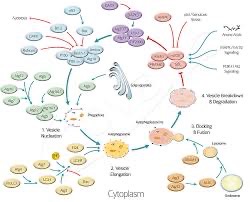
    One of the zillion pictures on internet about autophagy. I do not understand it, but just to show how complicated the process is

    Accelerating degradation over the years Universally cited “percentages of loss per year” for autophagy do not exist. It appears too difficult to measure in a scientific way, but some general observations can be made.

    Age 20: Autophagy at that age is generally robust, efficiently recycling damaged proteins and organelles, which contributes to cellular homeostasis and youthfulness. Note: Homeostasis is the body’s natural, self-regulating process that maintains a stable, constant internal environment despite changes in external conditions. 

    Age 70: Autophagy efficiency is markedly reduced, leading to the accumulation of damaged cells and cellular debris (senescence). This strongly contributes to the aging process and to the accumulation of damaged cells.

    To put things in perspective (and yes, mice are no men, but just to get an idea). In research on mouse neurons one sees a 94% decrease in autophagy from young adult mice compared to older mice. In older mice only 34% of the autophagic vesicles were functional, compared to 80% in young adult mice. Whether mice or humans, it is clear that at an older age, the body is less efficient at repairing itself.

    Why is autophagy important part 1? Autophagy, as mentioned, is the process of clearing away damaged parts. This process is essential for keeping cells healthy. It ensures cells remain in good working order. If junk builds up in the cell, it can permanently tweak the cell’s genes. This makes it difficult or impossible for the cell to repair itself. It also hinders the cell from regrowing the structures it needs to survive and thrive. Many diseases can then be the result.

    While some cells only last in your body for a few days, others are with you for a lifetime. Two especially important types of cells don’t turn over much. They are with us for decades, so they must stay healthy. Neurons are in our brains and other parts of the nervous system. Cardiomyocytes make up our heart muscle.Afbeelding met logo, Graphics, zwart, ontwerp

Automatisch gegenereerde beschrijving

      Why Is Autophagy Important — Part 2? The same idea as the previous paragraph, but more extensive.

      • Cellular housekeeping: It breaks down old, damaged, or misfolded proteins and organelles (like mitochondria). If left alone, these would cause cellular dysfunction. Ultimately, this could lead to cell death.
      • Energy & survival: During periods of starvation or stress, autophagy is activated. It recycles non-essential cellular components into usable energy (ATP).
      • Anti-aging & longevity: Autophagy is essential for reversing the accumulation of age-related cellular waste. Studies show that boosting autophagy can prolong lifespan in various species, because restoring autophagy gene activity to youthful levels can counteract decline.
      • Neuroprotection: It is crucial for clearing protein aggregates. These aggregates are similar to those found in Alzheimer’s and Parkinson’s diseases. This process occurs in non-dividing cells like neurons.
      • Immune system defense: It helps destroy intracellular pathogens (viruses and bacteria).
      • Cancer prevention: By removing damaged components, it helps prevent genetic mutations that can lead to cancer development. For this reason, some researchers are exploring whether autophagy may lower cancer risk. More research is needed, as autophagy can protect against some diseases but, in other contexts, may contribute to disease as Autophagy can also allow dysfunctional cells to survive in some contexts.
      • Quality control: Autophagy ensures that only healthy, high-functioning cells remain in your body.

      How to Stop/Slow Down the Downward Trend

      There are four methods to stimulate autophagy: fasting, the ketogenic diet, exercise, and supplements.

      A Fasting/Intermittent Fasting Any shift in calorie sources causes your body to shift its metabolic pathways. It will begin to use fat for fuel instead of glucose derived from carbohydrates. In general, it is important not to overwhelm the body with constant external calorie loads. It is crucial to give the body a break to focus on its own health and repair. Note also the importance of sleep! And what are metabolic pathways, another overused terminology? I had no idea, but see at the bottom of this blog :).

      “Fasting is one of the most effective ways to trigger autophagy.” During starvation, autophagy sustains the body. It breaks down cellular material. This material is reused for essential processes. This requires energy and cannot continue forever, but it buys time to obtain nourishment.

      Fasting is a commonly recommended way to induce autophagy; usually the longer, the better. Three days is sometimes cited as the minimum you need to fast to induce autophagy. For most of us, this is not feasible. Many turn to intermittent fasting, as animal studies show good results. Assuming (though not all agree) that intermittent fasting works, it requires a non-eating window of at least 14 hours (on internet you will find a lot of debate on the number of minimum hours, but I chose 14.

      Autophagy and gut-rest fasts prohibit caloric substances from passing your lips. Even one or two calories can be enough to stop autophagy and disrupt the fasted state. This means that virtually all foods are off limits. Beverages with calories, powders, and pills are excluded. Even breath mints and gum can be restricted. Tea, coffee, and water are allowed.

      B The ketogenic diet The ketogenic diet is high in fat and very low in carbohydrates. It can bring similar metabolic benefits as fasting. A typical ketogenic plan provides about 75% of daily calories from fat and 5–10% from carbohydrates. This diet can promote the same metabolic changes that fasting induces, though it is not identical to fasting.

      C Exercise is another non-diet factor that can promote autophagy. Animal studies show that physical activity can induce autophagy in organs involved in metabolic regulation. Compared with fasting, autophagy can be induced by as little as 30 minutes of treadmill running. Regular exercise, particularly endurance training and high-intensity interval training (HIIT), has been shown to enhance cellular cleanup mechanisms.

      Some reports suggest that Zone 2 training for about an hour can induce as much autophagy as a three-day fast. This is not yet established with certainty, but it is plausible. Note: Zone 2 typically corresponds to roughly 60–70% of your maximum heart rate.

      D Supplements Spermidine and Fisetin are considered direct and potent supplements for inducing autophagy. Pterostilbene is a strong, bioavailable enhancer of cellular cleanup pathways. 

      1. Spermidine triggers the degradation of damaged proteins and organelles. It mimics the effects of calorie restriction, boosting autophagic processes and cellular renewal, particularly in aging cells. Earlier I wrote a blog on Spermidine. https://shakethehealthtree.com/index.php/2025/04/20/21-spermidine-the-zombie-cell-killer-health-project99/
      2. Fisetin is a flavonoid that functions as a potent senolytic, helping the body clear senescent (“zombie”) cells. It induces autophagy to aid cellular repair, especially when cells are stressed. And a blog on Fisetin as well. https://shakethehealthtree.com/index.php/2025/04/02/21-fisetin-a-supplement-that-might-add-years-to-your-life/
      3. Pterostilbene promotes autophagy by activating AMPK and suppressing mTOR, a negative regulator of autophagy. It can enhance autophagy in skeletal muscle. Even on Pterostilbene there is an earlier blog. https://shakethehealthtree.com/index.php/2025/05/16/21-stay-healthy-100-glasses-of-red-wine-daily-or-resveratrol-pterostilbenehealth-project99/

      6 My Approach

      Every other day, I attempt a 14–16 hour fast. I aim to increase the number of days. However, I have not managed to go beyond about 22 hours of non-eating so far.

      Regular sport training, including a few sessions per week in Zone 2.

      I take supplements described in this blog: Spermidine, pterostilbene, and Fisetin.

      Ok, this was it. Not all about autophagy but the essence as I (a non doctor) see it. The problem with one’s body is that everything is important, but some are more important than others. Autophagy is one of them.

        Take care, enjoy life and let me know if you have any questions.

        Robert, your health friend,

        The mighty Congo River, up to 300 meters deep

        Metabolic pathways are interconnected series of chemical reactions within a cell. They convert substrates (stuff) into essential products. These reactions manage energy and matter to sustain life. These multi-step, regulated pathways (e.g., glycolysis) are categorized as catabolic (breaking down molecules to release energy) or anabolic (using energy to build complex molecules.