
What internet offers me when I search for mTOR picture
Dear reader,
One of the main reasons I write these blogs is to understand the basics of longevity for myself. In many articles, one is bombarded with acronyms, definitions, and concepts. It seems that authors assume readers exactly know what is meant by antioxidants, amino acids, metabolism, ATP, or DNA (well, the last one we know, of course). I have to admit that often I do not fully understand what I read. This lack of knowledge certainly applies to the multi protein mTOR.
mTOR is the subject of many studies, as much still has to be discovered. The main challenge is to find the right balance between the moments when mTOR has to do its job and other moments when it is better to scale back its influence. When mTOR is active, it tells cells to grow, divide, and make proteins, but constant high mTOR activity is linked to faster aging, inflammation, and diseases like cancer, diabetes, and heart problems.
Intuitively, it sounds logical, but when do we decide to activate mTOR and when not? There are some indications, but no clear answer yet. And, most importantly, it is not linked to clear indicators.
Before going into the details of mTOR, here is a simplified overview of the interaction of four important compounds that are closely interlinked: ATP, AMPK, Rapamycin, and mTOR.
A) When the cell has lots of energy (high ATP = Adenosine Triphosphate), mTOR is switched on to promote growth.
B) When energy is low (low ATP), AMPK is switched on to conserve energy and it turns off mTOR. It is like the cell’s energy sensor or fuel gauge. Its job is to save energy by slowing down energy-consuming processes and turning on energy-producing ones. One of the things AMPK does is slow down mTOR to conserve energy.
C) Rapamycin is a drug that specifically blocks mTOR’s activity. By turning off mTOR, Rapamycin can slow down cell growth and protein production. Scientists use Rapamycin in research and medicine to control cell growth, for example, in cancer treatment or to extend lifespan in some animals.
D) So, in short, ATP tells cells if there’s enough energy, AMPK senses when energy is low and can turn off mTOR to save energy, and Rapamycin is a drug that can block mTOR to slow cell growth regardless of energy levels.
What is mTOR?
mTOR stands for “Mechanistic Target of Rapamycin.” It’s a special protein inside your cells that acts like a master switch, controlling many important processes related to your health and aging. Think of mTOR as a traffic cop that decides when your cells should grow, make energy, build new parts, or take a break and repair themselves. It’s not just about how much mTOR protein you have but how active it is.
At a microscopic level, mTOR looks like a hollow, slanted rectangular-shaped structure with a central, stain-filled cavity and “feet-like” protrusions on both ends. It functions not as a single protein, but as a massive, multi-protein machine that builds and regulates cells.
Activating mTOR signals your cells to prioritize synthesis (production) over destruction.
Why is mTOR Important?
Your body’s cells need to balance growth and repair to stay healthy. When mTOR is active, it tells cells to grow, divide, and make proteins—very important when you’re young, growing, or recovering from an injury. For bodybuilders, it is doubly important.
But if mTOR stays turned on all the time, especially as you get older, it can lead to problems. Constant high mTOR activity is linked to faster aging, inflammation, and diseases like cancer, diabetes, and heart problems.
When mTOR activity is lowered at the right times, it helps cells focus on cleaning up damage, recycling old parts, and improving their function—processes known as “cellular repair” and “autophagy.” This balance between growth and repair is crucial for long-term health, better metabolism, and even possibly living longer. The key challenge is to determine what is the best balance and how to measure it. The final answer to this point has not yet been found.
Cycling your mTOR levels
As mentioned before, we have to look at the mTOR balance between growth and repair. This is crucial for long-term health, better metabolism, and even possibly living longer. Scientific perspectives highlight the importance of cycling your mTOR levels. By triggering mTOR through protein intake and exercise, then allowing it to drop by occasionally fasting or resting, you can balance muscle-building with autophagy—the body’s process of cleaning out damaged cells.
How can you increase mTOR activity?
You can influence mTOR through your lifestyle choices. Perhaps not surprisingly, they are the usual suspects: eat well (balanced and not too much!), exercise, fast, sleep well, and avoid stress.
1. **Eat Wisely:** mTOR responds to nutrients, especially proteins and sugars. Eating protein in moderation and avoiding excess sugar can help keep mTOR balanced. Protein intake, particularly those rich in the amino acid leucine (meat, dairy, eggs, legumes), strongly activates mTOR. Similarly, carbohydrates stimulate mTOR through insulin signaling.
2. **Exercise Regularly:** Physical activity signals your cells to activate or tune down mTOR as needed. Resistance training (like weightlifting) can stimulate healthy muscle growth through mTOR, while endurance exercise helps overall cell function.
3. **Consider Fasting:** Periods without eating (fasting) can reduce mTOR activity temporarily, allowing your cells to focus on repair and cleanup. Many people practice intermittent fasting for these benefits.
4. **Avoid Overeating:** Constant excess calories, especially from high-carb and high-protein diets, can keep mTOR switched on too much. Balanced meals and portion control are helpful.
5. **Manage Stress and Sleep:** Chronic stress and poor sleep can disrupt many body processes, including mTOR regulation.
What triggers reduction (inhibition) of mTOR?
Persistently low mTOR can impair muscle growth, hinder immune function, and stall wound healing.
Fasting, caloric restriction, certain dietary restrictions (like limiting methionine), stress, and lack of sleep all reduce mTOR activity. The supplement berberine is known to inhibit mTOR expression.
Increasing studies have demonstrated that some diet-derived natural products, including curcumin, resveratrol, epigallocatechin gallate (EGCG) found in green tea, and caffeine, may inhibit mTOR signaling directly or indirectly.
Rapamycin is the main mTOR inhibitor, but there are new analogue products developed: dridaforolimus/deforolimus (AP23573), everolimus (RAD001), and temsirolimus (CCI-779).
Can you measure mTOR?
Yes, but you cannot detect real-time mTOR levels at home because it is not a standard biomarker like glucose or cholesterol. Instead, you know mTOR is elevated based on what triggers it: high amino acid intake (especially leucine), high calorie/insulin spikes, and resistance training. Likewise, you know when it is low, for example, when you fast.
Measuring mTOR is not cheap but is quite standard in molecular biology labs. The expense depends on the method, reagents used, sample numbers, and whether you have access to a lab or must outsource.
Whether this is useful or not, I do not know. There is no single “good” absolute level of mTOR (mechanistic Target of Rapamycin). Because it acts as a central cellular switch, the ideal level of mTOR depends entirely on your immediate biological needs, age, and health goals.
The problem with mTOR is that these are rough indications only. Health influencers promote certain supplements or lifestyles to improve or reduce mTOR activity, but as long as there are no clear markers, it is difficult to assess the value of these recommendations. At least, this is my assessment so far.
One conclusion comes up in much of the literature: protein content should be moderate rather than excessive, as high protein intake strongly activates mTOR signaling. I know there are intense discussions on the intake of protein, but when you link this discussion with the functioning of mTOR the conclusion is to be prudent. Research suggests that 15–25 grams of high-quality protein provides adequate amino acids for morning protein synthesis needs without excessive mTOR activation. I have not seen recommendations for the remainder of the day.
Dear reader, I have tried to simplify an extremely difficult topic as much as possible. I hope it is useful.
Thanks for reading, take care of yourself, follow the news about mTOR, and enjoy a long and happy life.
Robert, your health friend
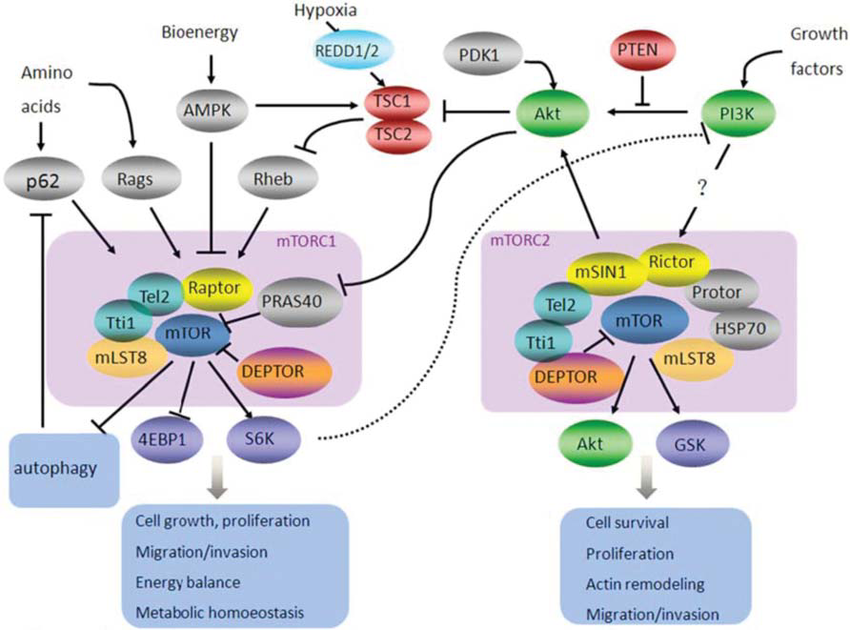
I love this images