

A party bus in Berlin
Dear reader,
For your overall health and wellbeing it is difficult to overstate the importance of gut health. When your gut isn’t well, you may experience short‑term discomfort. Regular discomfort can have longer‑term effects.
The main determinant of gut health is what you eat and drink, which is good news because it’s something you can influence. In this blog some tips that helped me a lot.
What has been beneficial for my gut?
- Avoiding certain foods, such as sugar, refined starches and above all ultra processed foods. When I have a weak moment and eat cake or cookies in one sitting, I immediately notice a negative impact on my gut.
- Focusing on healthy and fiber‑rich foods.
- I aim for three servings of fermented foods daily: as part of breakfast unsweetened Greek yogurt or plain quark and a glass of kefir, and in the afternoon a daily spoonful of raw cabbage (or sauerkraut/kimchi).
This blog is not medical advice. There are many potential gut issues, and factors such as age, medications, or genetics can also matter. I describe what works for me. In light of all I read in medical sources my approach should help many people as well. The daily intake of fermented foods has been one of my best new health habits over the past year. Earlier I wrote a blog on sauerkraut “ein sehr gutes probiotikum”.
Is the gut an organ?
Yes. In anatomical terms, the “gut” refers to the gastrointestinal tract (the esophagus, stomach, small intestine, and large intestine), which is an organ system made up of multiple organs.
Just to show how many different microorganisms there are in your gut microbiome
And what is the notorious gut microbiome?
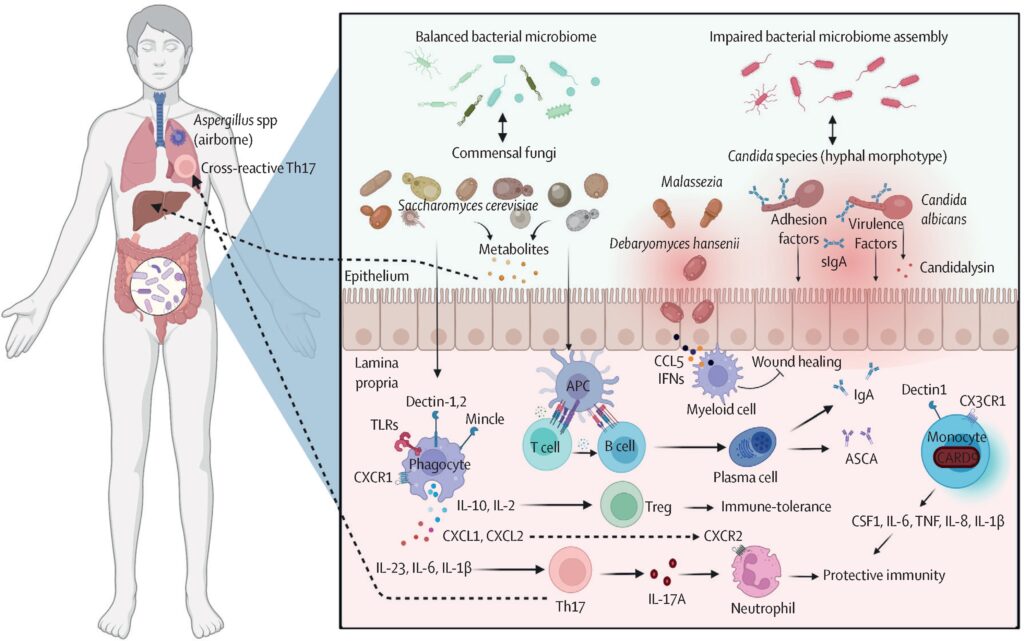
The gut microbiome is not an anatomical organ. It is a vast, dynamic ecosystem of about 100 trillion microorganisms—including bacteria, archaea, viruses, and fungi—primarily inhabiting the large intestine. Its composition and function are shaped by diet, genetics, antibiotics, and the environment, with complex microbe–microbe interactions giving rise to emergent properties that function like an additional metabolic organ. When well diverse and balanced, it supports health; when disrupted (dysbiosis), it can contribute to inflammatory, metabolic, and neuropsychiatric conditions.
The gut microbiome closely coexists with the human host, helping break down complex carbohydrates, synthesize vitamins, strengthen the gut barrier, and “educate” the immune system, while producing metabolites such as short-chain fatty acids that influence metabolism and inflammation. What are metabolites? They are small molecules produced or consumed during metabolism by living organisms (including gut microbes).
In relation to the gut microbiome, what are probiotics?
Probiotics are live microorganisms that, when consumed in adequate amounts, may offer health benefits by supporting a balanced gut microbiome, improving barrier function, and modulating the immune system. Many people use probiotics to prevent antibiotic-associated diarrhea. Importantly, the effects are highly strain- and condition-specific, so benefits seen with one probiotic do not necessarily apply to another.
When considering probiotics, focus on strain- and condition-specific evidence, not general “probiotic” claims. Choose products with well-documented strains and labeled doses for your target outcome, and be mindful that more CFUs are not always better. Also be realistic. Your gut microbiome counts 100 trillion microorganisms and most probiotics 10 billion CFU’s, which is a modest 0.01%.
Prebiotic examples (feed for gut bacteria): onions, garlic, bananas, oats, apples, flaxseeds. Note: these are not probiotics themselves; they are foods that feed beneficial microbes. If you want examples of probiotic foods, refer to unsweetened yogurt, kefir, sauerkraut, kimchi, and other fermented foods.
How to ruin your gut microbiome (1)
Sugar, refined starches, processed and ultra‑processed foods, artificial sweeteners, E‑numbers, and saturated fat can shape the gut microbiome in a negative way. They can alter the substrates available to microbes in the long term, influence bile acid circulation, and increase inflammation. Poor dietary choices can lower microbial diversity.
The overall effects depend heavily on the broader dietary pattern rather than a single nutrient, and on individual factors such as baseline microbiome, genetics, age, and medications. Disruption of the microbiome has been linked to diseases including inflammatory bowel disease (IBD), obesity, allergic disorders and asthma, type 2 diabetes, cardiovascular disease, and autoimmune disorders.
What your microbiome needs
A diet rich in diverse fibers (vegetables, fruits, legumes, and whole grains), resistant starch, and fermented foods tends to boost SCFA‑producing bacteria and strengthen gut barrier function. Omega‑3 fatty acids and polyphenols may also support a healthier microbiome. Consider adding probiotic foods to your diet and don’t forget fermented items. Aim to support a healthier dialogue between the gut and brain, though individual responses vary.
Gut–brain axis
You have heard about the gut–brain axis. What happens in your gut impacts your brain and mood. The gut–brain axis is a dynamic bidirectional communication network linking the central nervous system with the gastrointestinal system, integrating neural, immune, and endocrine signaling.
In practice, the axis helps govern mood, stress reactivity, cognition, and pain perception, while psychological states and stress can alter gut motility, permeability, and microbial composition, creating a feedback loop.
The microbiota sits at the heart of this axis, shaping brain function by producing and modulating neuroactive compounds such as short‑chain fatty acids. Signals travel via neural routes (notably the vagus nerve), immune mediators, and circulating metabolites that can affect brain cells, with gut barrier integrity and systemic inflammation playing key roles. Because this signaling is highly context‑dependent, factors like diet, antibiotics, stress, and aging can markedly influence the axis.
How to Ruin Your Gut Microbiome (2)
The impact of medicines can be substantial. It has long been known that antibiotics affect the gut microbiome, killing both beneficial and pathogenic bacteria. Researchers have found that also longer durations of other medication use and taking more medications are associated with greater disruption of the microbiome. In a recent study, 167 of 186 drugs affected the microbiome in some way, with 78 showing long-term effects. The longer people used medications and the more drugs they took, the greater the disruption.
Multiple drugs can interact to produce a larger impact on the microbiome; among individual drugs, benzodiazepines appear to have the greatest negative effect. The implications matter because microbiome disruption is linked to inflammatory bowel disease (IBD), obesity, Type 2 diabetes, cardiovascular disease, and autoimmune disorders. A healthy microbiome is a stable, diverse community with high microbial gene richness that lives in balance with its human host.
Bloating and floating
A healthy gut microbiome and normal transit usually manage gas without distress, but imbalances or intolerances can amplify symptoms. Bloating and gas are common signals from your gut that reflect how your digestive system and its microbial residents are handling food.
Most gas comes from bacterial fermentation of undigested carbohydrates in the colon, producing hydrogen, methane, carbon dioxide, and other compounds. The amount and composition of gas depend on what you eat—especially fiber and fermentable carbohydrates (FODMAPs)—your gut microbiome, and how quickly food moves through your gut.
In health terms, bloating and gas can be linked to specific conditions or dietary intolerances, such as irritable bowel syndrome (IBS), small intestinal bacterial overgrowth (SIBO), lactose or fructose intolerance, or celiac disease.
Red flags and the doctor
Red flags to seek medical evaluation include weight loss, blood in stool, severe or persistent pain, vomiting, fever, or new symptoms after age 50. If bloating or gas is persistent or bothersome, a clinician can help identify triggers (often via a symptom diary), assess for intolerances or underlying conditions, and discuss targeted dietary or therapeutic options.
Thanks for reading, mind your diet and enjoy life,
Robert, your health friend,

Art from Venezuela
Discover more from Health Project 99+ (in good shape)
Subscribe to get the latest posts sent to your email.
