Dutch graves in Macao
Dear reader,
Are all these latest advice on social media correct about mouthwash? “Do not use it because it kills nitric oxide (NO) in your mouth and thus indirectly creates heart problems.”
Well, as is often the case with health issues, it is both true and not.
My main takeaway: Mouthwashes can have added value, but go for the non-antiseptic ones, like fluoride-only or homemade washes (for example with baking powder). Most over-the-counter mouthwashes limit NO production, which can impact your heart health negatively. If you need an antiseptic mouthwash because of medical reasons, use it at least four hours after your meal, especially after a nitrate-rich meal. Its impact on any NO production is then minimal
1.Maintaining NO production is important for all of us, as its production declines early in life. So it’s better not to hasten this decline. Better to stop it or, even better, reverse the decline! As I wrote in an earlier blog on NO, many people are NO-deficient at an early age. https://shakethehealthtree.com/index.php/2025/06/26/21-nitric-oxide-the-longevity-molecule-i-never-heard-of/
By age 30, you might already experience a 40% decrease in NO production. This is followed by a further gradual loss each year if you do not take corrective measures. Aging, combined with certain health conditions (like diabetes), impacts the ability to produce NO. If you are concerned about this balance, you might consider several measures: select your mouth wash carefully and consume nitrate-rich foods. Dental hygiene is important, of course, but so is supporting a healthy oral microbiome.
2.What is NO? Many call it the “longevity molecule,” as it protects your DNA, promotes mitochondrial production, and stimulates stem cells. It is produced naturally in the body. The bacteria in your mouth play a central role: they convert nitrates from food into NO, which is a colorless gas. This gas plays several vital roles in various physiological processes. It is a signaling molecule that helps regulate blood flow, immune responses, and neurotransmission.
When you consume nitrates like in red beets they encounter bacteria in your mouth. These bacteria convert nitrates into nitrites. Nitrites can be swallowed; they are then further converted into nitric oxide (NO) in the stomach and bloodstream. The most important of these bacteria are located on the surface of your tongue. For this reason, it is advisable to regularly brush your tongue with a toothbrush. This stimulates the mucous membranes in the mouth and is part of achieving good oral hygiene. This practice can indirectly support nitric oxide production.
A lack of NO leads to many health issues, including cardiovascular diseases, diabetes, and neurodegenerative disorders.
3.What is the impact on your cardiovascular system? Mouthwashes that broadly kill oral bacteria—especially antiseptic formulas—are the ones most likely to reduce nitrate-reducing (NO-producing) bacteria in your mouth. The nitrate–nitrite–NO pathway depends on those bacteria, so strong antiseptics can blunt that route. The following NO-related cardiovascular functions may diminish: (1) relaxing and dilating blood vessels; (2) helping regulate blood flow and blood pressure by allowing smoother movement through the arteries and veins; (3) lowering systemic vascular resistance. This helps reduce blood pressure.
4.How many types of mouthwashes are there?
It is a bit confusing, as there are many. Take a close look at labels!
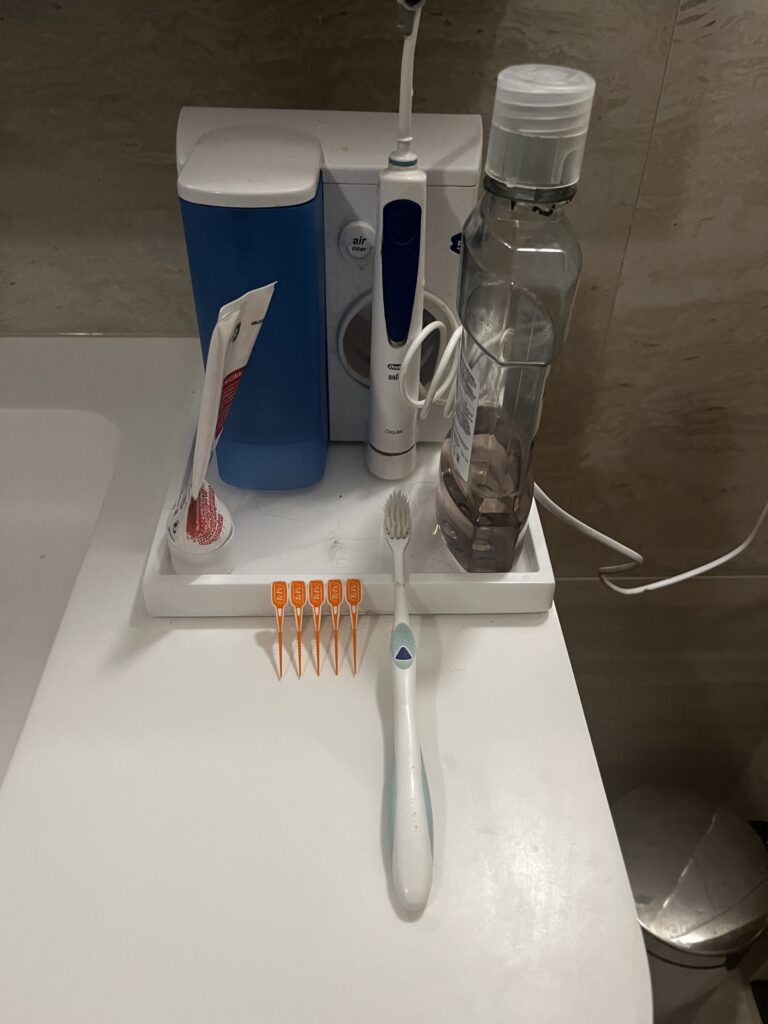
For overall cavity prevention, fluoride mouthwashes are the standard, evidence-backed option for most people. I use this one. Fluoride-only mouthwashes don’t kill bacteria to any meaningful extent, but at the same time they are not designed to reduce plaque like antiseptic rinses do. Because they’re not broad-spectrum antimicrobials, they have little to no meaningful impact on NO production in the mouth.
For reducing plaque and gingivitis on a daily basis: antiseptic mouthwashes with essential oils or CPC offer meaningful benefits; chlorhexidine is the most potent antiseptic but is generally reserved for short-term use due to staining and taste changes.
For short-term, strong anti-gingivitis effects (e.g., after gum surgery or when gingivitis is pronounced): a chlorhexidine mouthwash prescribed by a dentist is often the most effective option.
Whitening mouthwashes provide only mild, surface-stain reduction; they’re not a substitute for whitening toothpaste or professional whitening.
Desensitizing mouthwashes with potassium nitrate or similar ingredients can be very helpful. Alcohol-free formulations or products designed for dry mouth are typically best.
5.What types of mouthwashes impact negatively NO?
Sadly, most of them. See the whole list below. Broad-spectrum antiseptics can reduce these bacteria and lower salivary nitrite production.
- Chlorhexidine mouthwashes (Rx or OTC).
- Essential-oil rinses (e.g., many Listerine-type products).
- Cetylpyridinium chloride (CPC) rinses (less impact than others).
- Hydrogen peroxide rinses (needs further study to determine whether there is indeed an impact).
- Alcohol-containing antiseptic rinses.
6.Which mouthwashes preserve NO production?
- Xylitol-containing mouthwash without antimicrobial ingredients. Xylitol supports caries prevention without acting as a broad-spectrum antiseptic; however, check the label to ensure no chlorhexidine, CPC, essential oils, or peroxide.
- Baking soda mouthwash (sodium bicarbonate) without antimicrobials. It alkalinizes the mouth and helps with dry/acidic environments, but isn’t an antiseptic.
- Saline mouthwash (0.9% NaCl) or saltwater rinse. This is very mild and largely inert to oral bacteria; it does not kill bacteria or disrupt the nitrate-reducing community.
- Fluoride-only rinses.
7.Can you make mouthwashes at home? Yes.
In general, use them for a few days only (up to a week) and then make a new one. Always rinse 30 minutes before or after meals. Here are the most common Non-antiseptic options with no antimicrobial active ingredients.
- Saltwater rinse (saline) Ingredients: 1/2 teaspoon salt per 8 ounces (240 ml) warm water Very gentle
- Baking soda rinse Ingredients: 1/2 teaspoon baking soda in 8 ounces warm water Alkalizes the mouth.
- Xylitol rinse (no antimicrobials) Ingredients: 1 tablespoon xylitol per 8 ounces warm water Notes: Xylitol can help caries prevention.
- Green tea rinse (mild, non-antiseptic) Ingredients: Brewed, cooled green tea (unsweetened) Notes: Polyphenols may help; not a strong antiseptic.
- Aloe vera rinse (soothing) Ingredients: 1/2 cup water per 2 tablespoons pure aloe vera juice Notes: Gentle and soothing; not an antiseptic.
- Herbal-infused water (gentle) Ingredients: Fresh or dried herbs (e.g., peppermint) steeped in hot water, cooled Notes: Use as a pleasant alternative if you avoid additives.
Dear reader, apparently I am a bit into dental hygiene these days. Not for nothing as proper dental care can add up to 7 years of your life. If you have time read my recent blog on bleeding gums and how important it is to prevent them. https://shakethehealthtree.com/index.php/2025/09/27/15-dental-health-avoid-bleeding-gums-at-all-costs-health-project99/
Take care, keep on flossing and rinsing and live a happy and healthy life!
Robert, your health friend

Turists near Hong Kong Island, looking for a pink dolphin